
The original is one of the greatest games ever made, but how does the remake compare?
Warning: Spoilers Ahead
Resident Evil 4 debuted on Nintendo GameCube back in 2002 and changed the video game industry forever. Pioneering an innovative over-the-shoulder third-person shooting system, it did away with the series oft-maligned tank controls, resulting in much smoother world exploration and action-focused combat. Leon S. Kennedy became one of the coolest heroes in video games and the series was reinvigorated for years to come. When Capcom remade Resident Evil 4 in 2023, there was a lot of trepidation among fans. Resident Evil 2 and Resident Evil 3 had both already been radically overhauled with a third-person setup, but RE4 was different. To many it was already a game bordering on perfection; how do you remake something as storied as the original Resident Evil 4?
Well, if you’re Capcom, you produce exactly this: a remake that closely sticks to the plot of the original game while making small, but impactful, changes to the narrative and the controls. The alterations RE4 remake brings to the table are subtle in many cases, but they’re ones that longtime fans will notice right away. The story itself is largely untouched: Leon, the co-star of RE2, is back after six years since the fall of Raccoon City. Now a secret agent for the U.S. government, Leon has been sent to rescue Ashley Graham, the daughter of the President. Ashley has been captured by a cult called Los Illuminados, which is controlled, both figuratively and literally, buy Lord Osmund Saddler. Saddler has found a way to control human beings, animals, and more using a parasite called Las Plagas, which takes over the host while maintaining brain functionality. Leon needs to nab Ashley and get her back to safety before Saddler possesses her and then, in turn, the rest of the world.
RE4 drops players off in rural Spain, where Leon quickly discovers that Ashley’s kidnapping isn’t by run of the mill terrorists. The Plagas-infected villagers are quick to try and kill Leon, and much like the first game, players are launched into a crucible of fire when their first real exposure to RE4’s combat mechanics is via a gauntlet of swarming enemies. Leon’s movement is much different here, with the character bobbing and weaving as he sprints around the landscape. What’s more, Leon can now move and shoot, as opposed to planting his feet to aim and fire like he did before. Some might argue that this makes combat easier, but there are changes to how shooting and enemy weak points work that compensates for this. Leon can also execute stealth kills, another new wrinkle to factor into fights.
In the original game, players could routinely fire headshots and leg shots at enemies to stagger them. This would then trigger a prompt to do a powerful melee attack that would not only send enemies flying, but also help with crowd control by sending foes into packs of other enemies to loosen things up. That’s still much the case here, but the remake differs in that shots don’t always go exactly where the player is aiming (this is most apparent when firing at a distance) owing to more realistic gun sway and ballistics. A projectile in real life has some variation when fired, something that RE4 tries to replicate, and it’s a point of consternation for certain fans of the original. What’s more, headshots and leg shots are now less predictable when it comes to staggering a foe. Meaning, sometimes a single shot will get an opponent in a state to melee them, sometimes it might take two or three.
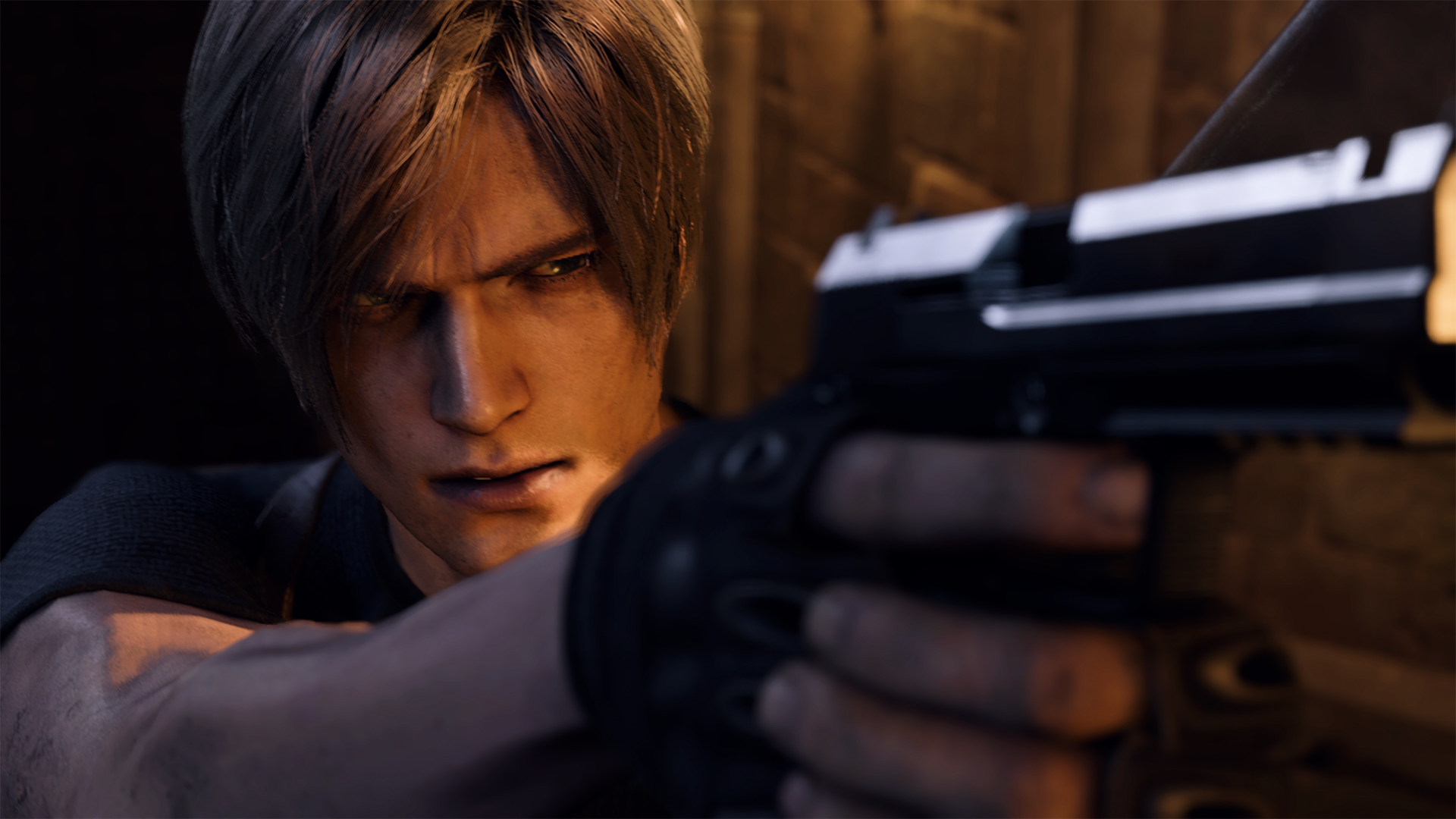
This matters to purists because the original RE4 had a very arcade-like quality to combat. Since shots always went where aimed and staggers could more reliably be dished out, there was a particular rhythm to shooting, doing a melee, and for those very frugal with ammo, sweeping in for a volley of knife swipes to finish off enemies. The remake of RE4 allows for some of that same rhythm, but it’s ultimately different enough that it bothers some players. The knife is particularly different in the remake, able now to be broken, repaired, and upgraded. It can also be used to parry attacks, both up close and ranged. I enjoyed the changes, myself, as I felt that making things less uniform resulted in more diverse combat opportunities. It was much less mechanical not knowing that every time I fired a shot I would get the same response over and over. It kept me on my toes and made it very satisfying to formulate new tactics than the exact same ones from 24 years ago.
Not everything has changed, as Capcom made the brilliant decision to retain the attaché case inventory management system. The case starts with a 7×10 grid and ends with a maximum of 9×13. Each item in Leon’s inventory takes up a certain number of cells, with each item able to be rotated to fit within the grid—or not, in which case the player has to dump inventory, combine inventory where possible, or consume items outright. It’s a game within a game, an almost Tetris-like exercise of arranging that is truly satisfying to engage with. My one grip is that I accidentally would hit L3 on occasion, which auto-sorts the contents of the case. I’d curse the computer and then rearrange everything to my liking, afterward. Definitely not a big deal, and indeed it will be a boon to those who don’t want to deal with sorting the attaché themselves.

Another change to the case is the option to attach charms (a max of three), which grant various buffs, and variants of the attaché which grant buffs on top of what the charms provide. Since this is the Gold Edition of the game on Switch 2, players have access to a couple of charms, a different case, and some more powerful weapons straight out of the gates. It will drive purists nuts, but you have the option to ignore the charms and variant attaché cases, so if you want a more vanilla experience, you can have it. However, those who might want a helping hand will find these extras invaluable. In particular buffs that help with crafting, one of the other new mechanics introduced in this remake.
Crafting plays a pretty important role in RE4. There are three pickups to keep an eye out for: gun powder, resources (both small and large), and knives. When combined, these items can be used to produce everything from bullets to bolts (basically arrows) to grenades and more. RE4 isn’t exactly stingy when it comes to dolling out ammo, but on higher difficulties it becomes a much larger concern. Crafting allows players to tailor some of the shooting to their needs; if, for instance, a player knows that a sequence with Regenerators is on the horizon, crafting provides the option to produce some rifle rounds that might not otherwise be in abundance. Or perhaps a crowd-heavy sequence is coming up, it might be wiser instead to craft shotgun rounds. I normally am not big on crafting in most games, but here it felt like a natural inclusion and really empowering. It was streamlined and straightforward, so it never felt like a chore.
The sheer range of weapons to fool around with is another great aspect of RE4. Each weapon type has multiple different guns to choose from, and they all handle in different ways with different advantages and disadvantages to consider. Take the Punisher handgun, for instance. It isn’t especially powerful compared to other guns of the same type, but it can pierce through up to five enemies with one shot. Is it worth it to have more penetration but do less damage? Maybe spread the shots around by grouping enemies, thus stretching Leon’s ammo supply? These are questions that arise with every weapon, and finding what works for you is a big part of the fun. Upgrading all of these weapons is also satisfying, as the maxed out version of every gun is not only more powerful and versatile, but it also unlocks the chance to obtain its Exclusive Upgrade. This can double damage dealt, grant magazines with greater capacity, and so on. The Merchant wants an arm and a leg for these upgrades, but they can drastically alter how you play and are usually worth the price.
Of course, all of these guns and crafting and inventory management would mean next to nothing if the shooting itself wasn’t satisfying, and boy, is it. The sense of feedback from shooting foes is some of the best in any game; whether individually or in packs, there’s nothing quite like the feeling of mowing down Las Plagas in RE4. I found myself looking forward to combat sequences because it was so mentally pleasing thinking of how I would handle different variations of enemies. Knowing when to whip out a shotgun versus a grenade is part of RE4’s challenge, as it tasks players with being cognizant of how their use of Leon’s inventory can make later sections easier or harder. Blow through all of your rifle rounds before running into a Regenerator or two is a deadly mistake to make, for example. As I played, I kept learning tactics that would work, others that wouldn’t, and would adjust accordingly. It’s a very cerebral experience that not all shooters are capable of.
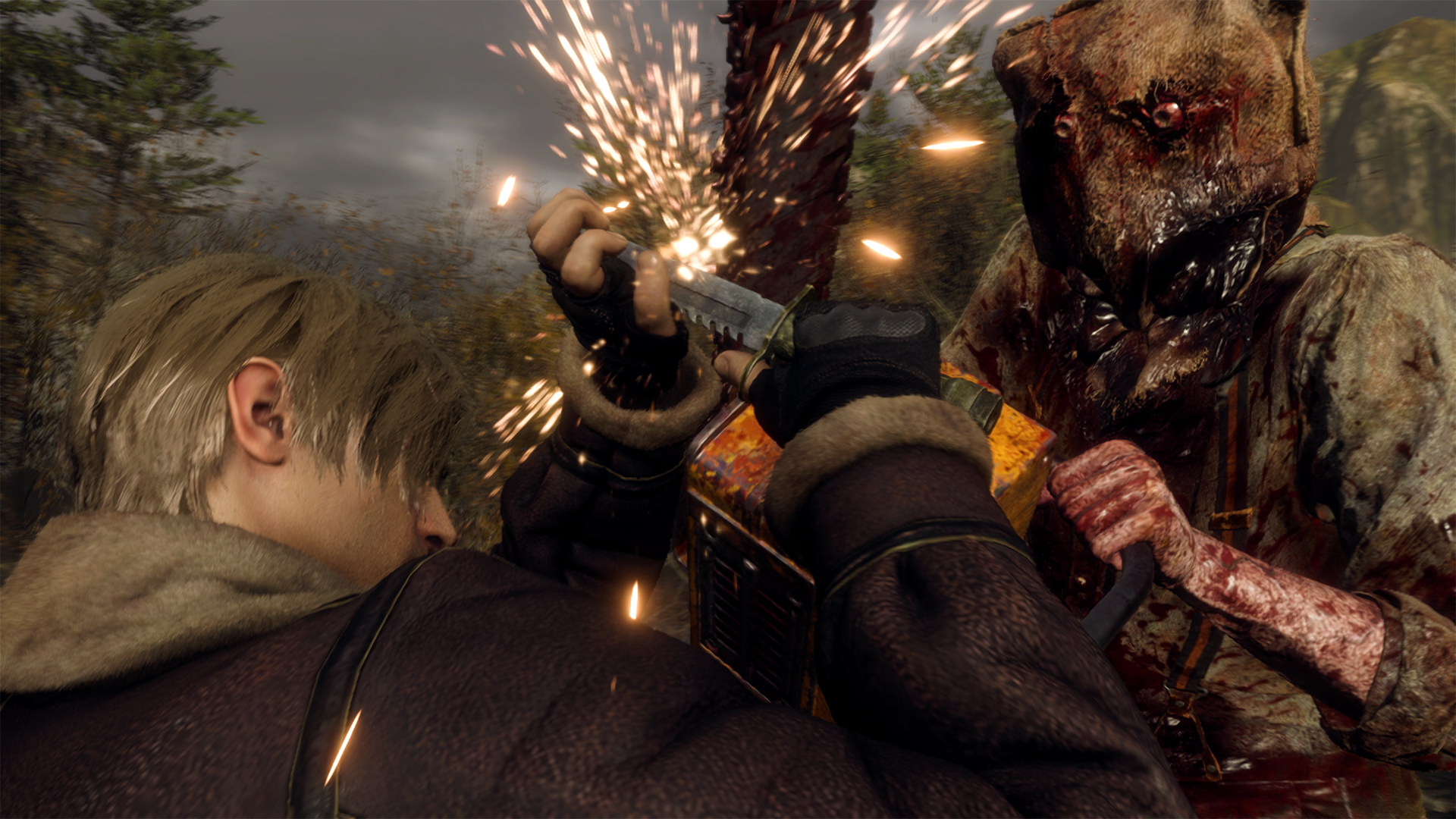
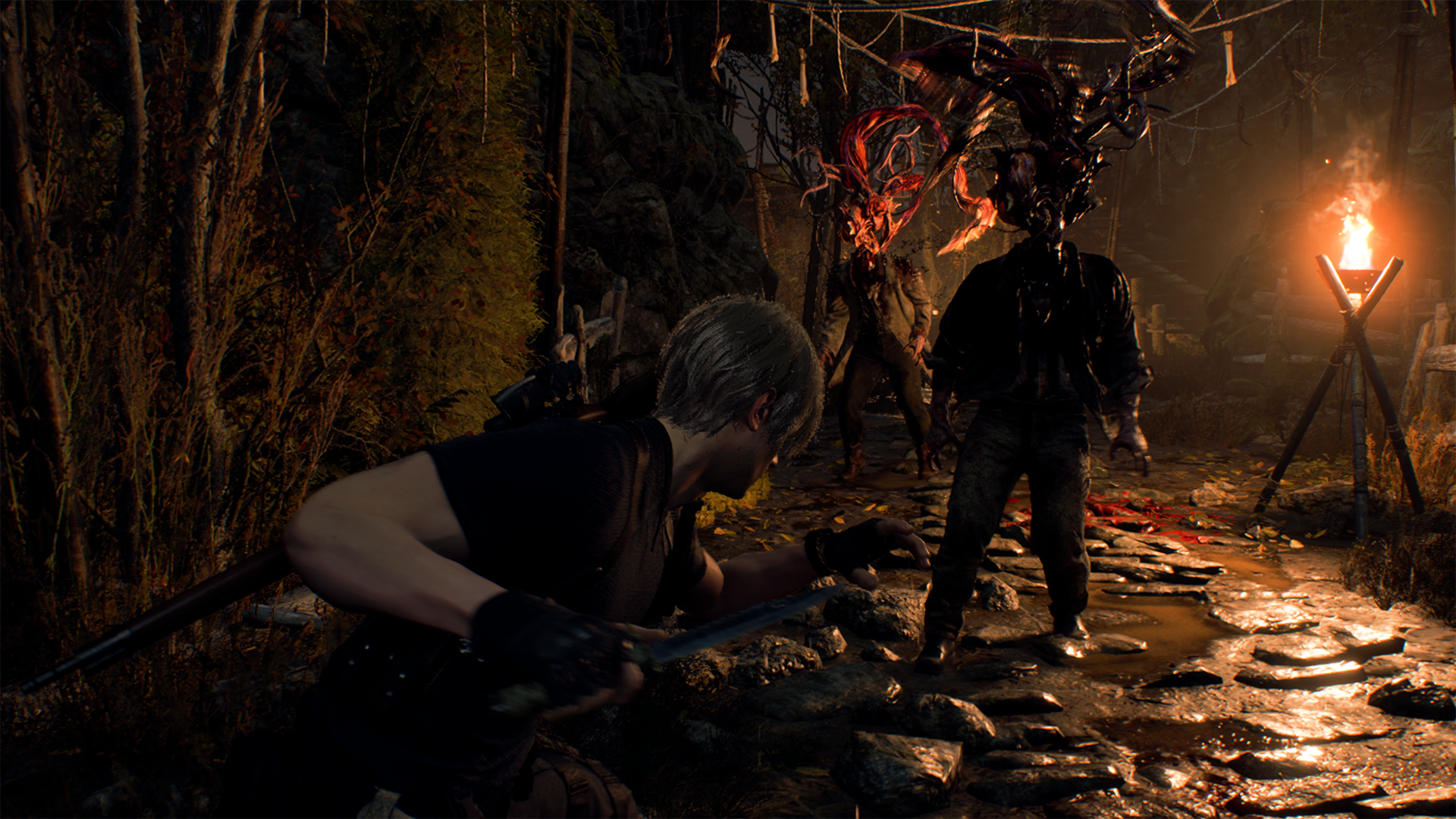
There are a number of different enemies to contend with in RE4 that make the fighting in this game a lot different than RE2 or RE3. With the shift to RE4, both in the original and here, players must deal with a faster, craftier enemy than traditional zombies. Where the undead shamble and maybe lunge every once in a while, the Ganado (people infected with Las Plagas) maintain vestiges of the person they once were before the parasite took hold. These foes can wield weapons, including pitchforks, axes, stun rods, and much more, making them a lot deadlier than zombies ever were. It also means that combat is more frenzied than prior Resident Evil games, as the less predictable enemy movements mean all sorts of crazy things can happen in a given fight. There’s nothing worse than getting grabbed by a Ganado only to then have another take a swing at Leon’s head with a chainsaw!
Speaking of enemies, the different types of Ganados keep things interesting. Villagers give way to Zealots, which in turn give way to Soldiers and, worst of all, Regenerators. The Villagers are the simplest foes, using pitchforks, axes, and the like to attack Leon, but are deadliest in large numbers where they will swarm and become overwhelming. Of course, the chainsaw variant is an iconic opponent from the original and can be found here, as well. The Zealots rely on medieval shields and maces to attack and prove more formidable, but it’s the accompanying Novistador, flying bug monsters, and worse still the blind, blade-wielding Garrador that are the bigger concerns. When Leon finally arrives on the island, the Soldiers are the heartiest foes with their armor and more modern weapons, but the Regenerators take the cake as the scariest and most lethal enemies in the game. These pale, humanoid monsters contain Plagas in their bodies that allow Regenerators to, as the name suggests, regenerate from any wound. The only way to kill them is with a thermal scope to spot the Plagas inside and blow them away. Finally, Iron Maidens are a more lethal variant of the stock Regenerator. They will grow spikes all over their bodies with a final Plaga that resides in its head.
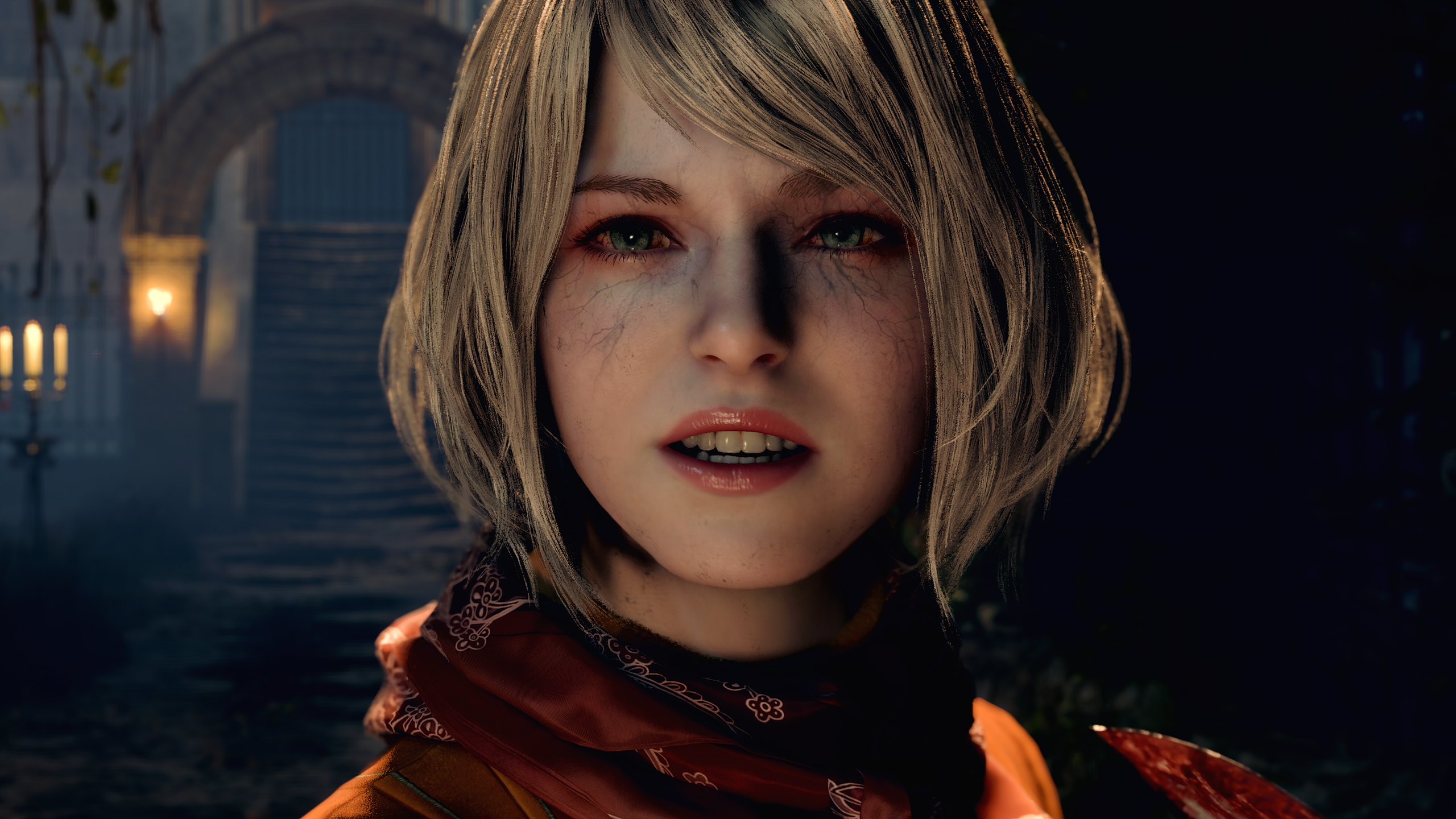
And those are just the run of the mill enemies that you’ll encounter! The bosses are all either gigantic, imposing, or a mixture of both, and far more lethal than anything else Leon will run into. Every boss fight is memorable; Vilage Chief Méndez in the burning barn; hurling spears at Del Lago on the lake; Verdugo in the bowels of the castle’s sewers; locking blades with Krauser right before making the final assault on Lord Saddler. Many of these fights follow the same beats as the original, while others take on a new dimension for the remake. The battle against Ramón Salazar, for instance, is not a stationary affair with Leon firing shots at the enemy from a distance, but is instead a more mobile fight where he has to avoid the monster’s lunges. The one complaint I have is that some bosses were cut altogether, most notably U-3 or “It.” “It” was an incredibly iconic, frightening battle that, while ultimately repurposed for the Ada Wong DLC (included in this Gold Edition), felt wrong to take away from the main campaign.
Capcom reasoned back when the game launched that altering and removing some of the content from the original helped to cut down on bloat and streamline the overall experience. Perhaps I’m in the minority, but I didn’t think the original RE4 was at all bloated, and I can’t remember disliking a single boss fight. Even the giant, mechanized Ramón was fun to take on. And while Capcom did streamline in some regards, in others it expanded. Things like the Blue Medallion challenge from the original RE4 has been added to multiple different areas of the game world. Other sections have been made larger than they were before, such as the lake, which now requires more thorough examination via the motorboat. For the most part I agree with or at least am fine with some of these alterations, but others left me scratching my head. Why get rid of the prison sequence towards the end of the game, for instance? It was one of the creepiest, most haunting aspects of the original RE4. Its replacement is pretty dang scary, too, but I’m not sure it was worth sacrificing the prison for.
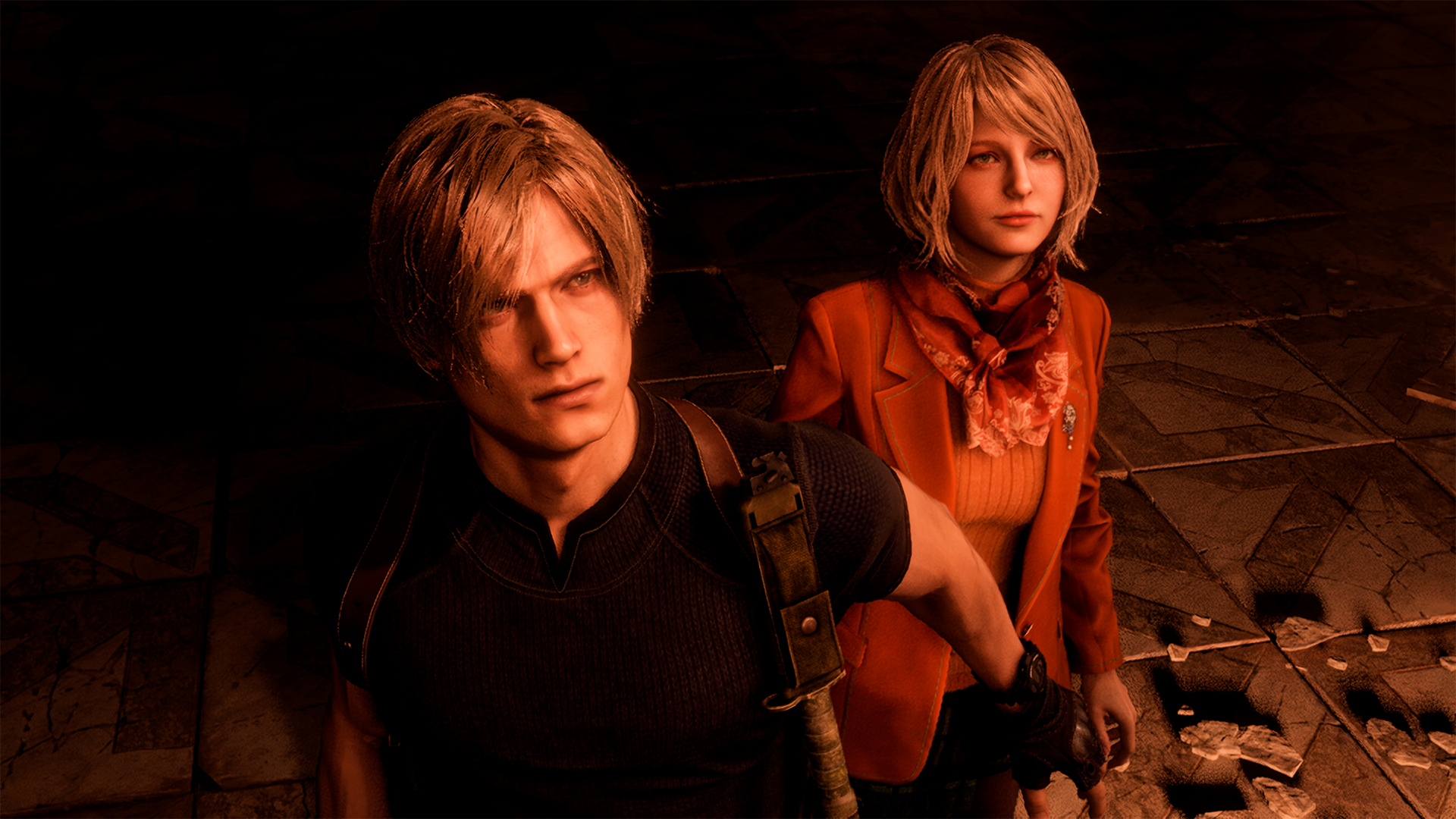
There are 16 chapters in RE4 with three primary areas to explore: the village, the castle, and the island. The horrors multiply with each new location visited. Although none of these environments are anywhere any sane person would like to visit, the RE Engine brings these locales to life in stunning ways. Environments are lush with detail, taking what people remember about the original game and rendering it more realistically and vividly than ever before. Each area is distinct and never overstays its welcome, as the player spends just enough time there before moving on to the next. For Switch 2, I worried that some of the impact of this remake’s visuals would be lost, as it was optimized for PlayStation 5 back at launch. Other than a small bit of stuttering at the end of the game, I thought nothing of note was lost in translation. RE4 is stunning on Switch 2 and is a genuine feast for the eyes.
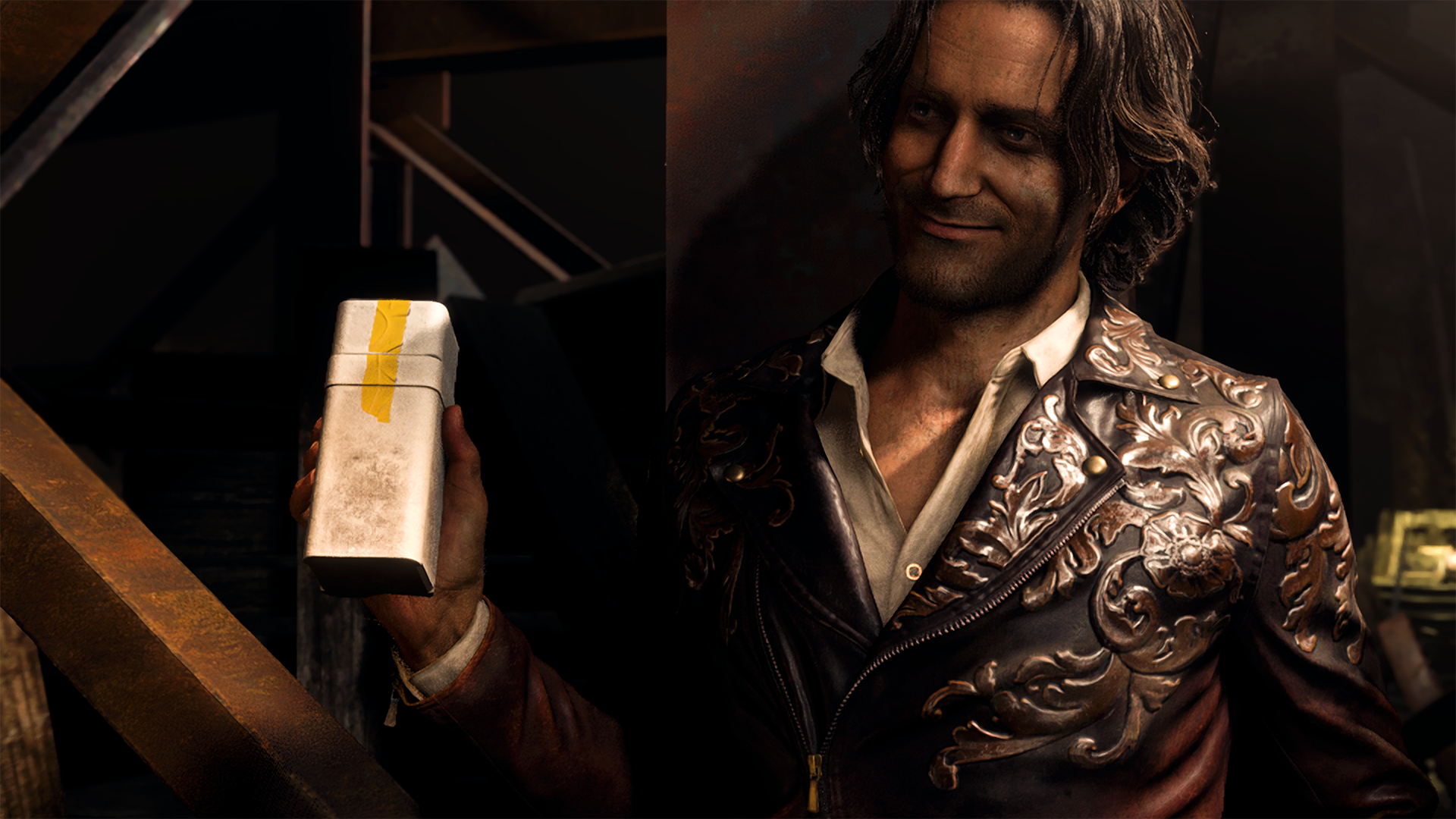
As far as performances go, hats off to the entire voice cast for a job well done. Leon, voiced once more by Nick Apostolides, is in a different place than he was in the previous game. Here, Leon is no longer green around the ears as he was in RE2. After spending time in the military and with the horrors of Raccoon City under his belt, this Leon is a little grittier and wearier than his younger self. Ashley, portrayed by Genevieve Buechner, is great as the outsider in this story; she’s not used to violence and battles, but she’s adaptive and helps Leon in getting the mission accomplished. She’s not portrayed as a weakling, but she’s also not unrealistically shown as a gun-wielding combatant, either. Luis Serra, the researcher with a guilty conscience, is played by André Peña to perfection. He’s got a dark past but tries to keep things as light as he can, cracking jokes, asking for smokes, but also holding his own in a fight.
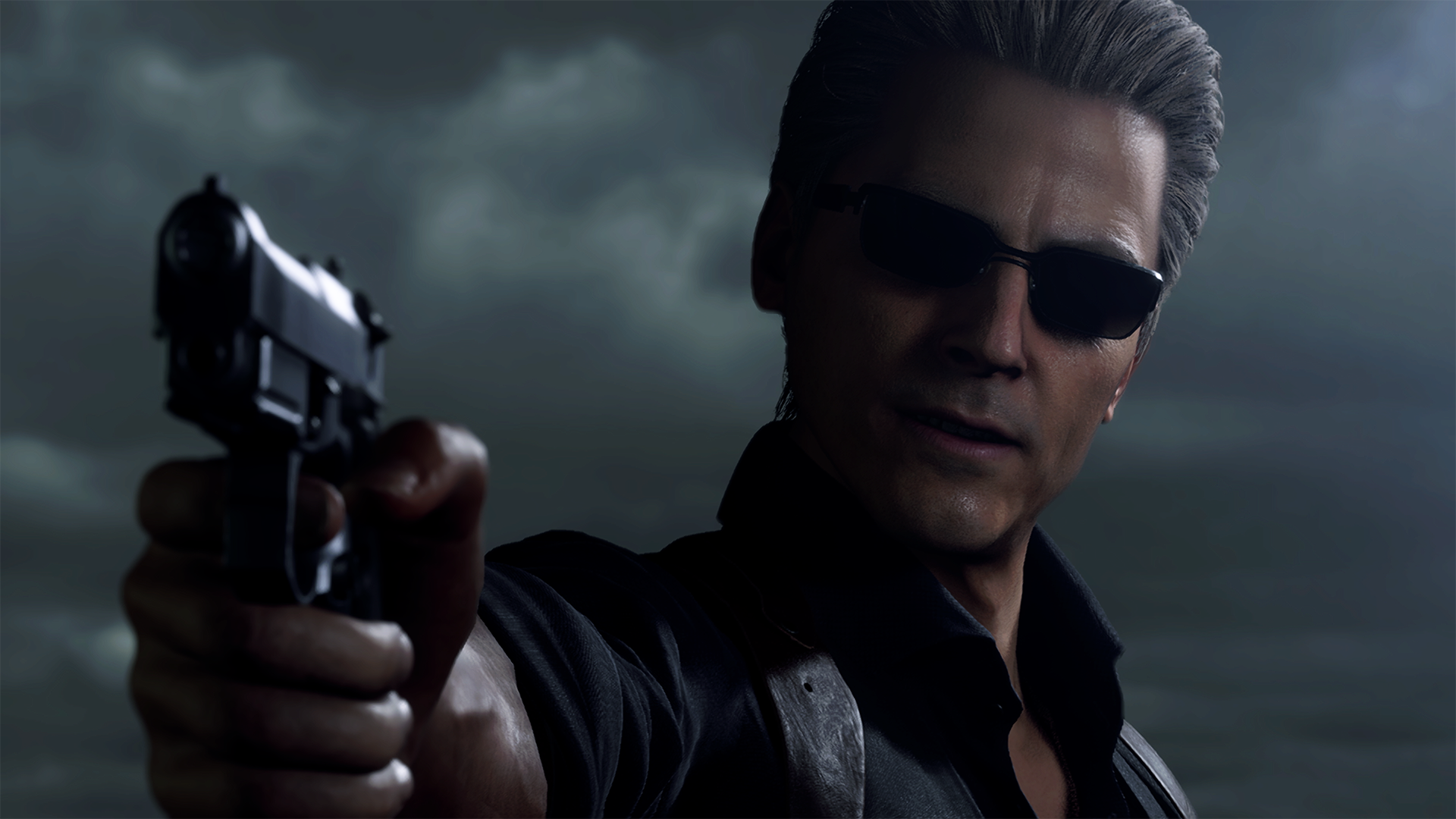
When we move beyond the core trio, however, some of the performances leave something to be desired. Not because of any failing by the actors, but instead due to the direction. RE4 remake has a much darker tone than its progenitor. The campy one-liners and goofy vibe that can be found throughout the original have been largely jettisoned in the remake. Leon’s humor is much more subdued, and some of the funnier jokes (“Los Illuminados? That’s a mouthful.”) are almost all cut. Ada Wong, the femme fatale from RE2, is back for RE4, but the delivery of her voice actress Lily Gao got a lot of criticism when this game first came out. I guess I’m going against the grain here, because while I can see how some people perceive Gao’s line delivery as sleepy or disinterested, I thought the tone perfectly suited the type of person Ada is.
The performance I was most disappointed in was that of Lord Saddler. Played by Christopher Jane, this Saddler is a shadow of Michael Gough’s flamboyant, over-the-top portrayal. While it works within the more serious, somber world of this remake, it only serves to make the new Saddler less engaging and less memorable. Oddly, Marcio Moreno, who plays Ramón Salazar, is allowed to be as pompous and ostentatious as the original performer. Why not let both ham it up, Capcom? As for the narrative itself, while it’s not especially deep, there are some genuinely good moments here, including new ones, like Leon and Ada’s conversation on the boat, and reworked ones, like changing the party responsible for the fate of Luis. That last one I felt was a great way of transforming the relationship between Leon and another character, adding another layer to their meeting later in the game.
If anything is a crying shame in the RE4 remake, it’s that so many things were cut out from the original. I know I moaned about this already, but it’s worth mentioning again. Sure, some sequences were simply changed, like Ashley piloting a crane with a wrecking ball instead of a bulldozer, but others were omitted entirely. U-3, as mentioned above, as well as the prison sequence, feel like critical things to have left on the cutting room floor or shifted over to Ada’s DLC. The dragon room is another sadly removed sequence, where originally Leon navigated a deadly hallway with giant, golden dragon statues and swarms of enemies. I realize that with a remake this sort of thing is bound to happen, but it was a letdown, nonetheless.
The Mercenaries
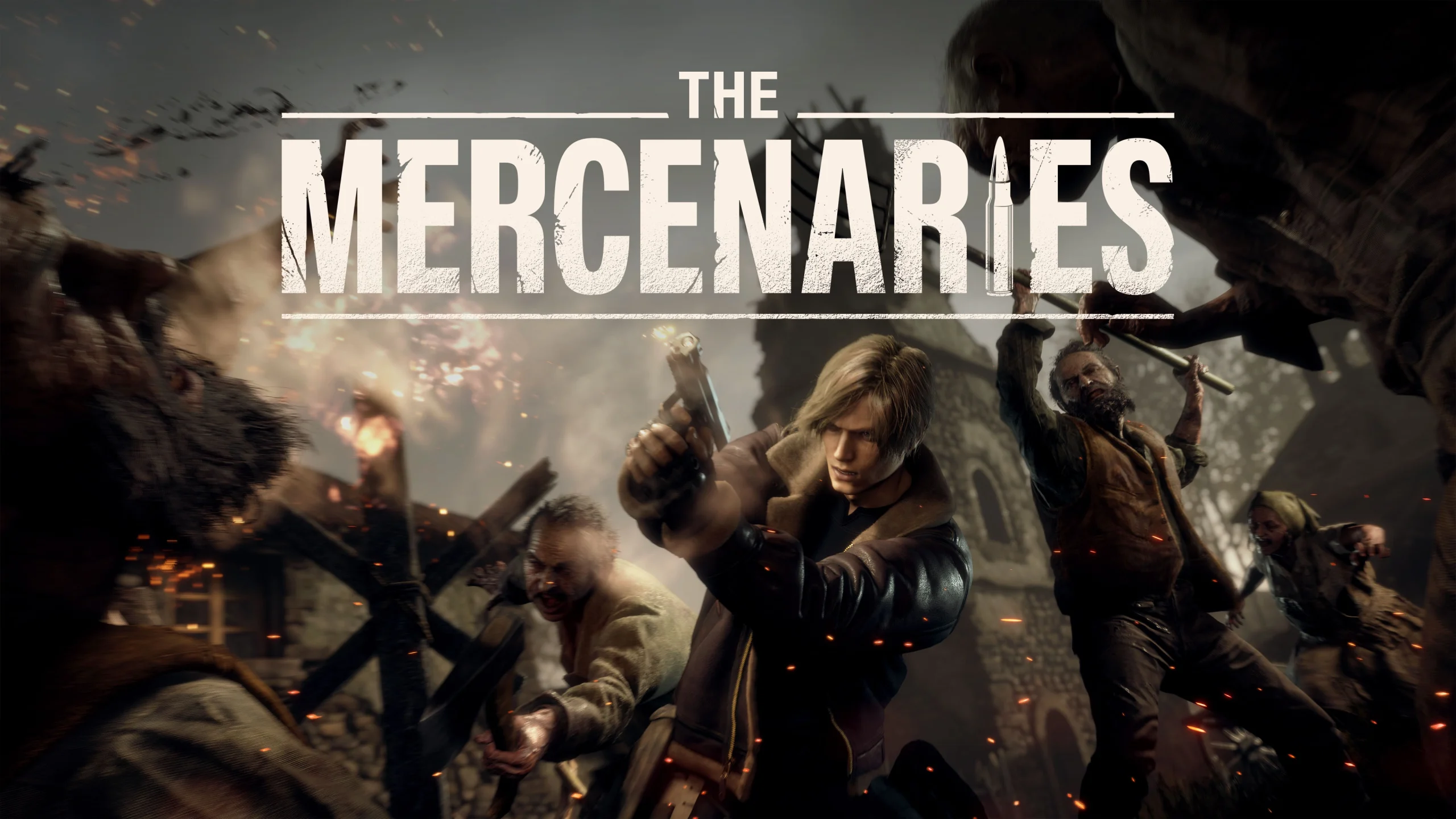
This returning, beloved Resident Evil game mode is a combat-focused experience featuring multiple characters from the campaign (and beyond) in a struggle to stay alive for as long as possible. Players unlock additional characters to choose from as they progress through the mode, as well as special weapons to use in the main campaign. I mentioned earlier how fun the combat in RE4 is, so it was with a lot of excitement that I approached Mercenaries. There is no need to be stingy with ammo, as maximum devastation is the only goal. The more enemies killed, the more time on the clock, and there are time expansions to find throughout each stage to extend the battle further. It can definitely be a stiff challenge, but no matter how hard things might get, there’s always the urge to give it one more go to see if you can topple your high score. It’s a diversion, yes, but an excellent one.
Separate Ways
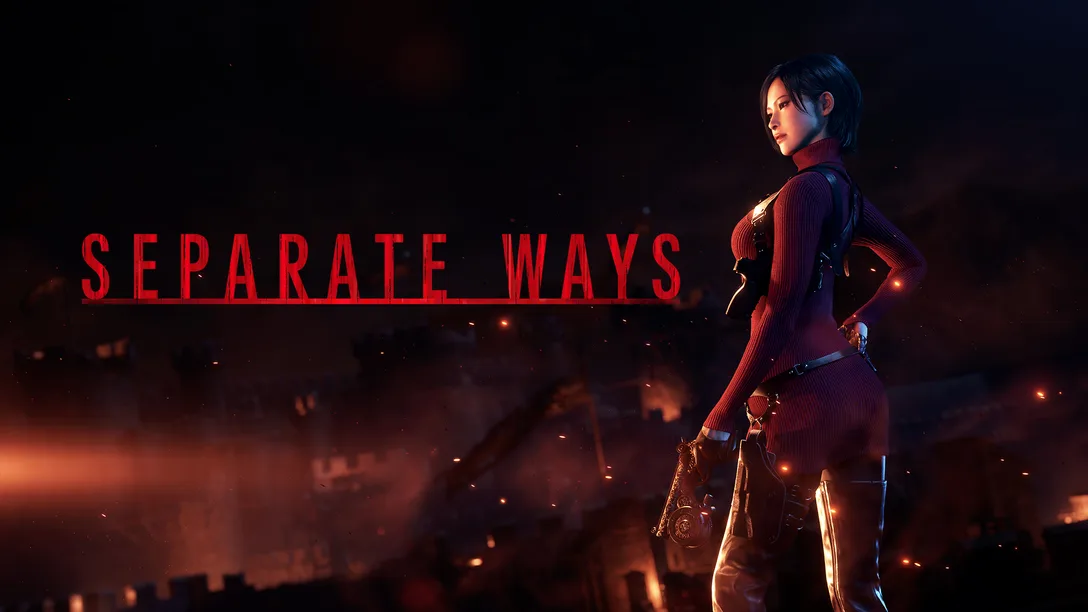
Ada Wong’s campaign returns as DLC for the RE4 remake, and it, like the main game, is a wonderful reimagining of the original. While the campaign sticks pretty close to the first RE4’s storyline, the new Separate Ways takes more liberties. It’s longer than the original, and features Luis in a very prominent role as he aids Ada on her mission. Separate Ways shows the things Ada does around Leon throughout the adventure, including distracting enemies and opening up routes for him, as well as how she deals with her own Plaga infection. Ada remains the morally gray character that she is, but she is portrayed here as having serious misgivings about helping her client, Albert Wesker, in retrieving the amber sample he wants. Separate Ways comprises roughly three to five hours of additional content, with new mechanics like Ada’s grapple and AR eye implant to add variety to her story. And some of the cut content from the original game makes it here, including U-3, the ski lifts, and more. There are also some unlockables that will transfer over to Leon’s story that make the effort here worthwhile. It’s an enjoyable expansion that is definitely worth a play if you enjoyed the main game.
Conclusion
I don’t know if I’d go so far as to say that this remake of one of the greatest games ever made is also one of the greatest games ever made, but it’s darn close. I didn’t even crack into everything in this review; there are cosmetic unlockables, including a jacket for Leon that I must own and crazy sunglasses that are wildly out of place and, thus, hilarious; CP points earned from in-game accomplishments that can be used to unlock all sorts of collectibles and extras; filters to alter how the game looks; the ability to toggle legacy music and UI sound effects. It’s a lot, dear readers, and all of it coalesces into a survival horror phenom that takes the best of the original and mixes it with new, bright ideas. In some cases those changes shine brightly, while in others maybe not quite so much. Regardless, I would argue that even the most diehard fan of the original RE4 will have a lot to enjoy about the remake, while everyone else (or those who aren’t quite as picky) will love the heck out of it. This is a must-play for Switch 2 owners.
Nintendojo was provided a copy of this game for review by a third party, though that does not affect our recommendation. For every review, Nintendojo uses a standard criteria.