
Capcom didn’t invent survival horror games, but the company certainly became the authority on the genre when it released the original Resident Evil on Sony PlayStation back in 1996. The game has been followed by eight mainline installments and countless spinoffs, and with the release of Resident Evil: Requiem for Nintendo Switch 2, the ninth core title has proven that there’s a lot of blood left in the series’ veins. While Resident Evil: Biohazard and Resident Evil: Village are both fine games, those titles made various changes and tweaks to reinvent/realign the series, whereas Requiem pulls things to a nearly perfect center that captures virtually everything about the franchise that fans love. Outside of some very small performance woes on Switch 2, this is a premier game that sets the stage for the series’ future and reminds everyone why Resident Evil is the king of survival horror.
Minor Spoilers Ahead for Resident Evil: Requiem
When Requiem was shown off during Summer Game Fest last year, it made quite the splash. Promises of a return to proper survival horror, a new protagonist, and a new setting had all the pomp and circumstance befitting a Resident Evil game. However, in the wake of Village being softly received, especially compared to Biohazard, there was at least a little trepidation among fans. Would Requiem truly be a return to form, or just another experiment wearing the skin of a legacy character or two? For me, these fears were assuaged with the reveal of a chunk of gameplay during Play Days directly after the SGF teaser.
In the PD demo, we were treated to our first glimpse of Grace Ashcroft, the new protagonist, and her initial encounter with The Girl in the Rhodes Hill Care Center. Played from first-person, it was dark, tense, and harrowing as Grace made one horrific discovery after the next, all while evading the lurching specter nipping at her heels—all without a single weapon to defend herself. The demo ended with the reveal that the entire game could be played from either first or third-person, something that warmed me to Requiem even more. Flash forward a bit and fans would come to learn that Grace would be joined by longtime series hero Leon S. Kennedy, with a split between stark horror and action between the two protagonists. The stage was set. Now, could Capcom deliver?
The answer is, yes, and then some. Requiem will hands-down be one of the most revered entries in Resident Evil history. Setting remains one of the key elements of any survival horror game, but especially in Resident Evil, where fans wonder about the connections between the location and series’ lore right up until release. Some of you might have been worried that stepping over luggage and pillow mints in the Wrenwood Hotel had the potential to get a little repetitive, but while I believe Capcom could easily pull off an entire game in that setting (keep that in your back pocket, Capcom), Requiem merely begins there before branching off to… places.
Oh, what places you will go. Half the fun of Requiem are the locales. The hotel, the care center, and two other spots that I won’t spoil here (and I encourage you to not spoil for yourself if you’ve managed up to this point to keep the plot secret). Now, admittedly, some of these locations are a tad rote if you want to nitpick, but honestly, what isn’t at this point when it comes to survival horror? Besides, I think that the… familiarity, in this instance, is fitting for the plot, rewarding for longtime fans, and a solid introduction for newbies. What’s more, Capcom was very playful and creative with the environments. Even if you think you know what’s coming, there will be some small twist or tweak that elevates the whole experience.
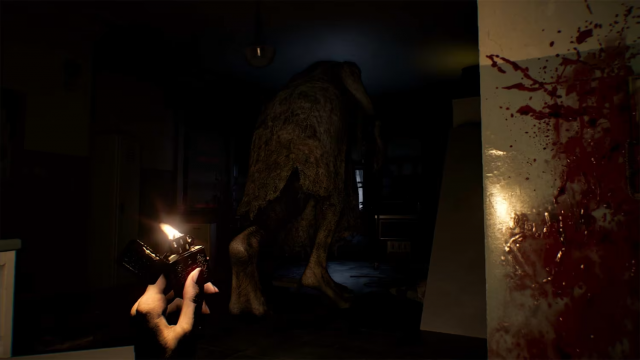
It also doesn’t hurt that everything is just so dang pretty in Requiem. No, not just Grace, the graphics. What? Leon?! Anyway! As I was saying, the visuals in Requiem are top notch. Environments are jammed with details, and the lighting is truly something else. There are areas that are so enveloped in darkness that the presence of light actually becomes uncomfortable, lest the hulking Girl find you hiding in a corner. The sense of dread is amplified by all of the grizzly details, like blood spatter and streaks all over the halls of the ward, bodies hanging lifelessly (and sometimes not-so-lifelessly) from conveyors, and even the remains of downed zombies that might reanimate.
Sound also plays a critical role in Requiem. Enemies make distinct noises as you make your way through the game world, noises that prove pivotal to surviving. From the creaking chains of The Girl to the gurgling and moaning of zombies, there are a bunch of different sounds to be wary of and on the alert for. And you’ll be on the alert for the bulk of your time playing Requiem. The zombies have taken yet another evolutionary leap here, in some cases now retaining vestiges of their humanity as they mill about as the undead. A behemoth chef continues to cook, a maid smears blood on the walls as a twisted way of cleaning, and singers belt out haunting, whimpering ballads.
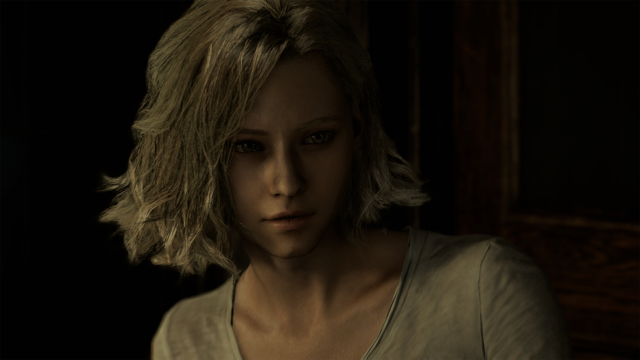
All of these details coalesce into an environment that feels alive and dangerous every step of the way. Of course, all that danger needs a fittingly violent reaction, and violence is something Requiem is very good at. Capcom has the same core gunplay at the heart of Leon and Grace’s story segments, but where Leon can bull his way through opponents on top of shooting them, Grace isn’t quite as strong and thus requires a tad more finesse. Skirmishes carry out similarly for the duo throughout the campaign, but the differences between the two heroes keeps things fresh and often offers new perspectives on how to handle foes, in some cases.
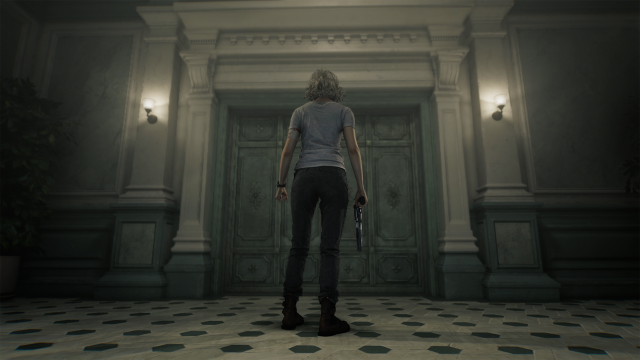
As has become common in the mainline RE games, specific body parts of enemies can be targeted for varying degrees of damage. Once staggered, enemies can often be smacked with a melee attack, which helps mix up combat and conserve ammo. Requiem’s action feels like a solid mix between the arcade-like shooting of Resident Evil 4 and its remake, and the more semi-grounded shooting in the remakes of Resident Evil 2 and 3. A new wrinkle comes in the form of axes and spears that Leon can hurl at enemies, effectively turning opponents’ own weapons against them. Grace, meanwhile, can sneak up on foes and administer a dose of meds that will make many of them explode in a shower of blood and gore. The game recommends you play in first-person as Grace and third-person as Leon, but you really can go about Requiem however you want. I will say that unlike Village, Requiem plays like it was designed to truly handle both perspectives. If you want things to be that much scarier, first-person will likely be the route to go, as it limits your field of vision and makes enemies feel more in your face.
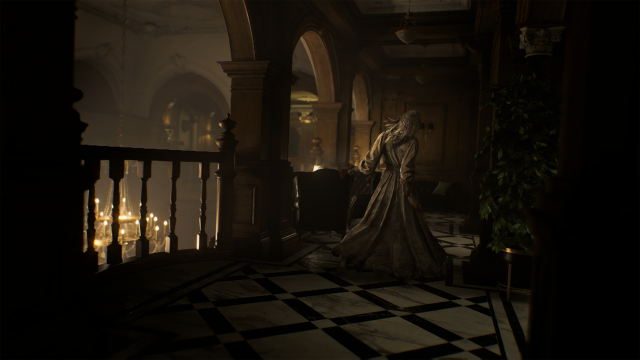
That part about blowing up zombies is important, by the way, as Requiem introduces a new type of zombie that is reminiscent of the GameCube Resident Evil remake’s Crimson Heads. Meet Blister Heads, zombies that re-reanimate with a mutated, bubbled cranium and a much more vicious disposition. Blister Heads are faster and stronger, not to mention more aggressive, and take many more bullets to down. If you pump them with meds before they can re-reanimate, however, they’ll explode and be taken of the playing field, so to speak. Of course, with limited resources at your disposal (and depending on the difficulty level), you’ll have to be strategic in deciding when to do a stealth kill or when to wipe a potential Blister Head from the map.
These sorts of decisions are found throughout Requiem. At one point, Leon finds himself teetering on sheets of glass and must decide which ones to blow out, taking enemies along for the ride, versus which to keep in order to continue progressing. There are other foes that require careful consideration before approaching, including a gluttonous behemoth named Chunk that roams the ward, Lickers, and even some living, breathing humans. Again, I won’t spoil anything, but I will say that there are faces longtime players were likely convinced they’d never see again, and a showdown, well, a showdown that will get RE nerds pumped.

All of that isn’t fan service, either. The story revolves around Grace and her role in a leftover Umbrella scheme, as well as something called Raccoon City Syndrome, an illness that is afflicting survivors of Raccoon City. The central villain of the game, Dr. Victor Gideon, is a nauseating, captivating creature. Unlike the zombies who retain portions of their personality, Gideon is in seemingly full command of his faculties, albeit still very much crazed and devious. Antony Byrne chews through his scenes, and while for a time he shares the spotlight with another enemy, this is very much his show. Gideon isn’t quite as over the top as some of the classic enemies in RE history, but he has carved out his own space as one of the best.
Grace, voiced by actress Angela Sant’Albano, is similarly well-cast and acted. Grace comes across as a real person the way she reacts to the madness happening to and around her. Sant’Albano’s delivery of Grace’s lines is excellent; her voice trembles at all the right times, and she manages to be simultaneously strong and vulnerable. She’s a far cry from the modern day unrealistic portrayals of female characters found in many (particularly Western) contemporary video games. Grace can handle herself in a fight, but isn’t afraid to accept help when she needs it.
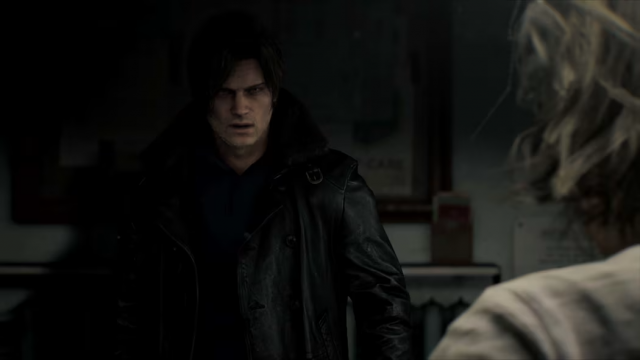
Leon, voiced once more by Nick Apostolides (from RE2 remake onward for all you Nintendo loyalists who only know either Paul Haddad or Paul Mercier), is similarly impressive. The only thing that holds back Apostolides is that he’s generally been a smidge too restrained in the part. I know that a lot of that comes down to Capcom’s direction, but it’s always been sort of a letdown—until now. I think that Apostolides has found his rhythm as Leon with Requiem, and given the character is older than ever (somewhere in his 50s here), everything about the portrayal gels perfectly this time around. What’s more, Leon is never sacrificed at the altar of modern day storytelling. He’s depicted as heroic, is never cut down at the expense of Grace, and kicks butt every step of the adventure.
That does bring me to one gripe, but it’s a broader concern I have with Resident Evil as a whole. Namely, that Capcom needs top stop aging these characters. Do I like Grace? Sure. But outside of Grace and a couple characters here and there, Resident Evil is largely held aloft by the core cast introduced in the first three games: Chris and Claire Redfield, Jill Valentine, Albert Wesker, Ada Wong, Leon S. Kennedy, and a few others, remain the heart of the series. Really, who else is there that fans love and clamor for? Does anyone even remember Jake Muller or Helena Harper? Ethan Winters isn’t even above ground at this point. How does Capcom and Resident Evil benefit from making these characters creep closer and closer to being geriatric? Leon is inching towards his 60s at this point, which means it’s going to be a lot harder to factor him into a future installment and expect him to take on hoards of zombies and monsters.
Sure, Resident Evil could eventually provide us with someone(s) to expand the lore and capture the hearts of fans, but after 30 years it’s seeming less and less likely. But heck, even if that does happen (I wouldn’t say no to seeing Sheva make a comeback), again I come back to… why? Why make them old? I don’t particularly care about realism in a game with giant spiders and clones. Keep it grounded-ish, but if you opt to go the Marvel/DC Comics route and age characters incrementally I think in the long run that’s the much smarter way to go. Keep Leon at 50 for the rest of time and we’ll all be good when he pops back up in Resident Evil 12 or whatever.
One other concern I had that does impact Requiem is the aforementioned semi-coherent zombies. I think the eerie way that these members of the undead pantomime some of the actions of their old lives is delightfully unsettling, but that it’s ultimately undercut by their dialogue. Not entirely, mind you, but enough to be distracting. The issue primarily is that the dialogue can sort of make what they’re doing humorous when clearly the mood is supposed to be serious. Of course, it stops being funny when one of them tries to murder you, but still, I wish these zombies were mostly silent, instead. Although kudos to Chunk, whose ravings legitimately made me chuckle as I tried to keep the heck away from him as I wandered the ward.
Anyway, going back to the gameplay, I was also taken with the game’s inventory and weapons upgrade systems. The attache case is back for Leon, in all its Tetris-esque glory. Manipulating items to fit inside is always weirdly compelling. Grace, meanwhile, depends on hip pouches to house her items, and is far more dependent on using the Item Box to swap inventory in and out. Again, this is a nice balance between classic and more modern Resident Evil, and both work well. As for weapons, players are free to attain multiple different guns by the time Leon steps more firmly into position as the primary protagonist, and from there they can be fitted with numerous custom parts to improve aiming, extend ammo, and so on. The handling of each weapon feels distinct and most have a meaningful upside and downside that will position players to really have to determine which best suits their play style.
These are important decisions, make no mistake, because you’ll be playing Requiem a lot, including post-game content. There are various unlockables to attain, a greater challenge to undertake, and so on. But make no mistake—this is what Resident Evil is all about. Compelling heroes and villains, frights and gross out moments, killer graphics, perfect sound direction, a huge list of weapons to play with. It’s all very nearly perfection with one caveat, which is Requiem does struggle here and there on Switch 2. I experienced some stuttering and slowdown during my playthrough that can’t be ignored. It wasn’t constant by any means, but it was regular enough that it was noticeable. Noticeable, but tolerable, although your own opinions will vary. I would wager that most won’t care about these small performance woes, but it’s something to consider if you’re a stickler about that sort of thing.
Resident Evil: Requiem is an utter triumph. It’s gripping and scary and thrilling in all the right ways. It’s a contemporary horror masterpiece that pays tribute to the series’ history while also marching it proudly into the future. Although it isn’t quite as pretty and smooth on Switch 2, Requiem is largely the same experience here that you’ll be getting elsewhere, and thus is a must-own for Nintendo fans. Definitely consider downloading the game today.