
When things that go bump in the night won’t stop knocking on your door.
Life is strange, but the afterlife is stranger — especially when its denizens refuse to stay there. Such is the reality of Kagatsu Village, a tiny, remote enclave tucked away somewhere in rural Japan and shrouded in secrets, scandal, and terror beneath its sleepy, peaceful facade.
Village in the Shade opens with a curious scene: the player, who is a small child, is harvesting crops from their farm, which is overflowing with an abundance of spring vegetables. Suddenly, a chicken appears and hops over a fence, and the player goes chasing after it. It leads you on a wild goose (or rather, chicken) chase through a mountainous, woodsy trail until the player stumbles upon a large, deep chasm and a person sitting in front of it. The player shakes the person, who is either unconscious or unresponsive. Suddenly, the player, with one last look back at the person, leaps with zero abandon into the chasm and falls presumably to their death. The next scene is of the player lying at the bottom of the hole in a pool of their own blood, surrounded by broken remnants of vermillion torii gates. The symbolism here is strong: in Shintoism, torii are believed to be portals, and that passing through one takes a person from the physical world into the divine realm. Vermillion is believed to ward off evil spirits. But these long-destroyed, forgotten gates at the bottom of this forsaken pit don’t seem capable of warding off anything anymore.
After the game’s title screen fades, the player is shown miraculously pulling themselves out of the hole and back up to the surface. They return the way they came, though bridges and fallen logs they crossed the first time become inaccessible as they walk back over them, and eventually stumble upon a young woman named Komako. Komako lives in Kagatsu, takes pity on the lost child, and decides to bring them back to her village to help them find their way back to their own home. However, fellow villager Kisuke is distrusting of the child, claiming they’re the spitting image of someone who disappeared from the village a long time ago. Rin, the village head, insists on giving the child a hot meal and arranging living accommodations for them. However, Rin’s “generosity” is soon revealed to be anything but.
Rin takes you to a small farm with a tiny house; it’s dilapidated and the land is overgrown with weeds, rocks, and trees. Despite the fact that the player is a small child, significantly smaller than any of the other villagers except the only other child in Kagatsu, Rin insists that if they want to stay on the land even temporarily, they need to pay over 456,000 yen. That cost includes a bunch of nonsensical fees, the cardboard bed she gives the child to sleep on, and the cost of the meal that was provided to the child at the village diner (which Rin told the owner to put on her tab). When Komako chastises Rin for expecting a lost child to have any money at all, let alone that amount, Rin tells the child that no one gets anything for free and that if they want to stay on the land, they’ll need to make it a place that’s useful to the village and become a real member of Kagatsu in the truest sense.
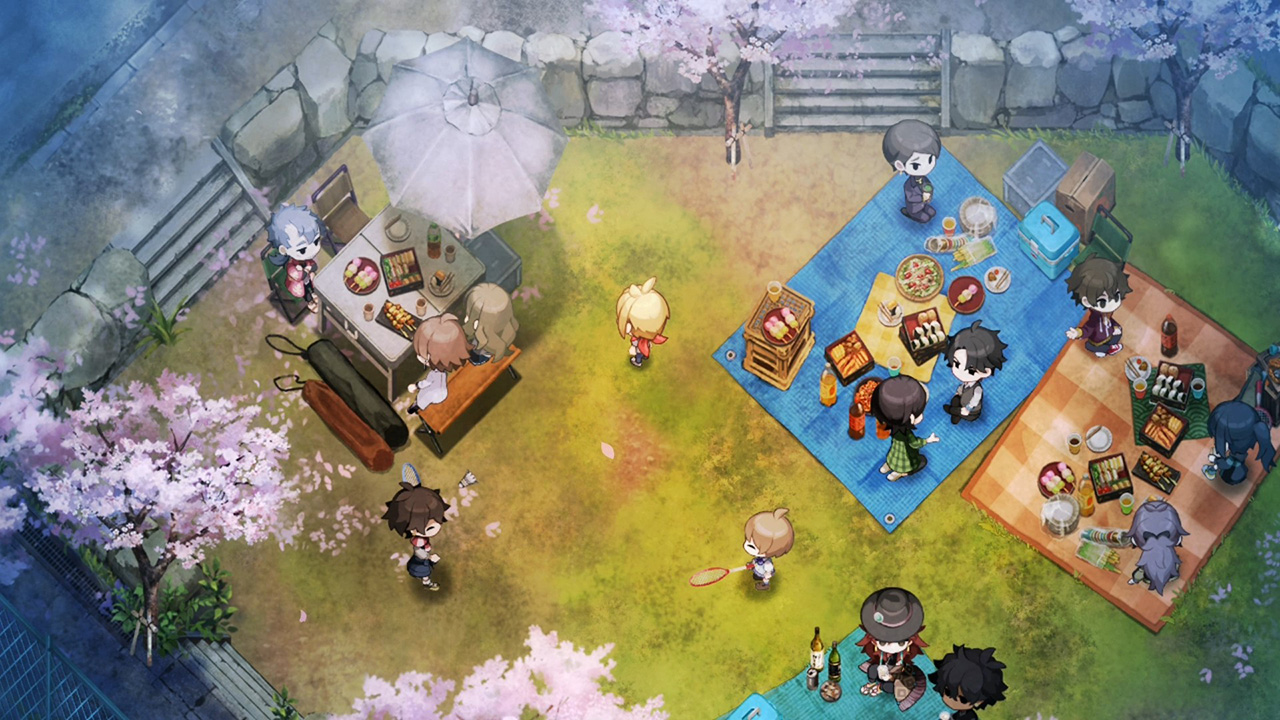
This opening sets the tone for the rest of the game: it feels like a fever dream, vacillating between something pleasant and something nightmarish. Village in the Shade begins in the spring, and as you start to roam the town and countryside you rapidly learn that, despite the overwhelming amount of natural beauty around you, there’s something very off and very wrong about Kagatsu, and that Rin is desperately trying to prevent you or anyone else from figuring out what that might be.
There’s a pretty barebones character customization menu at the start of the game, and the player is deliberately designed to appear androgynous by default to make it easy for players to choose whether they want to play as a boy or a girl by changing up their hairstyle and clothing. The default name is even Ame, which is a Japanese gender-neutral name. While clothing options are extremely limited to start, eventually a character starts coming to town every other day who sells boy and girl clothes and accessories.
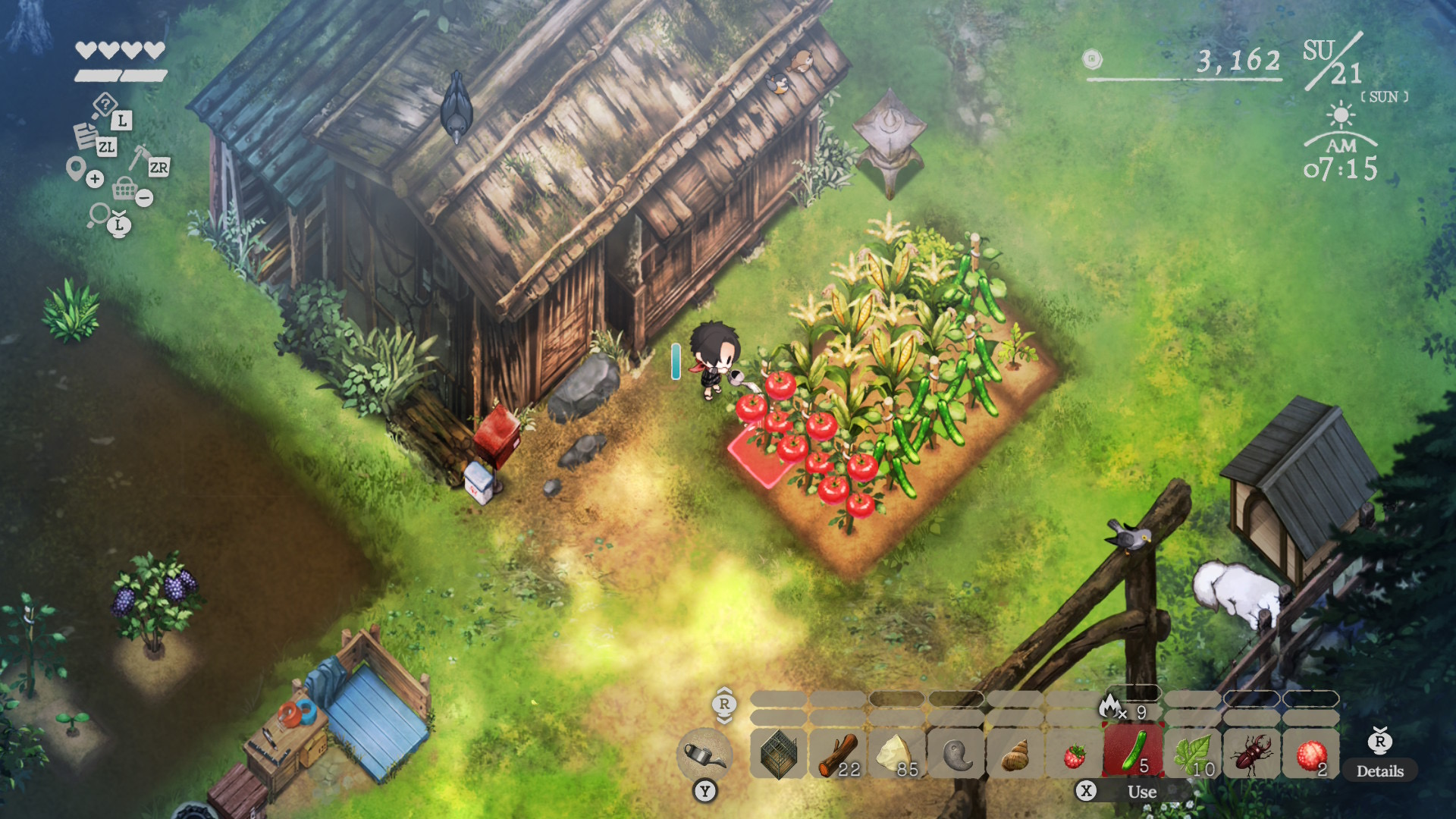
Completing your first tasks on the farm also serves as the game’s introduction to your basic mechanics. The inventory wheel is incredibly easy to navigate: pull it up with ZR, use the control stick to navigate to the farming tool you want to use, and then select with A. Use the item with Y. Hold L while moving to remain facing in one direction; this is extremely useful when using the watering can to water crops, which are arranged in a grid formation. Hold R while moving to stay rooted in one spot while you spin around to face different directions. Scroll through your inventory with the right stick, hover over an item, and, if usable in the moment, use it with X. Press + to bring up the town map, which shows where your neighbors are in real time and makes it much easier to navigate the winding, almost labyrinthine qualities to the town and the surrounding mountains and woods. While the UI has a lot going on, it was simple to pick up.
This is a farming sim that was made by a Japanese developer, so of course it’s got fishing. When you get a bite, a close-up of your line comes across the top of the screen; you have to tap a few spots on the line in time with a cursor that moves down the line until it reaches the hook. If your timing is perfect, you’ll reel in your catch, which could be either fish or literal garbage. You can spread fish bait (which you have to craft) if you want faster bites, but you don’t need it and I found that it really didn’t always speed up the process of getting a bite. Fishing is one of the fastest and earliest ways to make some serious cash, so I think it’s great that the fishing mechanic feels good and is easy and intuitive to understand.
As the game cycles through seasons, different seeds will be available to buy at the general store. But you have to be strategic about when you plant certain things. Some plants take longer to grow, so planting toward the end of the season would be foolish because the plant will be dead on the first day of the next season before it had the chance to fully mature. Some plants grow faster, and some even continue to replenish themselves throughout the season rather than provide only one harvest before having to be replanted. Different crops hold different values, and oftentimes the longer it takes to grow, the higher the sale price.
You can hunt different animals in the wild, but you’re required to get a hunting permit for each different species in the area before you can kill them. The bow is easy to use, but I felt like arrows didn’t fly nearly as far as they needed to, which was a problem with incredibly aggressive animals you needed to put space between, like boars and deer. But once I got the hang of it, hunting became fun and I eagerly wanted to take on the more dangerous animals (which can and will knock you out if you’re not careful). I thought it was a bit odd, though, that when you kill an animal, the animation doesn’t show them die, but instead shows them running off-screen. I wouldn’t have taken issue with this had it not felt incongruous with some of the violence shown toward animals early in the game, which I’ll get to later.
Your farm comes equipped with a shipping area, where you can take things out of your inventory to have Rin pick up in the morning to buy from you. The idea is that you’re supposed to be paying off the debt you owe for your land by providing the village with crops, meat, and other materials and goods. The nearby quarry is a rich resource of minerals and stones, including rare gemstones, and some of those materials can be smelted down to create things like glass rods or copper slabs to upgrade your tools and farm equipment. The quarry, which will take you down dozens of levels into the earth, is also said to hold buried treasure, but it also seems to be a source of other hidden secrets…
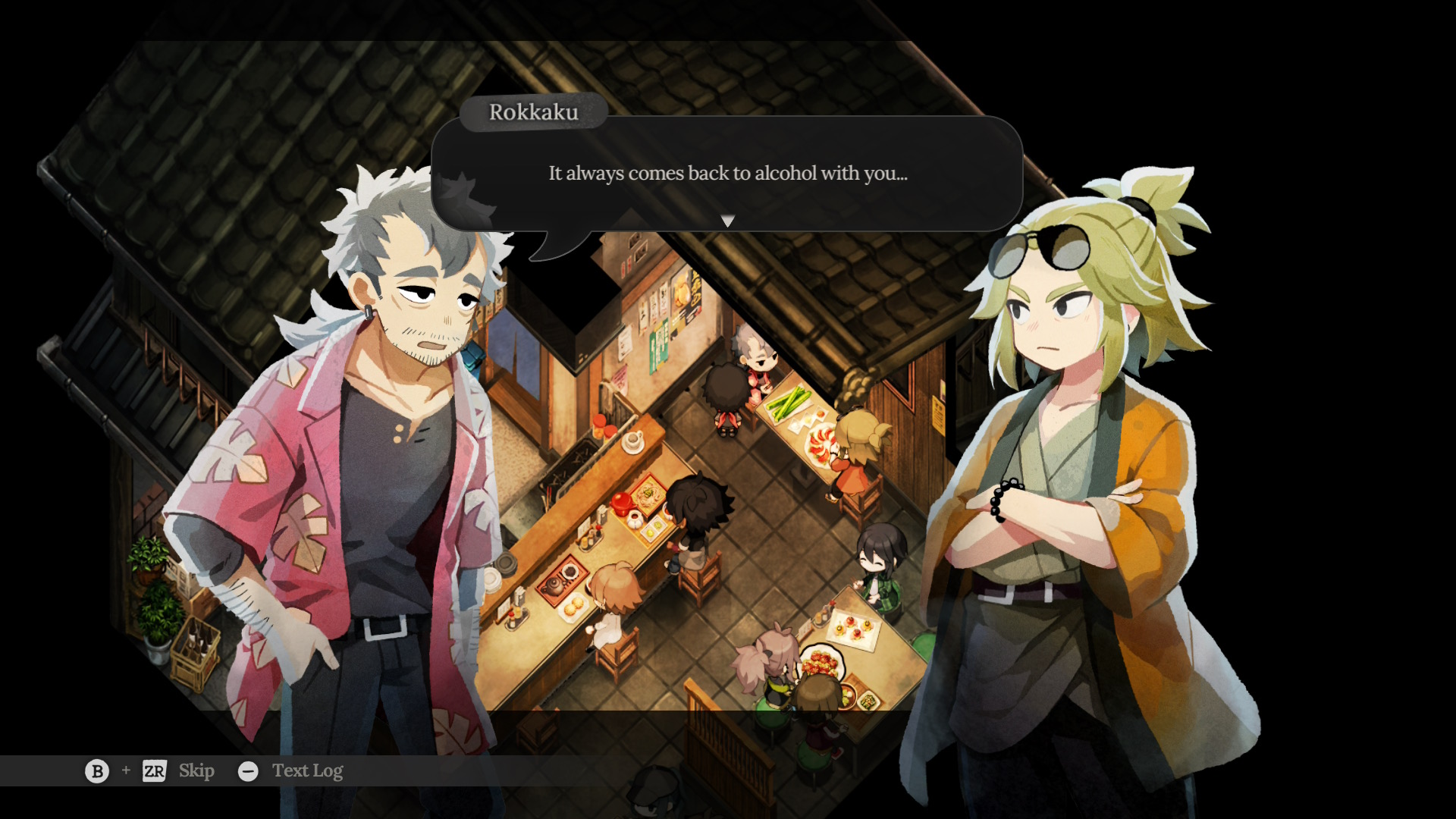
And on the subject of secrets, everyone in town seems to have some skeletons in their closets. When you first arrive in the village, Rin instructs everyone to ignore you because you’re a stranger, and one of the town’s eight strict rules that everyone must abide by is to not speak to strangers. It’s not until you participate in the town’s bizarre ritual of live animal sacrifice that you’re finally considered one of the gang and everyone can finally interact with you. But even then, there’s a distinct coolness between you and them that’s more pronounced with certain characters than others. You can get people to warm up to you by gifting them the things they like or completing tasks for them, but I just didn’t really love the dynamic between my character and the villagers. Maybe it was intentional that, despite hours of gameplay and bonding, everyone still felt a bit distant, but it gave me less of a reason to care about anyone when everyone felt like they were still holding me at arm’s length even when they were being incredibly friendly.
While I respect the game’s message about working for what you have, rather than accepting handouts, the entire premise of the game is a bit odd when you dwell too much on the fact that your character is a very small child. This is emphasized by the villagers repeatedly. Some of them believe that you might be a child who was prophesied to come down from the mountain one day, thus you might even be some sort of god or have special powers. Regardless, they’re totally ok with you running your own farm, hunting dangerous wildlife with a bow, restoring a dilapidated house, mining in the quarry, and in general living life as a full-fledged adult. This is in stark contrast to the only other village child, who’s basically the same size as you, is totally reliant on her father, and who really isn’t self-sufficient in any way. It’s a bit… strange. But I guess that’s in keeping with the entire game.
It’s also strange how flat-out stingy the villagers are with each other; everyone expects and demands payment for helping each other, and will remind each other how they don’t work for free. That’d sound reasonable if they weren’t living in a tiny, remote, godforsaken village, and if it didn’t seem to undermine the village’s sense of community and Rin’s constant harping on working for the sake of the village’s collective good.
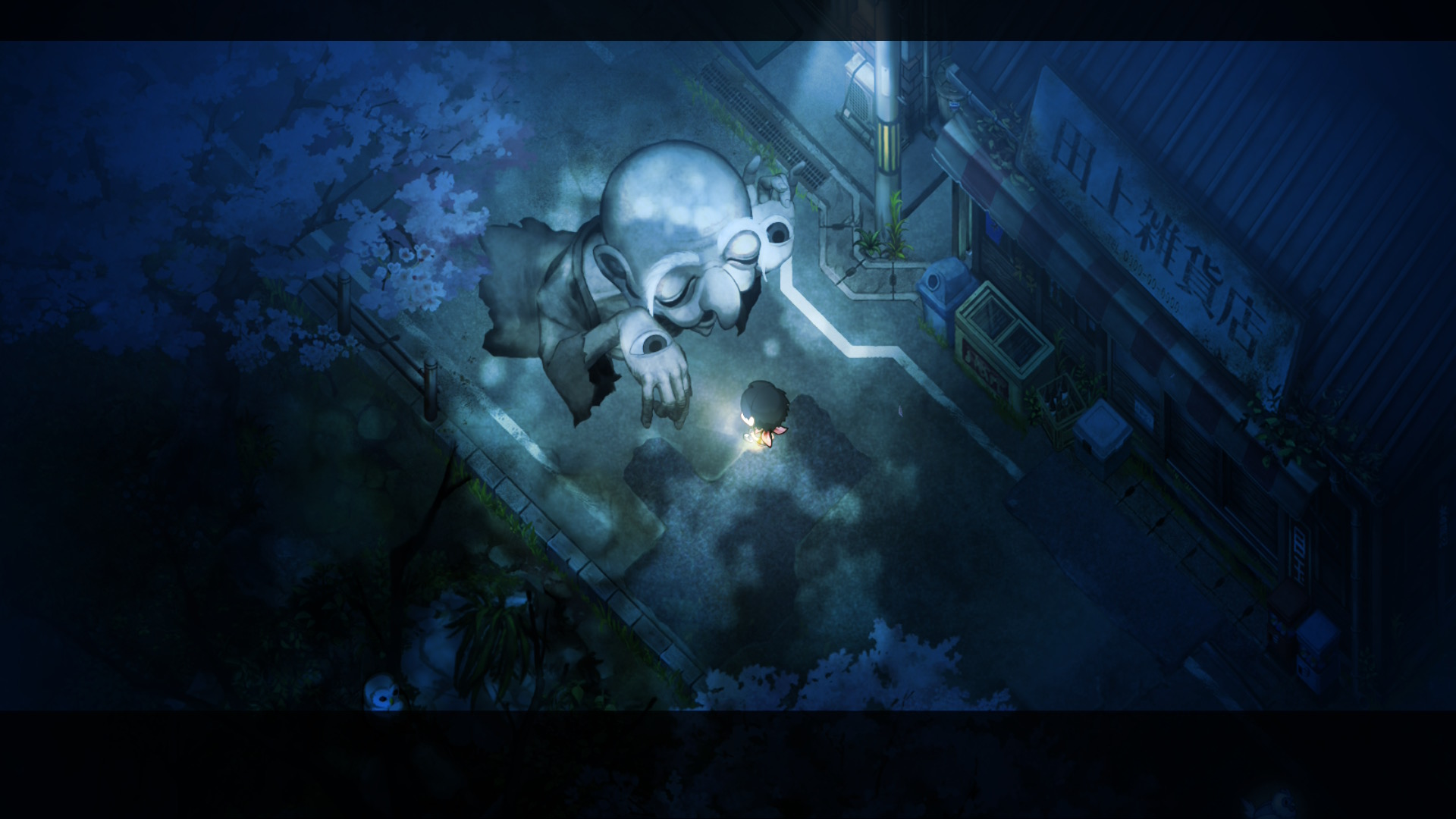
The village’s most important rule is to not go outside after 11:00 pm. All villagers must be back in their homes before that time or they’ll face severe consequences from Rin if caught. You wind up learning pretty quickly that there’s a curfew because the village is crawling with yokai and spirits at night — and they soon come knocking at your door. Every couple of days or so, after you go to sleep, something creepy will knock (or violently pound) on your front door at midnight. Once you answer the door and go outside, you have until 5:45 am to explore before you pass out from exhaustion. There are all sorts of unnerving, bizarre, and terrifying yokai around, none of which I was able to harm but all of which could cause serious damage to me. Some are less aggressive, even friendly, and will offer you a chance to barter for strange and rare items. Sometimes a fox would suddenly appear in the darkness and guide me to a phantom shrine, where I could make requested offerings in exchange for charms that would increase my stamina. There are also a number of items you can find on the ground only at night.
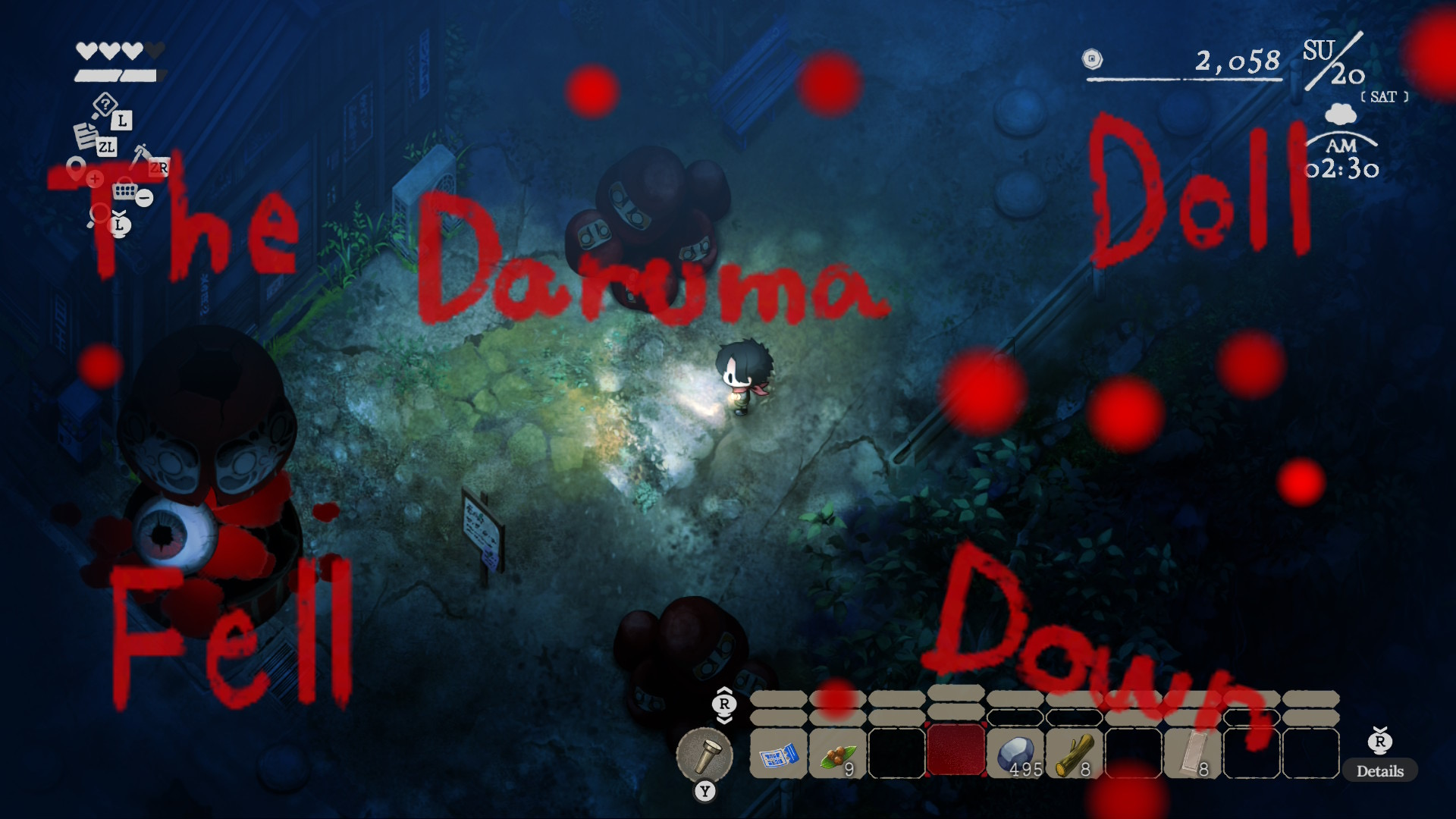
Expectations are vague during these segments. It wasn’t always clear what I was supposed to be doing while I was sneaking around at night, if there was anything I was supposed to be doing at all. So while I was avoiding the one-eyed gaze of spectral sentinels around every corner or getting chased by a yokai, I couldn’t tell if there was always a goal or if it was just “don’t die.” For example, there was more than one night where the yokai pounding at my door was a daruma, and the words “THE DARUMA DOLL” would flash across my screen when I walked out of my house. The town was then covered in piles of creepy, giant darumas, and eventually I was chased by a massive one. During one of these chases, the words “THE DARUMA FELL DOWN” came on-screen, and a creepy eyeball came out of the daruma, causing damage to me. I kept fleeing from it since your character doesn’t seem capable of physically harming the yokai. (I was also told this by a NIS America employee when I demoed the game at PAX West 2026.) So while I appreciated the opportunity for exploration and the thrill of avoiding the demons out to get me, I also didn’t always understand what the ultimate point was to some of these nighttime encounters.
I found the dark, terrifying environment fascinating, but I really disliked that I couldn’t freely choose to explore at night. The only time I was able to do so was when the spirits came hammering on my door. From a story perspective, it’s because your character doesn’t want to break the rules; if you’re still outside at 11:00 pm, your character will stop what they’re doing, note that they need to return home per the village code, and be instantly transported back to your house. You can’t leave, either. Yet your character is perfectly willing to answer the call of the yokai whenever they come around and risk getting caught and in serious trouble for wandering around all night. So it just didn’t really make any sense to me why I was limited in when I could go out at night.
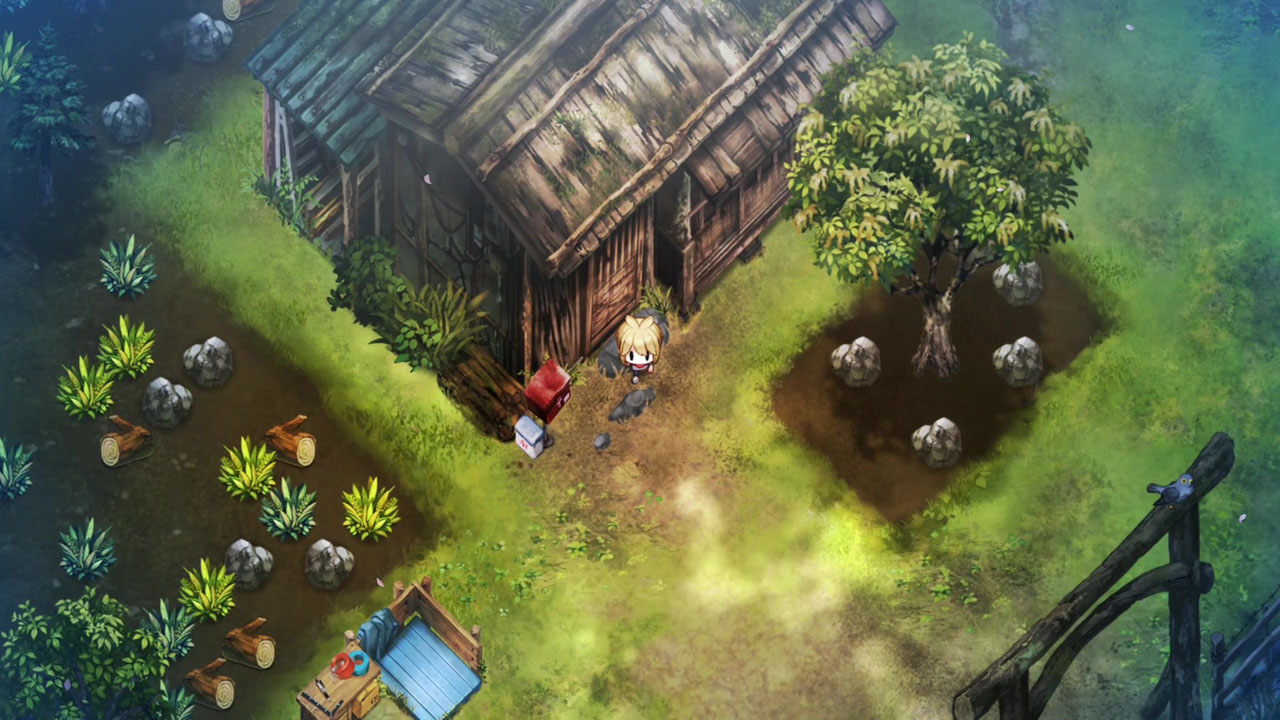
This game is a slow burn in every sense of the word. Increasing friendships with neighbors and animals, making money, and uncovering the dark, disturbing truth of Kagatsu Village gets stretched out day by day, week by week. Gaining access to the entire map is locked behind the hunting permits, which get increasingly expensive and cost tens of thousands of yen combined. As I mentioned before, fishing is a good money-making method, but the in-game days go by relatively quickly and fishing is a game of patience, with the clock ticking down as you stand waiting for a bite. There’s only so much fishing you can do in a day. So it takes quite a while to save up enough to buy all of the hunting permits, especially if you’re also interested in buying seeds for crops, livestock, supplies to upgrade your equipment, clothing, and furniture for your home. So if you’re not interested in grinding on the farm, in the quarry, in the woods for meat, or at the ponds for fish, this is definitely not the game for you.
I got satisfaction out of gradually improving my farm and making more and more yen. But I was also feeling the grind after a while. This game can start to feel a bit repetitive if you play it in long sessions, and it doesn’t help that the music starts to sound samey when you’re listening to the same village theme for 30-ish in-game days until the season changes. The flip side of that, though, is that the game’s music is quite nice, especially in the quarry. There’s also some effective atmospheric work in creepy places like the forest, where the music dies and you’re left with ambient noise and howling wind or just uncomfortable silence. It’s also a joy to look at — this game is absolutely gorgeous. The watercolor-like visuals made every frame look like a woodblock print or painting, whether you were admiring the natural beauty of the world around the village or the very cool imagery of the yokai and creepiness of Kagatsu at night. Interestingly, I was watching someone’s YouTube video of their PlayStation 5 gameplay and noticed some stuttering. I played the Nintendo Switch 2 version of the game, docked the entire time, and experienced no issues with the visuals at all.
I was heavily invested in finding out the dark secrets of Kagatsu and the story behind the origins of my character, but it felt like I spent so many days where nothing happened except toiling around on my farm or in the woods. I’ve played Harvest Moon and Animal Crossing, the latter of which I invested over 1500 hours into in New Horizons. So I’m quite familiar and comfortable with the slow-burn game. But the difference with Village in the Shade is that there’s a really intriguing story and mystery that begins to unfold from the game’s first scene, and it just feels like it takes so long to even begin to unfurl it once you begin life in the village. That’s not to say there’s no story in the games in the aforementioned series, but they don’t leave you on cliffhangers or dying to know why that villager was possessed and sneaking around at night, or why the library and clock tower are perpetually locked and inaccessible, or why the eerie, abandoned tunnel out of town just puts you right back at the entrance when you try to leave. Be prepared to be in it for the long haul with this game if you want to know what’s really going on with Kagatsu Village.
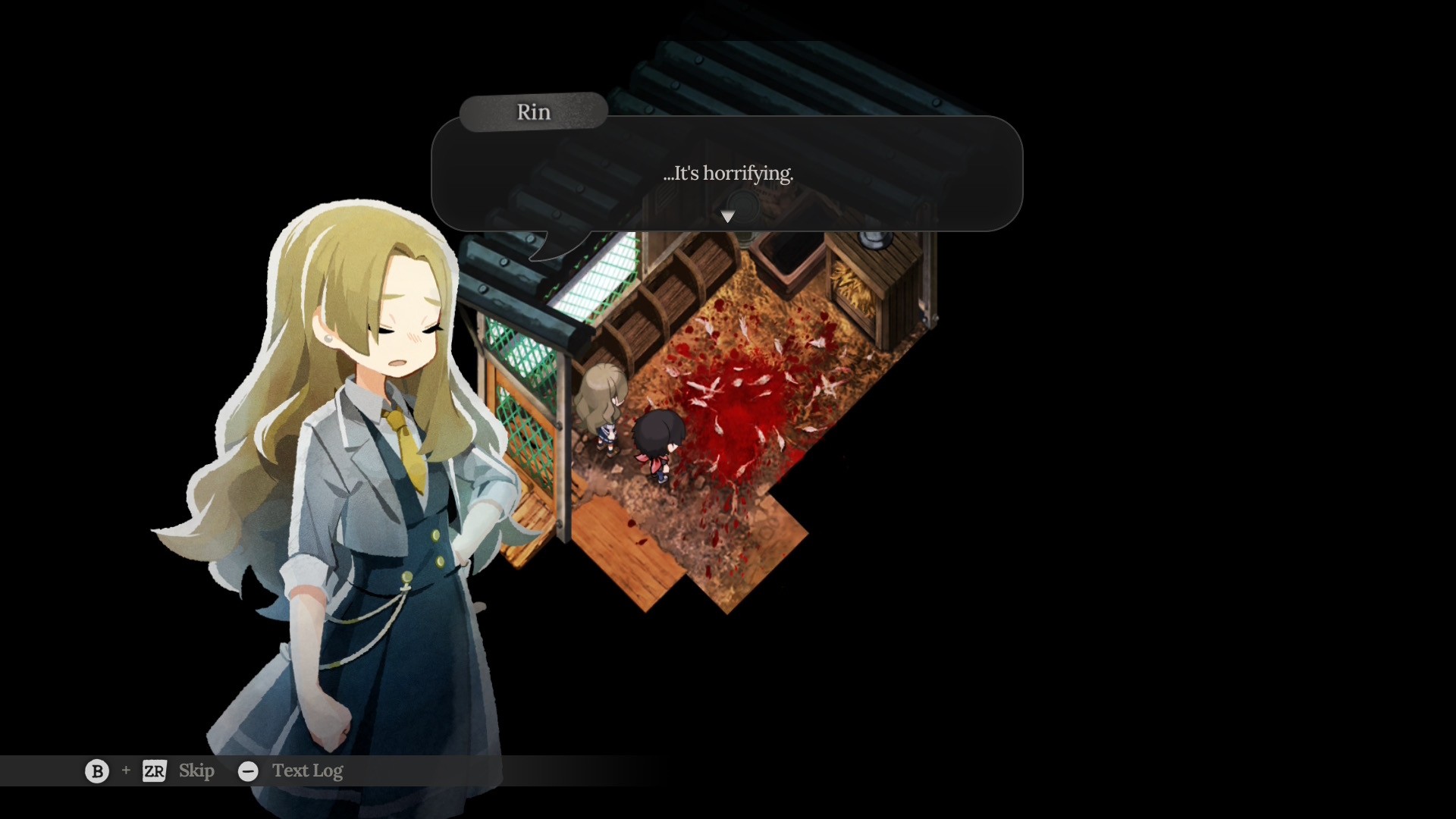
Also worth noting that if you’re sensitive to seeing small, innocent animals face sudden, brutal deaths, this may not be the game for you. Village in the Shade has two modes: Shade Mode and Sunshine Mode. The former is how the game’s story was intended to be experienced, with the horror elements and the creepy things that happen in the village. The latter ensures that nothing scary happens and the player isn’t able to break the village code. I’m not entirely positive if these instances of animals being sacrificed or killed happen in Sunshine Mode, since they’re part of the game’s main storyline. But in one instance, a baby goat is thrown, alive, down a deep well to sacrifice to the village god, and in another, a chicken that a young girl has been raising on your farm is stolen by a yokai from your coop, leaving behind a mess of blood and feathers. So just go in prepared if you’re not the biggest fan of this kind of imagery.
Village in the Shade has done something unique, engaging, and interesting with the farm sim genre. From the first screenshots and details I saw and read about the game, to the first demo I got my hands on, to the finished product, I was hooked on learning the truth behind Kagatsu Village’s terrible secrets. But the game could benefit strongly from better pacing and less vagueness, to the point where I wonder if the farm sim was the right genre for the story this game wants to tell. However, what it does well, it does very well, and the fact that I struggled to put down the controller some nights and just wanted to keep playing is a testament to that. I ultimately recommend giving this game a go if you love both farm sims and horror, but also if you’re looking for a unique experience and a game with a strong narrative. Go in with patience and steel yourself up to start breaking the rules to uncover the truth.
Nintendojo was provided a copy of this game for review by a third party, though that does not affect our recommendation. For every review, Nintendojo uses a standard criteria.