
It’s an inferior sequel, but does that mean it isn’t worth a play?
The remakes of Resident Evil 2 and Resident Evil 4 have come to be seen by many as games that are, if not equal to the legendary precursors they share their names with, then pretty dang close. They are at least arguably two of the greatest remakes ever made, so one might then assume that the remake of Resident Evil 3 must, surely, be on equal footing with its siblings. Well… it’s complicated. Yes, RE3 is a competent remake of the original, but a short campaign combined with a plethora of cut content, scripted Nemesis encounters, and missing game modes, make this the weakest of the remake trilogy. Weakest doesn’t mean bad, of course, but temper your expectations if you’re expecting RE3 to wow you on the same level as the other two remakes.
RE3 plays out as bookends to the events of RE2. It begins with Jill Valentine, one of the heroes of the first Resident Evil, trying to escape Raccoon City a day before the arrival of Leon and Claire. The former S.T.A.R.S. member has been in bureaucratic hell since the events of the Mansion Incident, unable to achieve any meaningful traction against the Umbrella Corporation and suffering from 24-hour surveillance by the company. Worse, outside of her apartment, Raccoon City is being overrun by zombie hordes infected with the T-Virus. Jill gets a frantic phone call from her former teammate Brad Vickers telling her that she needs to get out of her apartment—immediately. Before she can, the monstrous Nemesis bursts through a wall and begins to chase her, his mission to kill Jill and anyone else who knows about the secrets of Umbrella.

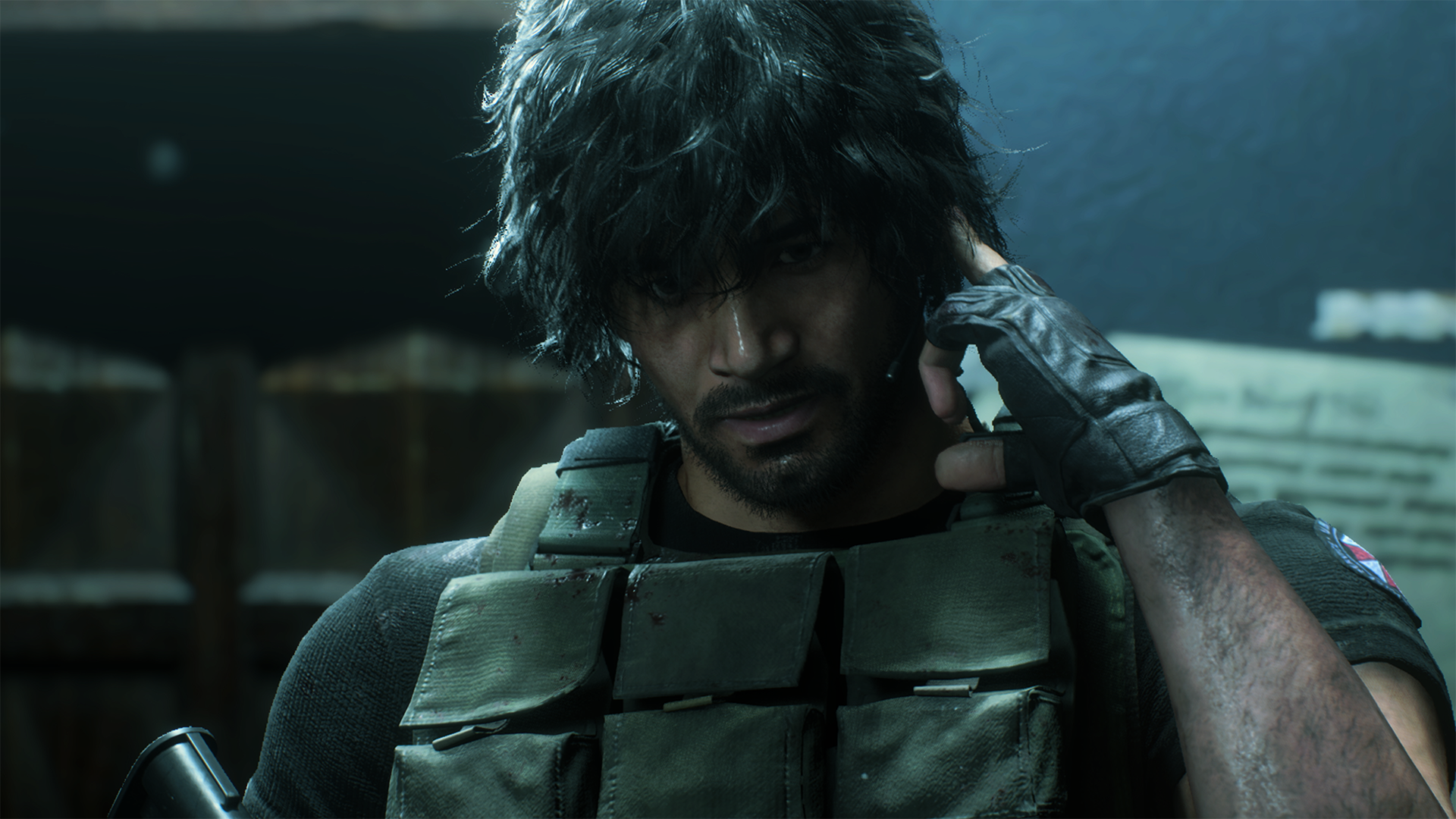
This chase is at the heart of RE3, with Jill always barely a step ahead of the relentless beast throughout the campaign. To help her in her quest for survival is Umbrella Biohazard Countermeasure Service (UBCS) member Carlos Oliveira. Carlos, despite working for Umbrella, has a heart of gold and genuinely wants to help the survivors in Raccoon City get to safety, Jill included. Jill is naturally wary of Carlos at first, only working with him in order to meet her own ends. As the adventure progresses, the two become closer, with Jill coming to realize that Carlos’ is as genuine as he comes across. By the end of the game, Jill and Carlos are a day behind Leon and Claire, who have already escaped, leaving this pair to not just escape the city, but also the radius of the bombs that are coming to wipe Raccoon from the face of the earth.
Jill, played by Nicole Tompkins, has already lived through the atrocities of the Spencer Mansion by the time RE3 begins, and the experience weighs heavily on her. Thus, Jill isn’t the light, exuberant spirit that Claire is in RE2, but is instead more mistrusting of the people around her and ready for betrayal at any moment. Tompkins imbues Jill with a lot of raw emotion, both in terms of anger (Jill is clearly pissed about everything that has happened so far), sadness (the loss of her friends), and exhaustion (she’s seen so much in a very short span of time). At the same time, even though it would be easy for someone in a position like Jill’s to be a total jerk, she remains a likable protagonist. Her mistrust of Carlos only makes sense, but it’s very satisfying over the course of the game to see her accept him as a true ally.
Meanwhile, Jeff Schine voices Carlos, and I have to say, I loved this performance. I guess I have a soft spot for Carlos; I’m Mexican and am so used to the representation of Latinos in pop culture as stereotypical first-generation caricatures that getting a character like Carlos was a major breath of fresh air. He’s genuinely likable, he’s cool, and you feel for him as he slowly comes to terms with the truth of what Umbrella actually is. His persistent need to keep everyone safe, most particularly Jill, is such an honorable trait and makes it all the more believable when Jill finally accepts him as an ally. I wouldn’t have minded seeing the two of them become more than friends, but it’s a wonderful relationship whether it’s romantic or not.
Hopefully it’s becoming clear that RE3 is a pretty different game compared to RE2. There’s only one campaign to speak of, and its events are running parallel to those in the previous game. When the original RE3 was developed, it was envisioned as more of a spin-off than a full game. It was eventually expanded a bit and turned into a proper numbered installment, but the origins of RE3 as an aside remained. Like Nintendo rapidly developing Majora’s Mask to capitalize on the enormous success of Ocarina of Time, Capcom wanted to maintain the momentum of the series after RE2 but couldn’t develop an entirely new game from scratch due to time constrains. To speed up the process, this meant whole chunks of the game world in RE2 were recycled, and Mr. X was retooled to be Nemesis, a scarier and similarly relentless enemy that went after Jill at random times throughout the adventure.
To compensate for the minimally different game world, Capcom experimented with a number of different things to keep RE3 interesting. More of Raccoon City was opened up for the player to explore, with some truly memorable environments like the Clock Tower, Raccoon Park, and the Dead Factory. A Live Selection choice system was incorporated, as well, which provided players with in-game prompts to make decisions that would impact gameplay. An excellent example of this is in the Substation, where Jill can either electrocute a pack of incoming zombies, flee from them, or do nothing and wind up face-to-face with Nemesis. Speaking of Nemesis, this Umbrella operative will pop up at different points to cause total Chaos until Jill defeats him or gets away from him. All of these tweaks and additions helped to make RE3 enjoyable, but nothing could quite belie that it was largely a remix of RE2’s assets, setting, and so on.
So, why mention all this? Because the RE3 remake attempts to do largely the same thing… but not as successfully. The combat, movement, and inventory systems carry over from RE2 remake to RE3 remake, with minimal changes (such as Jill’s ability to dodge attacks). There is still a larger focus on combat in RE3 remake like its precursor, with a lot of big set pieces to compliment the action. So far so good… until you realize how much Capcom took away from this version of RE3. The Clock Tower, Raccoon Park, and Dead Factory are all gone, with some of the other locales from the original heart-breakingly truncated. Where the original felt like it opened Raccoon City up in a way that RE2 didn’t, this take on RE3 shrinks things back down again. The result is a more linear experience.

The loss of the Live Selection system also kind of sucks, as it further draws back the scope of RE3 remake compared to the original. The split-second decisions added some complications to otherwise straightforward gameplay segments. A wrong or bad choice could make a terrible situation magnitudes worse, while staying calm under pressure rewarded the player with a smoother path. Capcom argued at the time when RE3 remake first launched that the omission was to provide a single, focused narrative for the game instead of the branching paths of the original. The implementation of Live Selection back in the first RE3 was meant to provide players with an excuse to replay the game to see all the different ways that the story could play out. Given the remake is only a five to six hour-long campaign, I don’t see why the inclusion of Live Selection wouldn’t have been a benefit this time around for the exact same reason.
Another disappointment is the handling of Nemesis in the remake. Encounters in RE3 remake with the villain are limited to scripted appearances and not random encounters. To be fair, the original RE3 didn’t have Nemesis freely roaming the game world, either; his behavior was much like Mr. X in the first RE2. Capcom changed things up with RE2 remake, however, when it reworked Mr. X to be a continual roving threat that could pop up at any moment inside the police station. The assumption by many was that Nemesis would be similarly reprogrammed for the RE3 remake. Alas, that was not to be. Instead, Nemesis’s appearances remain tethered to triggers and specific zones in Raccoon City. Capcom argued that sticking with scripted encounters established a snappier and so-called cinematic pacing for the game, but after the evolution of Mr. X, this was another instance of RE3 remake feeling like a step backwards. It wasn’t a change that bothered me because I hate being chased, but I can appreciate why others were let down.
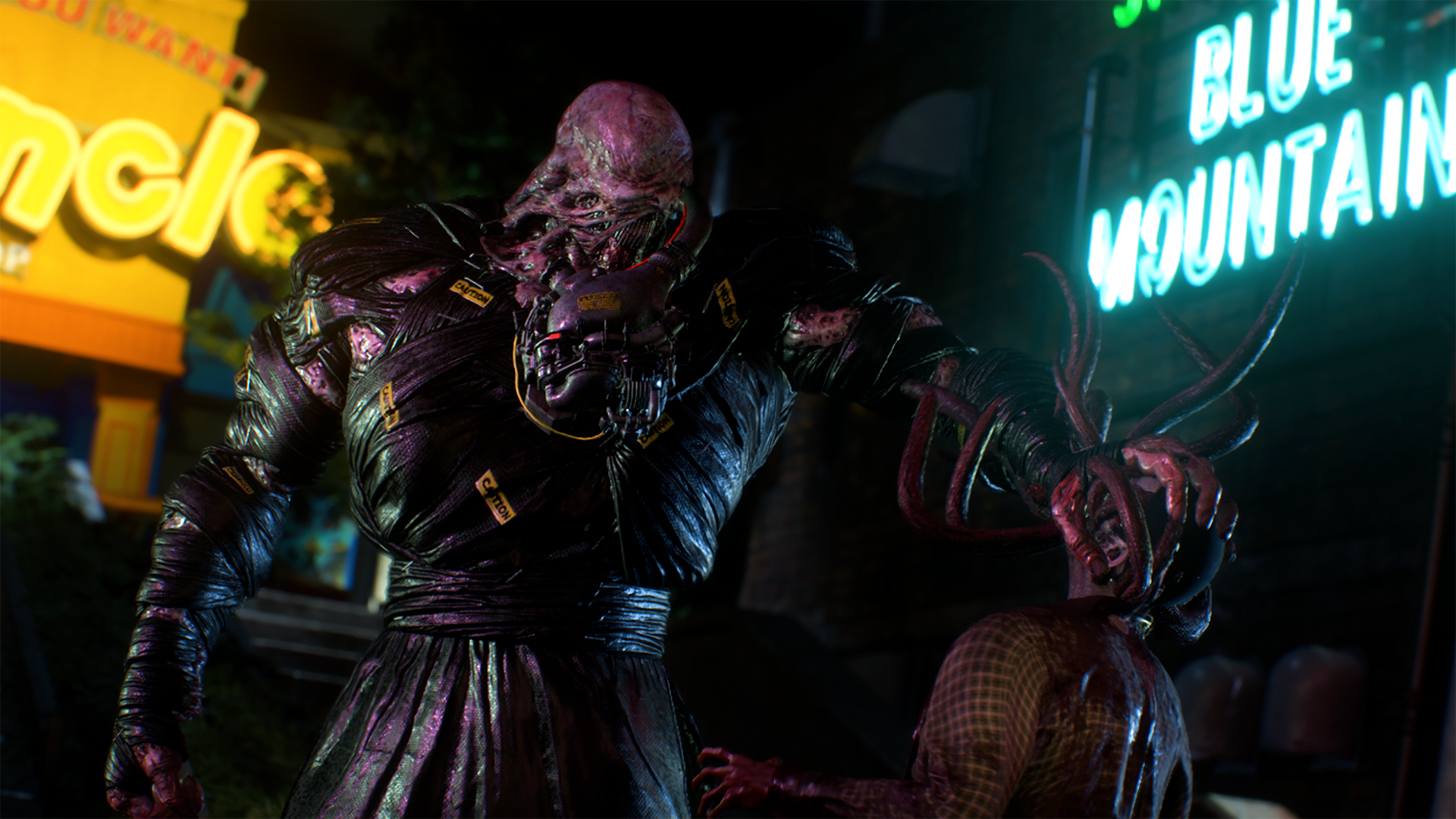
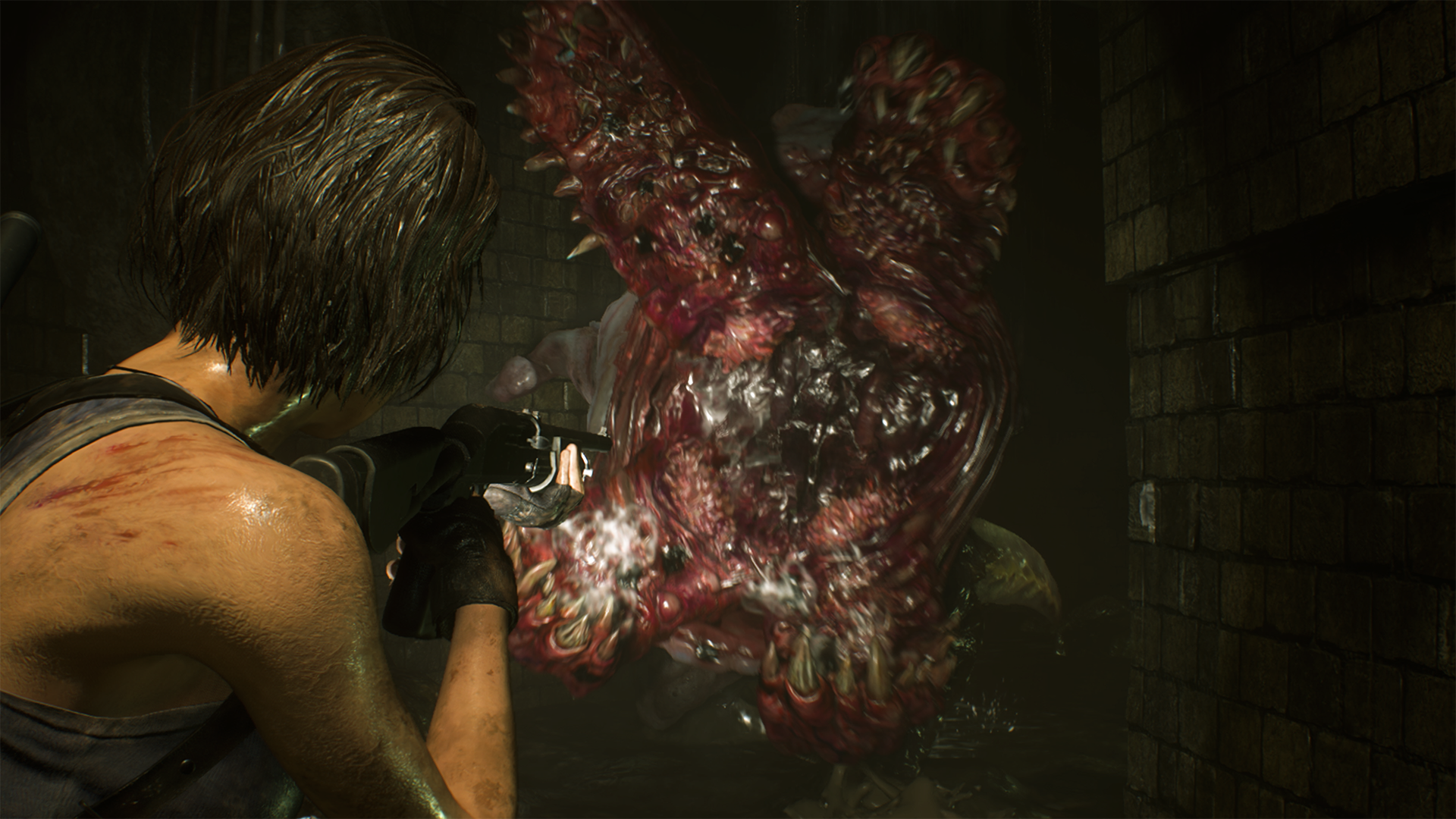
Nemesis as a whole is less frightening in the remake than the original. His humanoid form, wrapped in folds of black leather, his face obscured, is potently menacing and intimidating. The player has no idea what lies underneath the dark garb, which makes him scarier. It could be a man, but he’s so big, so powerful, and so abnormal that there’s clearly something else going on with him; the uncertainty multiplies the sense of fear. Unfortunately, for RE3 remake Capcom is too quick to begin transforming Nemesis and move him away from his humanoid appearance. By the second boss fight, the leather has already given way to a dog-like form galloping around the battlefield. By the end of the game Nemesis is a large, room-filling leviathan that’s more blob than anything else. Worse, the boss fights with Nemesis are hindered by problems that should have been fixed via playtesting during development. Camera angles can sometimes interfere with gameplay, and the dodge mechanic is unreliable, which is a problem when fights are predicated around the player being able to use the mechanic to win.
There’s a small but notable change to the narrative that I also didn’t care for. While bursting into someone’s apartment and trying to murder them would be enough to make anyone hate Nemesis, there’s a pivotal moment in the original game that Capcom alters here which provided greater depth to Jill’s story. When Jill runs into Brad in the first RE3, they eventually arrive at the RPD building where Nemesis appears and kills him. Jill’s interaction with Brad is harrowing in both versions of the game, but having Nemesis be the one to kill Jill’s friend made their battles a lot more personal in the original RE3. Capcom felt that it was worth the tradeoff to have Brad be the one to bite and infect Lieutenant Marvin Branagh, thus forging yet another connection between the stories of RE2 and RE3, but I think it instead sucked some of the drama out of RE3. Marvin could have been bitten by any fellow officer that he hesitated to shoot and would still be the brave, memorable character that he is. Conversely, not having Nemesis kill Brad, again, minimizes the intensity of the feud between Jill and the creature.
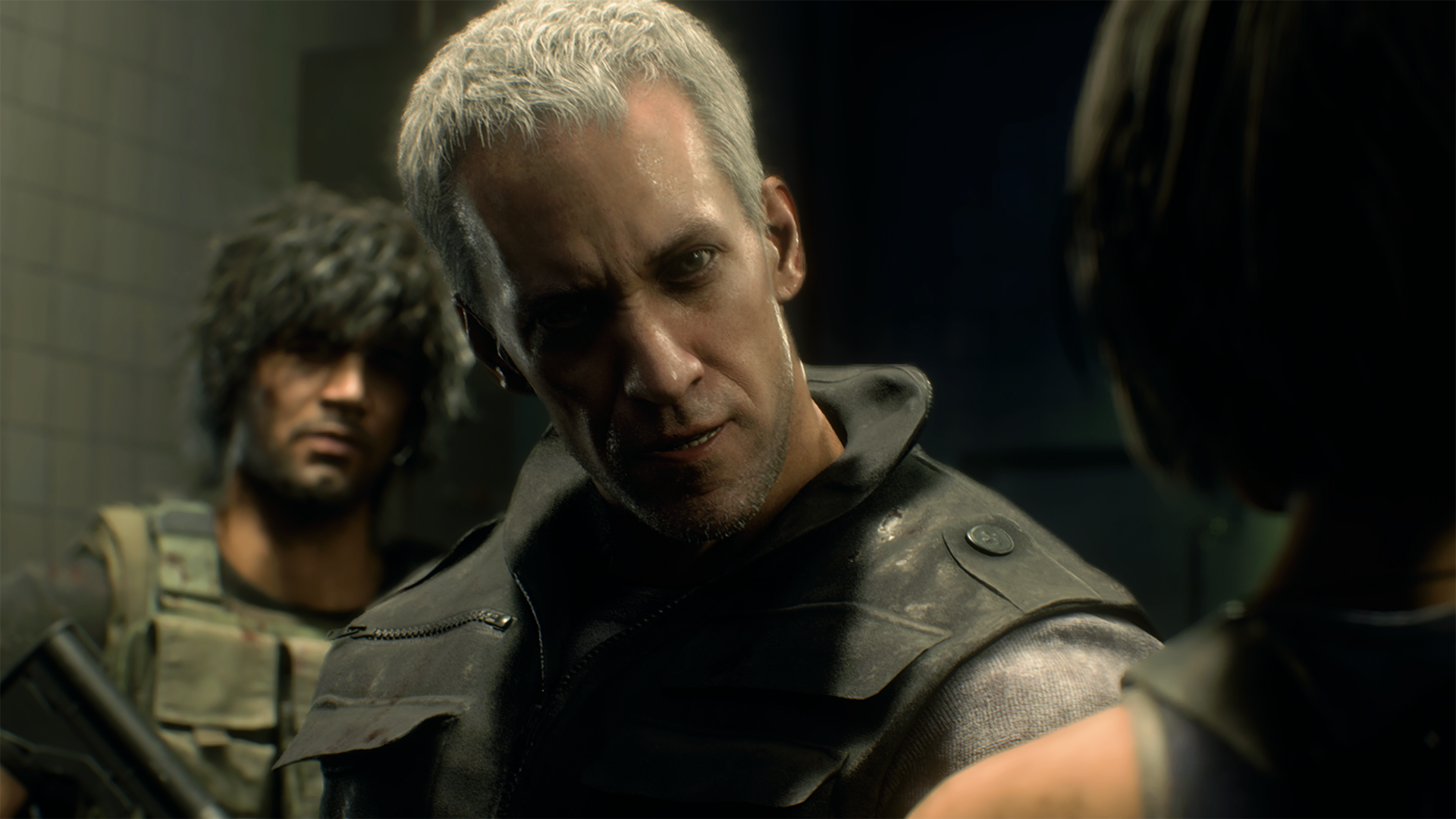
So far, this review probably sounds really negative, but consider that if someone has never played the original RE3, a lot of the omissions and changes I’ve discussed wouldn’t mean a thing to them. It’s still plenty fun shooting zombies and monsters here just like it was in RE2. There are some new enemies here that are worth a mention, too, including the reptilian Hunters that can kill with a single blow. Worse are the Pale Head zombies. These durable, ferocious creatures are a major pain to deal with and are terrifying to behold. Some sequences are also undeniably memorable. Escaping Jill’s apartment as Nemesis doggedly pursues; returning to the police station as Carlos; defending Jill as waves of zombies assail the hospital; and other moments besides. It’s a shame that Capcom didn’t use this remake as a chance to expand upon the first RE3, because there are some really excellent moments, just not enough of them.
RE3 remake might be lacking the Live Selection system, but it has other ways of getting players to keep coming back for more. Beating the game unlocks new difficulty levels that up the ante, most infamously Inferno difficulty, which is crushingly brutal. If you want a stiff challenge, RE3 remake on Inferno might be the steepest in the whole series, or at least in the top three. Limited typewriters, no autosaves, more ferocious, formidable enemies—Inferno really goes for the player’s throat. There’s also an in-game shop that opens up after your first playthrough. In it, there’s a bunch of unlockable gear like Jill’s S.T.A.R.S. uniform from RE1, new weapons, special coins that grant powerful buffs, and more. The player has to complete different challenges during the campaign as well as destroy hidden Charlie Dolls in order to unlock Currency Points (CP) to obtain these items. It’s a good way of adding replay value, as some of these unlockables are very worthwhile.
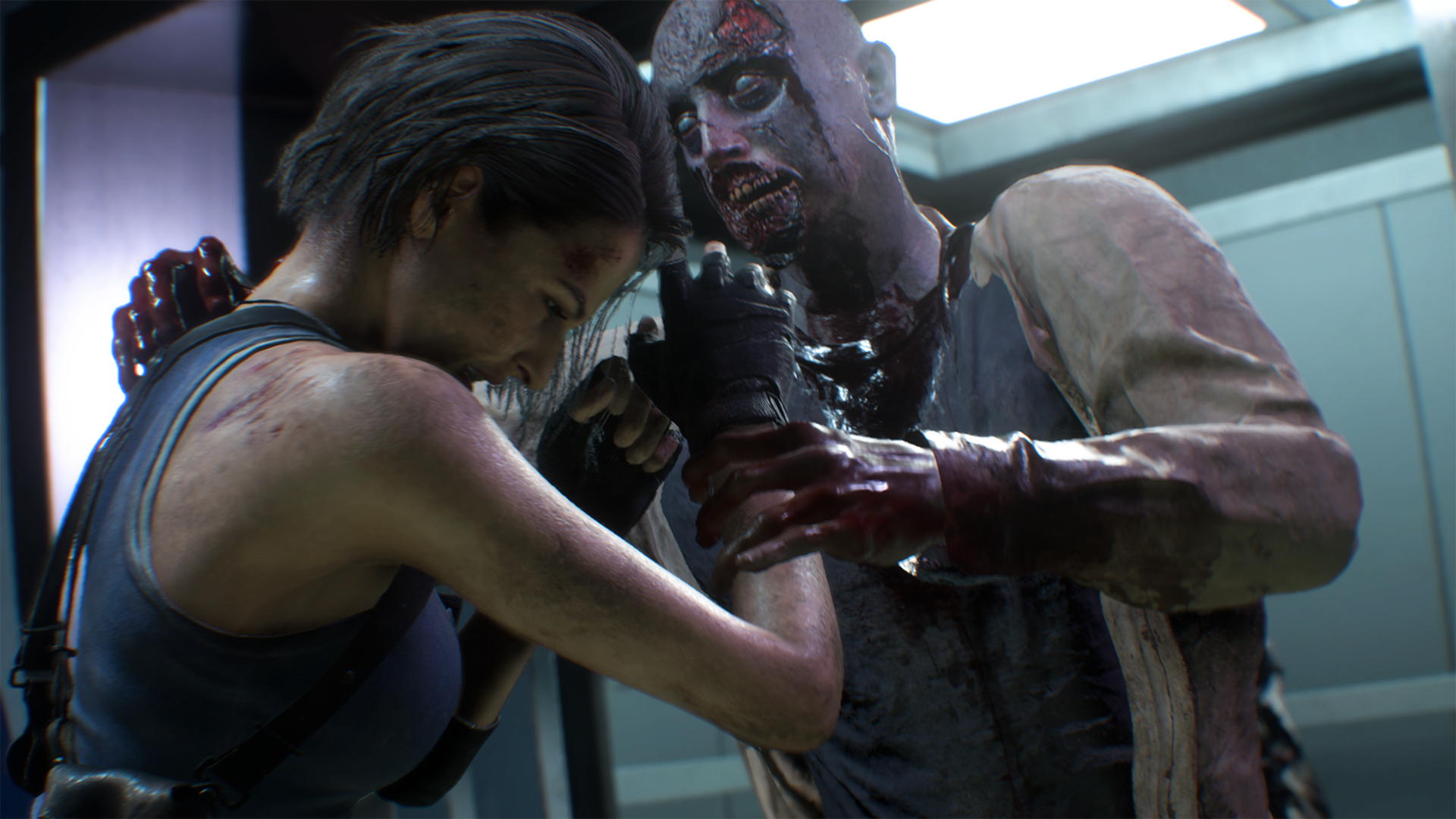
Even if you’ve never played a minute of RE3 on PS1, there’s no denying that that RE3 remake is a shorter, inferior game to RE2. Taken as a standalone installment with no prior exposure to the Resident Evil series, there are still some good things here worth experiencing. Jill and Carlos are both very compelling characters deftly performed by their respective actors. Their fight to survive is engrossing, and many of the action sequences are memorable and exciting. Gunplay and inventory management are still at the heart of this remake; knowing when to run versus gun is a core tenet of the early Resident Evil games, in particular, and is as fun as it ever was. If you’re walking in blind, you should have a fun time for as long as it lasts.
For longtime Resident Evil fans, most prominently those who played the original RE3, this remake might leave a lot to be desired. A ton of cut content, scripted Nemesis encounters as opposed to Mr. X’s random altercations, and some technical issues during boss fights all make this game a disappointment no matter how you try to cut it. It shines in spots, the parts that work really work, but RE3 remake will leave longtime fans wondering what could have been more than anything else. The RE3 on PS1 did a lot with limited development time and resources; it was a sequel that carved out its own identity in the shadow the mega-hit that was RE2, which was no small feat. RE3 remake in many ways feels like a step backwards, which is a shame. Play it for the lore, play it for the fun it provides, but know that it is the lesser of the three remakes so far.
Editor’s Note: I’d be remiss if I didn’t mention that there is no Mercenaries mode in RE3 remake. The beloved bonus mode from the original was replaced, at the time of its initial launch back in 2020, with the asymmetrical multiplayer game Resident Evil Resistance. It was a completely underwhelming game that did not do well and was quickly scrapped by Capcom. At the time, fans were annoyed that RE3 cost full retail MSRP despite being so short, but the inclusion of Resistance was supposed to be the justification for the higher price point. While I complained about the brief nature of RE3 remake in this review, Resistance is not included in this Switch 2 version of the game. RE3 remake sells for $29.99 in the eShop. If the game’s brevity has you on the fence about a purchase, at least know that this is selling for a lot less than RE2 and RE4.
Nintendojo was provided a copy of this game for review by a third party, though that does not affect our recommendation. For every review, Nintendojo uses a standard criteria.