
A remake that hits some wondrous highs and sinks to some disappointing lows.

Welcome to our Dual Review of The Legend of Zelda: Ocarina of Time. Both Angela and I love the original Nintendo 64 version of this game, so we’ve decided to combine forces and produce a joint review of the remake. We’re giving it a singular score, but you can read both of our reasonings for the grade in each of our reviews. And with that, find out what we thought of the new Ocarina of Time!
Spoilers Ahead
Writer: Angela Marrujo Fornaca
I’ve mentioned over the years that The Legend of Zelda: Ocarina of Time isn’t just my favorite game of all time, but incredibly significant to me. It was formative on me in ways very few other pieces of media have ever been. As a result, I knew the moment a remake of this game was confirmed that it was very likely it wouldn’t meet the astronomically high bar it would have to reach for me to consider it anywhere near the same caliber of work as the original.
That doesn’t mean I went in wanting to hate this game, refusing to give it a chance, or whatever other idiotic commentary is floating around in the hellscape of the Internet aimed at people who dislike this remake compared to the original. But the fact remains that in nearly every way, 2026’s Ocarina of Time is inferior to its 28-year-old predecessor.
Let’s start with the ways in which it’s not. Combat is punchy, sharp, and fast, with dynamic effects that made me look forward to getting into fights. Enemies are more aggressive, especially Stalfos, Lizalfos, and Dinolfos, and their movements are slightly different this time around, making encounters with them feel fresh and keeping you on your toes. Other enemies have technically been made easier to confront, such as Iron Knuckles, whose swings you can now block with your shield. At the same time, because they’re more aggressive there’s still a challenge there, just of a different kind. Some bosses have been given new moves and mechanics, preventing veteran players from getting too comfortable and overconfident. Link’s long-range weapons — the Fairy Bow, Hookshot/Longshot, and Slingshot — no longer take the player into a first-person POV, but are over-the-shoulder and have a solid balance between control and speed that make aiming feel tight and responsive. Granted, it feels a little less immersive, but it’s a worthwhile tradeoff given how well it’s been implemented.
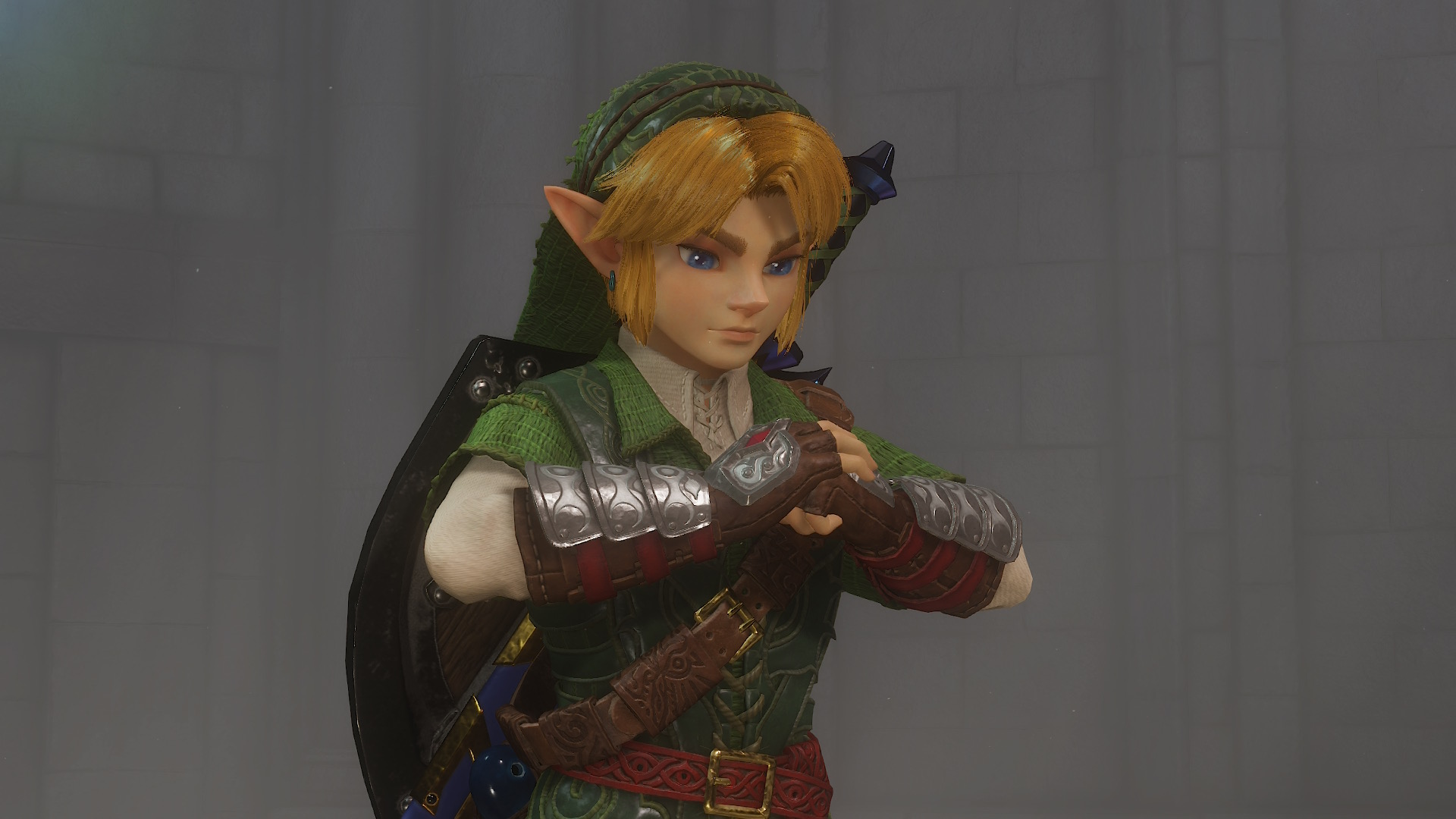
Environments are gorgeous, with some of the standout locations including the Water Temple, Castle Town, the Spirit Temple, and Ganondorf’s Castle. The game’s visual style is a double-edged sword, which I’ll get to later, but I did enjoy seeing all of these familiar locations reimagined with a thousand times the detail, yet still clearly and unmistakably the locations we know and love. NPCs look great — the Happy Mask Salesman, in particular, was eeriely lifelike — with everyone maintaining the unique aspects of their faces and bodies, and they now go about their business in places like Castle Town or Kakariko Village throughout the day in ways that make them feel like real people in the environment. During the child years, the carpenter’s son, for example, will spend most of his day in Kakariko under a tree sulking, then eventually move to hide behind the building under construction, waiting for his father to go home at the end of the day so he doesn’t get spotted by him. The son will then move to his perch under the tree at the front of the village all night before leaving before dawn to avoid his father in the morning. Seeing that level of detail was really neat and made these familiar characters feel different and alive. I was also impressed by the animations of Link playing the ocarina, from his individual finger motions to the subtle movement of his lips on the mouthpiece.
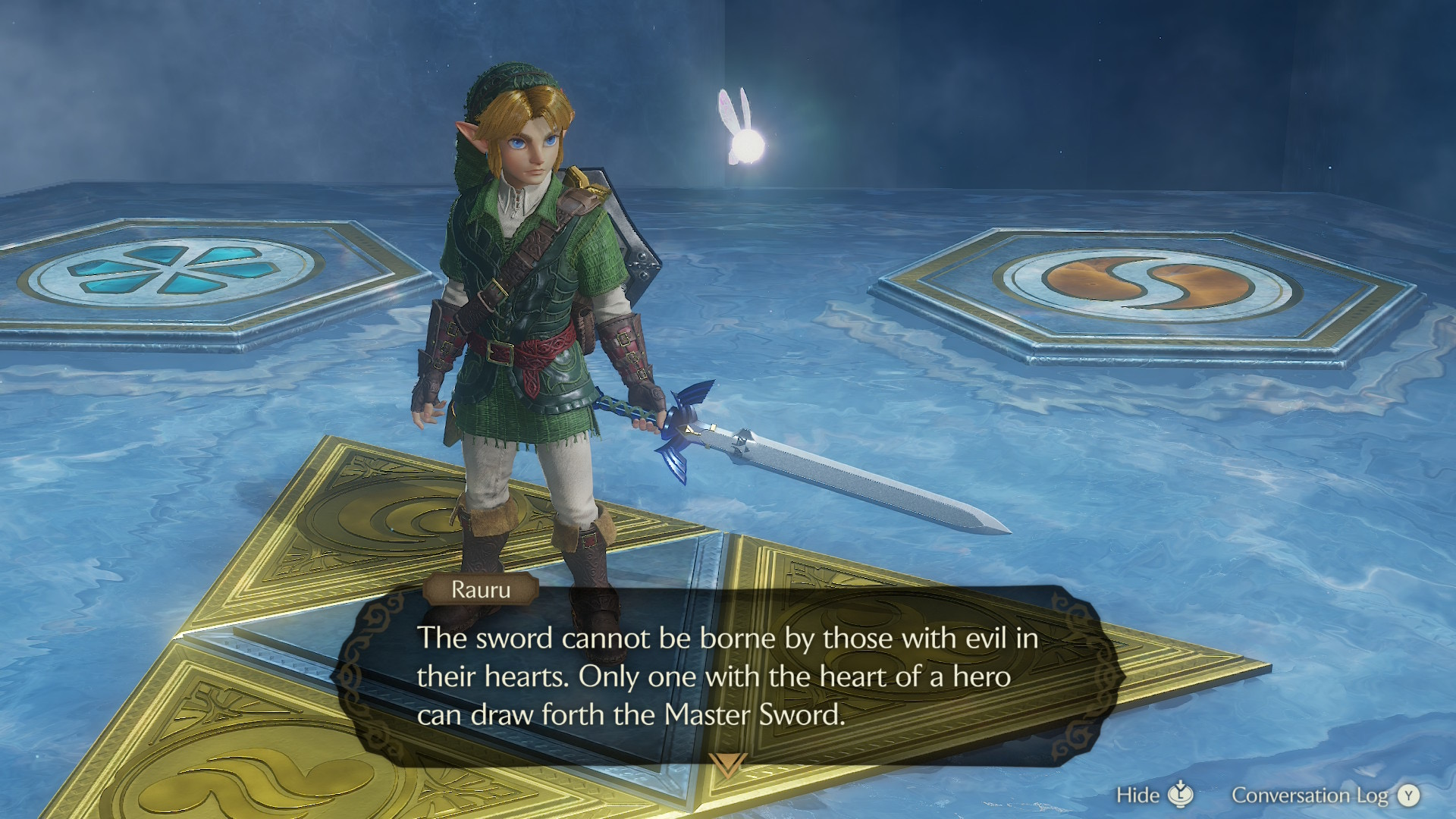
For the most part, the modern score is quite nice, with the majority of tracks managing to capture the essence of the game’s original soundtrack (unlike, by comparison, 2023’s Super Mario RPG). Ocarina of Time‘s score is legendary (no pun intended), and managing to recreate some of these tracks in ways that held up to the original was no small feat. However, there are many that just simply don’t, like the Potion Shop/Poe Shop theme, or others that are beautiful if evaluated on their own, but lose some of their luster when compared to the original versions. The Shadow Temple and Spirit Temple themes are really well done in this game, but they’re both missing the strong percussion elements of their predecessors.
This is actually important to the Shadow Temple theme, which is as much a diegetic theme as it is a track. The bongos you hear in the song are likely audible to Link throughout the dungeon (probably some of the eerie groaning, too) — because, you know, the boss is Bongo Bongo. Yet in this game’s rendition of that song, the percussion is conspicuously deemphasized for reasons I can’t determine. Likewise, the Spirit Temple theme was originally heavy on the shawm and had a reedy, nasally quality meant to emulate Middle Eastern music. This game’s theme is quite beautiful and romantic, heavy on the strings with a softer flute quality, but lacks the presence, power, and authenticity of the original track.
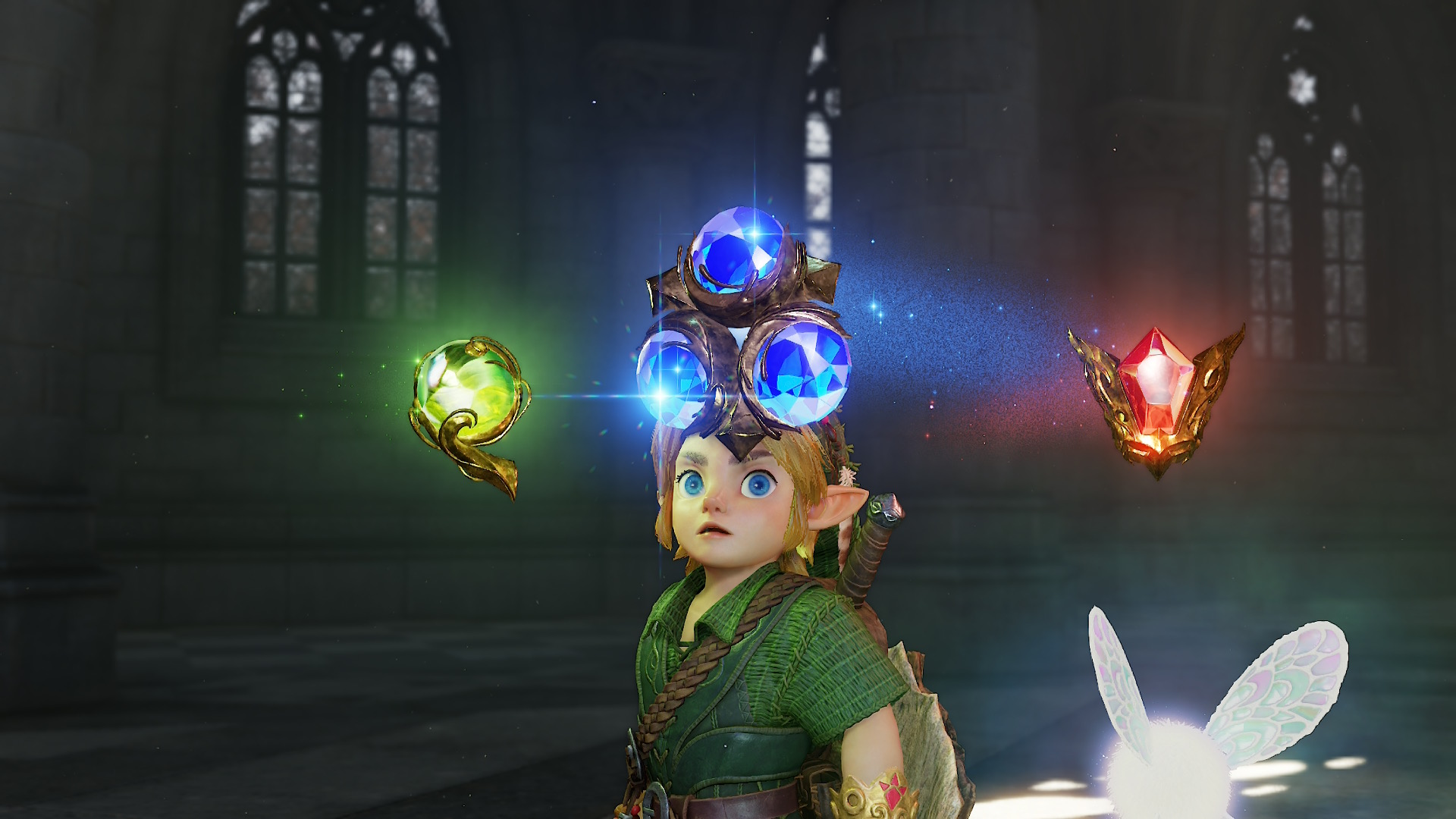
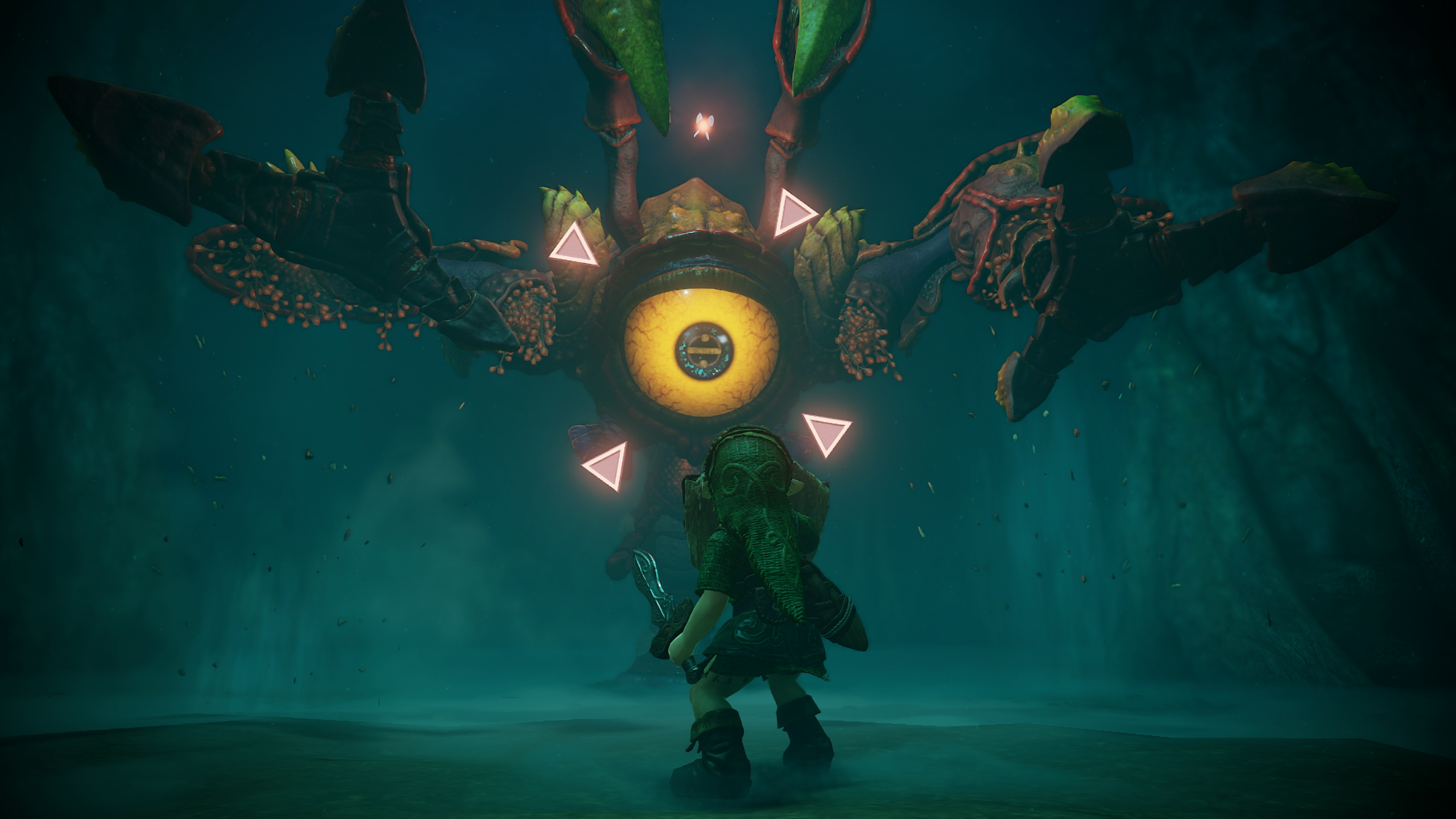
The Hall of Fallen Foes was a cool surprise that I totally wasn’t expecting. It gives the player the opportunity to redo boss fights or engage in boss gauntlets, but it also serves as a very cool gallery and museum to view models of every enemy Link defeats in the game. The major bosses are impressive to study up close. This feature is especially nice for fans of Ocarina‘s enemy design and art direction.
Despite the positive changes, Ocarina is a prime example of why the current trend of remaking classic games isn’t always popular with fans. The development team’s target demographic — the modern audience — is painfully obvious, and from the startup screen to the ending credits, I was just constantly gritting my teeth, asking myself “Why?” out loud, or actually rolling my eyes and sighing.
I expect AAA titles these days to insult my intelligence. I’m shocked when they don’t. But I didn’t expect Ocarina to do so in the deeply offensive way that it did. I’m not going to pretend that the game’s original script was on par with Orwell or Hemingway, but it assumed that the player’s intellect was high enough to, say, understand and appreciate Early Modern/Shakespearean English or not have to be frequently told explicitly where to go or who to speak to next. This game embodies everything that’s wrong with Nintendo’s modern obsession with handholding, to the point where it broke immersion for me constantly.
Why am I being told that a particular NPC is a sage? Why is the Great Fairy telling me how many of her sisters are in the overworld and how many I have left to find? Why is the guard at the entrance to Kakariko Village telling me about the Sun’s Song, a closely-kept secret of the Royal Family? Part of the appeal of any Zelda game is exploration and the excitement of revealing the hidden or unknown. For new players who didn’t experience the original game, part of that experience has been tempered drastically now that they have NPCs telling them left and right where to uncover totally optional secrets, or telling them the story rather than showing it to them. God forbid a player be left to find or figure something out on their own.
My single biggest issue with this remake is the script. It’s awful. It genuinely felt like the writing team threw the whole thing into an LLM and prompted it to rephrase everything to be slightly different but still recognizable to the original, like a student trying to get away with plagiarizing someone’s essay they found online in the early days of the Internet. But the end result is always lesser — less profound, less sophisticated, less poignant. It’s even more glaring when compared to the lines in the game that were reused from the original. Everything Sheik says in this version, particularly before teaching you new songs, is either less impactful or needlessly wordy compared to what he used to say. Melancholic, bittersweet lessons get turned into statements of the obvious that carry no weight and sound almost the same from one meeting with him to the next.
When Link meets Sheik in front of the Forest Temple, he initially tells Link that “the flow of time is always cruel,” but now tells him that it “differs for us all.” “A thing that doesn’t change with time is a memory of younger days,” has become, “But there are some things even that relentless flow cannot change, like memories of a childhood together.” What was originally a lesson about how unfair the passage of time is in so many ways, but how time can’t take away your memories (of youth in general, not just childhood specifically) is now a vapid, overly verbose statement about how the passage of time feels different for everyone. Words have meaning, and changing even one can have a profound effect on a sentence; this game is littered with countless baffling, unnecessary script changes that don’t flow as well and lack the well-balanced poeticism and clarity of the original writing.
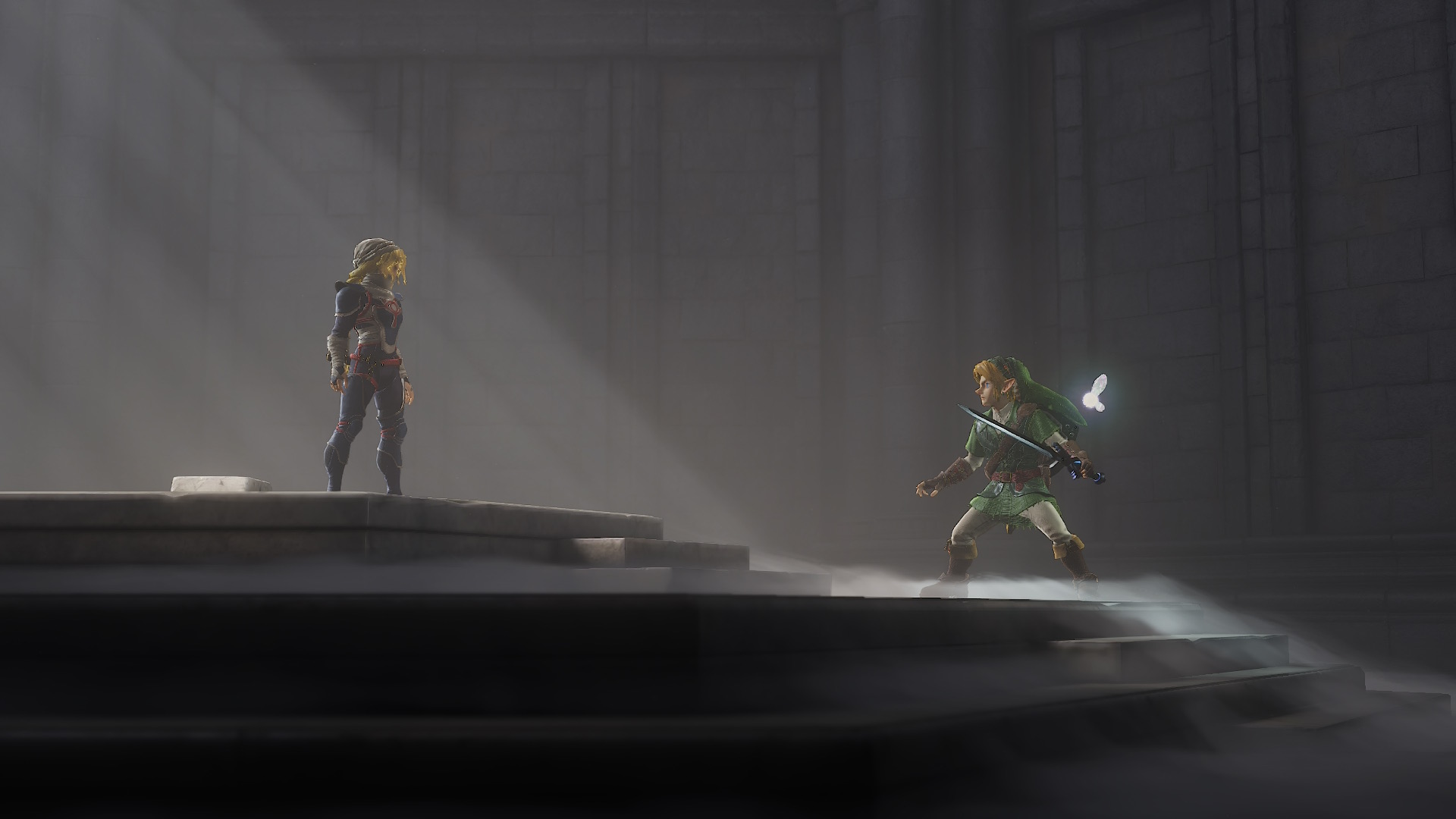
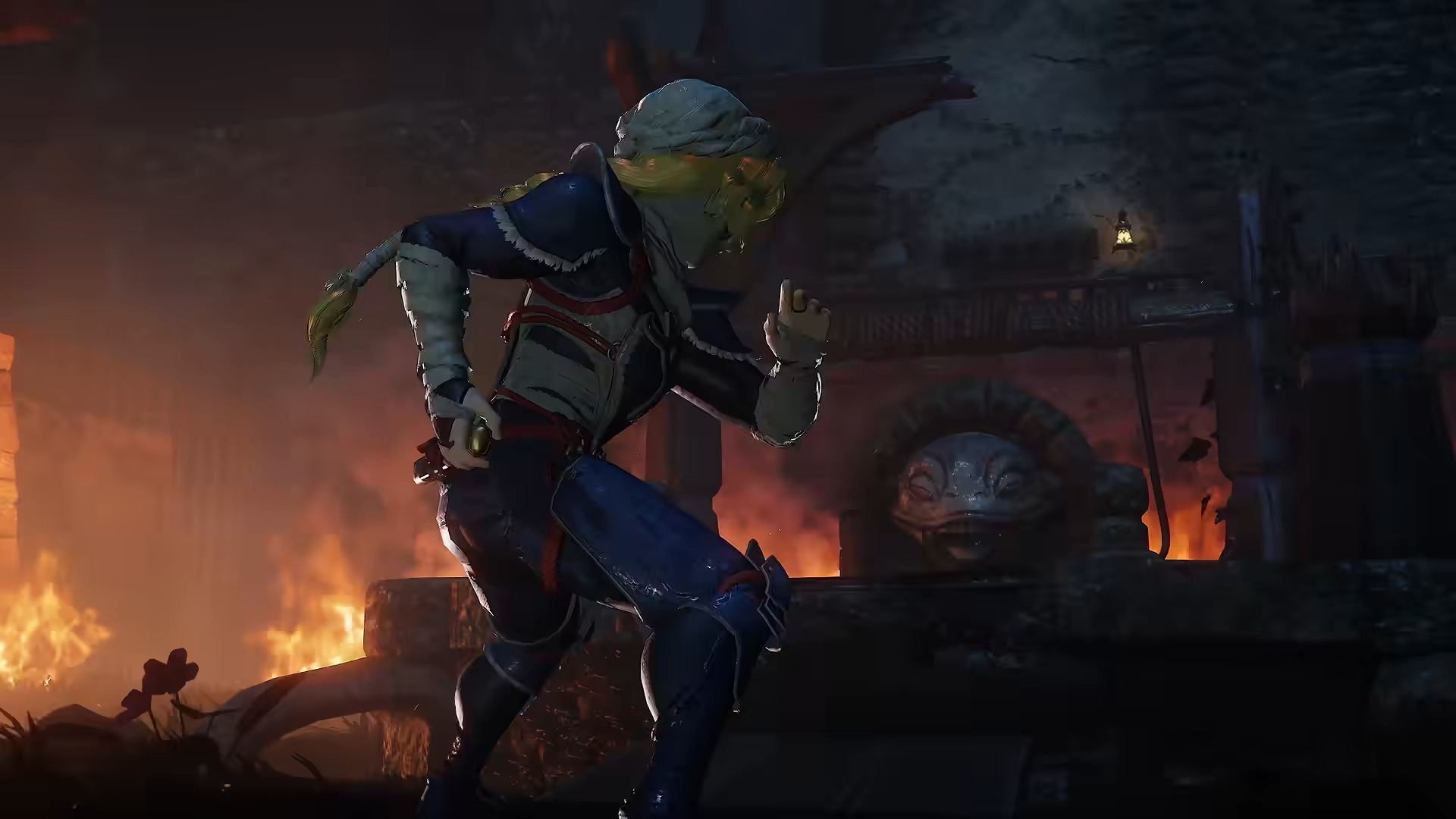
While on the subject of Sheik, I was so confused by him in this game. The decision to give him the Smash Bros. Brawl design, which makes it clear that it’s Zelda in disguise, with the long braid and feminine body, completely destroyed the entire point of Zelda hiding in plain sight. I was deeply confused as to why Sheik was pouring his heart out to Link, begging him to save Impa because of how important Impa is to him, when Sheik makes a point in both games of not speaking to Link any longer than necessary and disappearing as quickly as he shows up to keep his disguise safe. Sheik wouldn’t tell Link or anyone else a word about himself. His character makes no sense in this game.
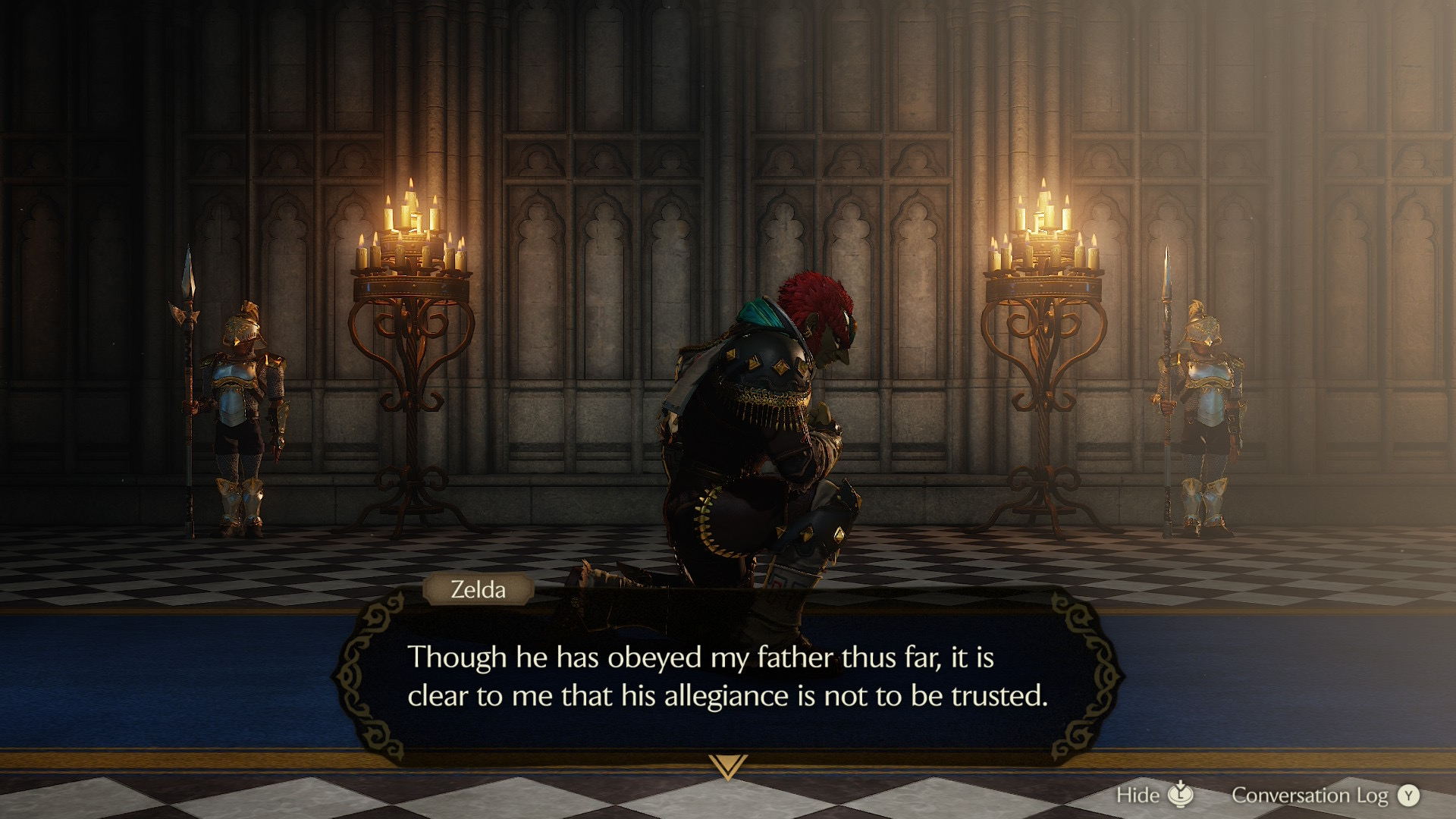
There’s also a weird aversion to certain references to death and violence in a story that’s filled with it. The Deku Tree doesn’t die — every Kokiri kid stops just short of saying it — but instead “withers.” The dying guard in the alley in Castle Town doesn’t die, but just sits there wounded and ailing. Ganondorf no longer coughs up blood or green… whatever at the end of the first phase of his boss fight (which was already censorship of the former in later prints of the game). The blood on the floor beneath the torture device in the Bottom of the Well now looks like faded motor oil on the floor of a garage. At the same time, death is explicitly referenced in other moments, so the decision of when to dance around it or address it outright seems arbitrary at best and infantilizing at worst.
Even the Sharp Brothers’ story has been changed from dying to protect the Sun’s Song from Ganondorf to… dying from the king’s overly stressful demands to develop the song. They died from stress. I wish I could say I was making this up.
I found it very strange how certain suggestive lines were eliminated from the game while others were added in. The Poe salesman no longer tells you that if he looked half as good as you, he could run a different kind of business, but one of the carpenters gushes over how handsome Link is. Nabooru no longer tells you that if she knew how handsome you’d grow up to be, she’d have kept her promise to do something great for you, but all of the Great Faeries are incredibly flirtatious, telling you to be a good boy and accept their gifts and not to get too worked up in anticipation. The town drunk in the Castle Town alley is no longer a drunk, despite being surrounded by empty bottles and doing nothing but laying and sitting all day, but is now a serial overeater. It’s not clear to me what content Nintendo considers inappropriate or why.
It was painfully obvious that someone on the writing team really wanted the female characters to have agency, despite being a game filled with strong, formidable women from the start, particularly Zelda herself. Sheik has a dramatic ninja fight sequence for no reason in which “he” manages to hit nothing and still lose the fight against the darkness in the well. Nabooru tries and fails to wield her Iron Knuckle axe to defend against Koume and Kotake, though she really doesn’t wield it so much as she picks it up and does… nothing with it. Because I guess standing and looking scared is more action and agency than making a run for it. Zelda uses her powers to hold back a couple Stalfos and Bubbles while fleeing from Ganondorf’s crumbling tower, even though Link could take them out in a heartbeat, tried to tell me she was going to “take care” of a group of ReDeads that I didn’t even give her the chance to stop before I eradicated them in a flat second with Din’s Fire, and then had to be the one to toss Link the Master Sword during the fight with Ganon because… I don’t know why. In a game where she’s one of the central characters, Zelda had to be even more of a central character this time around.
The Gerudo you fight four times in Gerudo Fortress, meanwhile, makes violent threats toward you, including threatening to cut off your legs the next time you escape from your cell, and then proceeds to not make due on any of those threats even after you escape again. But if she didn’t sound angry and aggressive, how would we know she’s tough? There’s only one vague mention of the Gerudo not welcoming men in their fortress, so there’s no context for why they locked up the carpenters or hate your guts (especially once you get a free pass to come and go) except that you’re trespassers. It’s a very strange lore omission, especially given all the other aforementioned changes.
Nintendo has a knack for choosing some of the worst voice actors it can find, and this game excels at delivering mid to terrible performances. I suffered through the English so I could hear how every character was imagined in this remake (and to hear how some of the names are supposed to be pronounced), but wow, I do not recommend it. Darunia was impressively cringe, Navi was a high-pitched anime trope, Koume and Kotake were clearly voiced by a young woman trying and failing to sound old (props for getting the laugh down, though), Zelda sounded about as elegant and sophisticated as your average college student, and Sheik was so laughably, obviously a woman that I wondered why they even bothered still referring to him as “he.” Matt Mercer is whatever as Ganondorf, I can take it or leave it. He’s not bad, but he’s somewhat generically “evil.” The change from Shakespearean to Modern English for the Deku Tree made all of his scenes fall flat, which was one of the biggest disappointments in the entire game.

While Link has no speaking lines in either version of the game, both Young and Adult Link’s original voice actors are so iconic that every voice actor since has been emulating Fujiko Takimoto and Nobuyuki Hiyama’s work from 1998. They both have a fierceness in those original performances that is largely lost in the actors who were chosen to play Link this time around. I’m not sure why Nintendo didn’t reuse the voice work from the original game (perhaps they couldn’t for various licensing or contractual reasons), but it was a mistake not to if the company still had the ability to do so. I’ve never liked any voice actor for Link anywhere near as much as I do Takimoto and Hiyama.
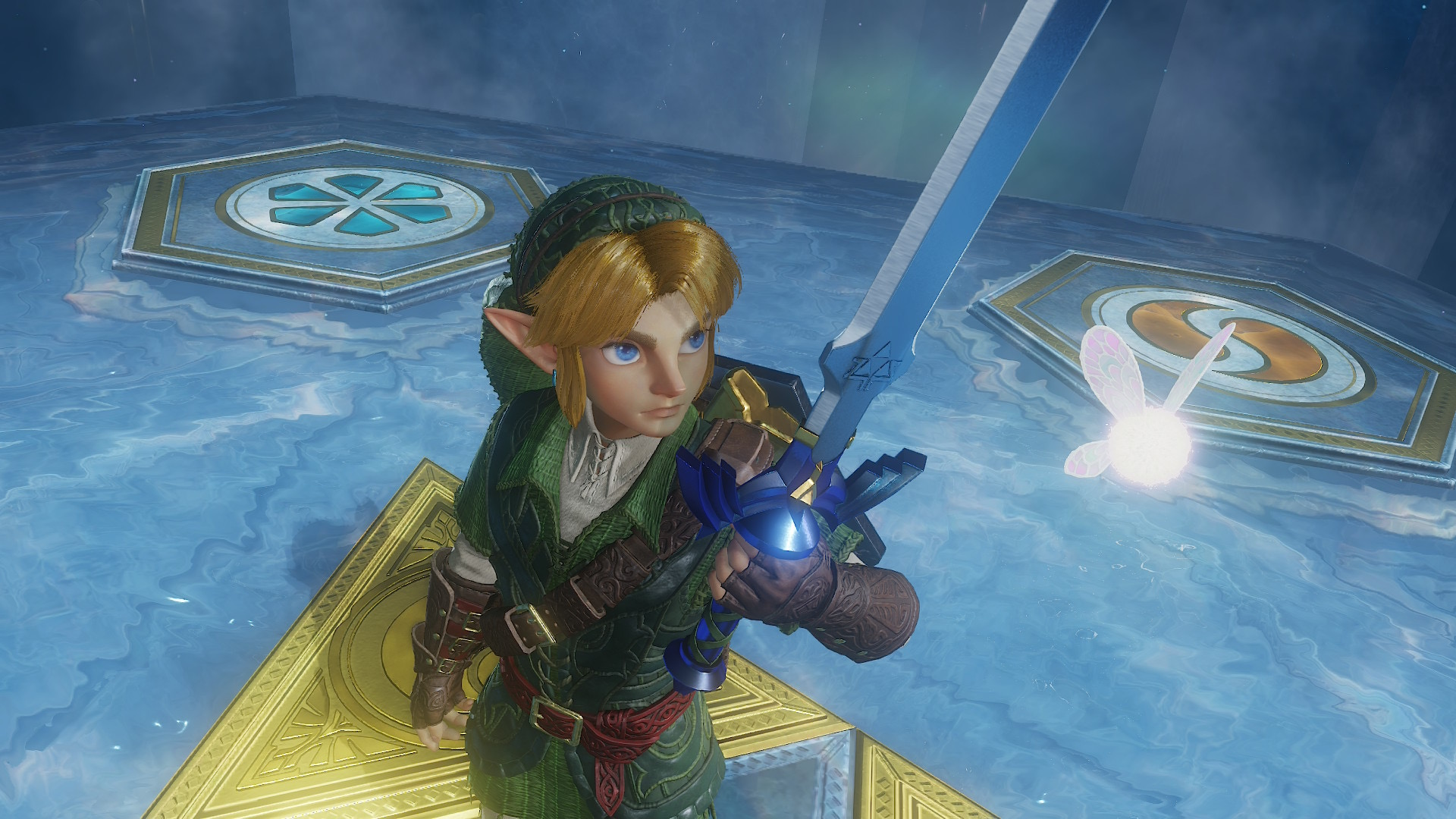
While the game’s art direction does a pretty good job of preserving the original designs and feel of the characters and world, Link’s general look is massively over-designed and, frankly, hideous. His tunics get increasingly ugly and foppish, all of them looking more ceremonial than functional, covered in endless winding patterns and designs for no real reason. Even the Kokiri Sword didn’t escape this treatment. The Kokiri Tunic appears to be woven from grass, because I guess the Kokiri kids were incapable of working looms and creating cloth from natural fibers, but somehow got their hands on tanned and tooled leather for Young Link to make himself a jerkin. The Hero’s Clothes (the new name for the Kokiri Tunic for Adult Link) are inexplicably woven from grass. Why would Rauru weave the Hero of Time a tunic of grass? Your guess is as good as mine.

Link, Zelda, Ruto, Nabooru, and the Gerudo all have such shockingly large noses that some of these characters look deformed. Ruto’s nose is so long and hooked that you couldn’t see her mouth during some cutscenes. The gap between some of the Gerudo’s eyes is so wide that their eyes look bugged out. The curve of Link and Zelda’s noses has such a dramatic dip that it looks less realistic than the sharp, polygonal noses of their N64 models. I also didn’t understand why Ganon’s final form now has weird tentacles coming out of his head. It looks, again, so over-designed and unnecessary.
As I mentioned before, the game is visually beautiful. That’s undeniable. But it’s beautiful in the way every modern game is. Individual blades of grass rustle. Glass and water sparkle and shine in the light. Rain falls gently and patters softly. But the original game’s very strong and, at times, deeply unsettling feelings of loneliness, melancholy, and solitude are totally lost in this new environment. The soul of the original is nowhere to be found. It’s a little like comparing a one-hundred-plus-year-old Craftsman or Spanish Revival home against a new build: the former has an unmistakable character that can’t be replicated and, once lost, is lost forever, while the latter might be nice to look at but lacks the charm, uniqueness, and craftsmanship of what came before.

Certain aspects of the game’s combat and gameplay changes baffle as much as some of the writing and art changes. The worst thing about this game’s combat system is the scrolling inventory of the last three Zelda titles. Ocarina was made to have three items equippable at once, a fact that becomes quite clear as soon as you start to accumulate more weapons and items that the game demands you scroll through to access. No, I don’t actually find it enjoyable to have to open up ZR and scroll back and forth between my Fairy Bow and Longshot every time I need them, or scroll all the way to the end to grab a bottle. By the time you’re an adult, this is such a frequent occurrence that I can’t understand how the dev team thought it worked for this game. Breath of the Wild encourages exploration, where you might go long stretches without needing to rapidly cycle through weapons or items. That’s not the case in Ocarina, which is combat heavy and also requires using your items frequently to solve puzzles. The C-button system of the N64 controller was perfectly suited for this gameplay style. The scrolling inventory system is not.
First-person POV is gone, a decision I can’t understand in a game that’s infinitely more detailed than the original and has all sorts of things you want to be able to look at more closely. You can’t crouch, either, and as a result certain enemies are such a joke to fight now that it’s not even worth doing so if you don’t have to. Octoroks now just float in the air waiting for you to deflect their rocks back at them instead of having to put in a little effort to aim it back at them. Link’s dash is nice, but it also made some fights feel too easy, like the one against Big Octo. And yes, the jump button definitely takes some time to adjust to and even in the fight against Ganondorf, I was still finding myself occasionally rolling off edges and forgetting to hit jump because I assumed I’d auto-jump. I have to give the devs massive credit for assigning the boots to the d-pad to instantly remove and put back on; this is one of the most welcome and positive quality of life changes in the game.

Many dungeons have had their layouts changed to be more linear and streamlined, as opposed to requiring backtracking, or the number of small keys reduced. There’s more “yellow paint” in some places, like Jabu Jabu’s Belly, and timed events have been removed almost entirely. The block puzzle in the Forest Temple is no longer time sensitive. Neither is the mad dash from Ganondorf’s crumbling tower. There are still timed switches, but the “tick-tock” countdown sound has been removed for some reason, perhaps to make the player feel less rushed. Gerudo can, inexplicably, block any arrows aimed at them from head on despite the attack coming completely unannounced, and they wake up much faster than they used to. The latter isn’t necessarily bad, as it increases the amount of stealth and urgency needed to free the carpenters from their fortress, but the former makes zero sense, especially when they don’t sound an alarm and immediately start trying to find whoever’s running around their compound attempting to shoot them in the face with arrows.
Removing the ability to speak to Navi anytime you want drastically changes your relationship to her and makes her nothing more than an annoyingly quippy NPC who speaks to you mainly via a speech bubble that appears randomly. She never says anything of substance, has been reduced to stating the obvious (i.e. a door opens and she’ll say “It opened!”), and even becomes an atmosphere-killer in some moments. The first time I ran down the twisted corridor in the Forest Temple, a speech bubble appeared over her and she said, “Twisty!” and it made me wish for the ability to turn off her speech bubbles. Even her combat advice is less helpful this time around; I didn’t need it, but checked it from time to time out of curiosity to compare it to the original. If I was a new player who didn’t understand some of the enemy weak points, I’d find her to be borderline useless in assisting with that. The lack of closeness with Navi makes her final departure so much less meaningful this time around; I’m not sure why the player would even care.
Look, I could keep going. I could make this review twice as long if I wanted to dive into more specifics about how this game just doesn’t stack up, especially if I chose to focus on its script. But I think I’ve made my point, and I’ve spent the last week agonizing over all of this enough in my head to last a lifetime. The Legend of Zelda: Ocarina of Time from 1998 is a masterpiece. The Legend of Zelda: Ocarina of Time 2026 remake turned a work of art into a consumer product because it chose to embrace some of the most soulless, sterile practices of modern game design.
I knew from the moment I booted up the game for the first time, sat and watched the iconic start menu segment, and bristled at the loss of ambiance, atmosphere, and melancholy, that things were only going to go downhill from there. The next time I want to play Ocarina of Time, it’ll be the original version.
Angela’s Grade: C

Writer: Robert Marrujo
This is an abridged version of Robert’s review on Bits & Bytes. Click this link for the full review.
The Legend of Zelda: Ocarina of Time came out in 1998 on Nintendo 64. It was a watershed moment in the history of video games, a game so pioneering and innovative that it changed the industry forever. Major advances in cinematic storytelling, a context sensitive action button, adaptive music, and its Z-targeting system were all marked leaps forward for video games. Ocarina of Time’s legacy has impacted countless players and inspired numerous video game developers to take up the career in the first place. To remake Ocarina of Time is to remake, quite truthfully, one of the greatest games ever made.
When Nintendo revealed that it would be taking a second stab at remaking Ocarina of Time (Grezzo was first up to bat with The Legend of Zelda: Ocarina of Time 3D back in 2011), I was worried about what changes would be made, how extensive they would be, and what might be cut in an effort to sanitize the original. It was honestly nerve-racking at times when playing the remake because I dreaded seeing something I cherished ruined. That might sound hyperbolic, but I wasn’t exaggerating up above when I said how impactful Ocarina of Time was to the industry—and me. I couldn’t possibly write a review about this remake without talking about how much the original meant to me.
I was 12 when I first played Ocarina of Time; it was the marquee Christmas gift that year. Ocarina of Time had been hyped for years and my prepubescent mind was bought into it the second all those glorious screenshots started hitting the pages of Nintendo Power. Playing it, though, was another story entirely. It was a formative experience, one that sent my young mind in a thousand different directions simultaneously. I marveled at its art, its music, its characters (especially Link), its story, its world… virtually every aspect of Ocarina of Time embedded itself into my gamer DNA. It might not be necessary to point all this out, but I feel like there are many who will read this review and have similarly strong memories of either the N64 original or even Ocarina of Time 3D on 3DS. There’s simply no way for me to review this new Ocarina of Time without being influenced by my appreciation of the classic one.
With that in mind, let’s get to it. Ocarina of Time, like its forbearer, centers around Link, a young Kokiri boy without a fairy. One day, the Great Deku Tree, the protector of Kokiri Forest and the children within it, is taken ill by an assault from Ganondorf, the King of the Gerudo. He sends the fairy Navi to help guide Link, who embarks on a grand adventure across Hyrule to aid Princess Zelda in defeating the evil Gandondorf before he can get his hands on the Triforce, an all-powerful divine artifact that provides providence to their world. Link’s adventure transcends time as he fights as both a child and as an adult to complete his quest. The narrative remains simple but compelling, akin to the classic fairytales and parables that humanity has been telling for eons. Thankfully, the story here remains largely intact, beyond a couple of small, but noteworthy, changes that I’ll get to in a bit.
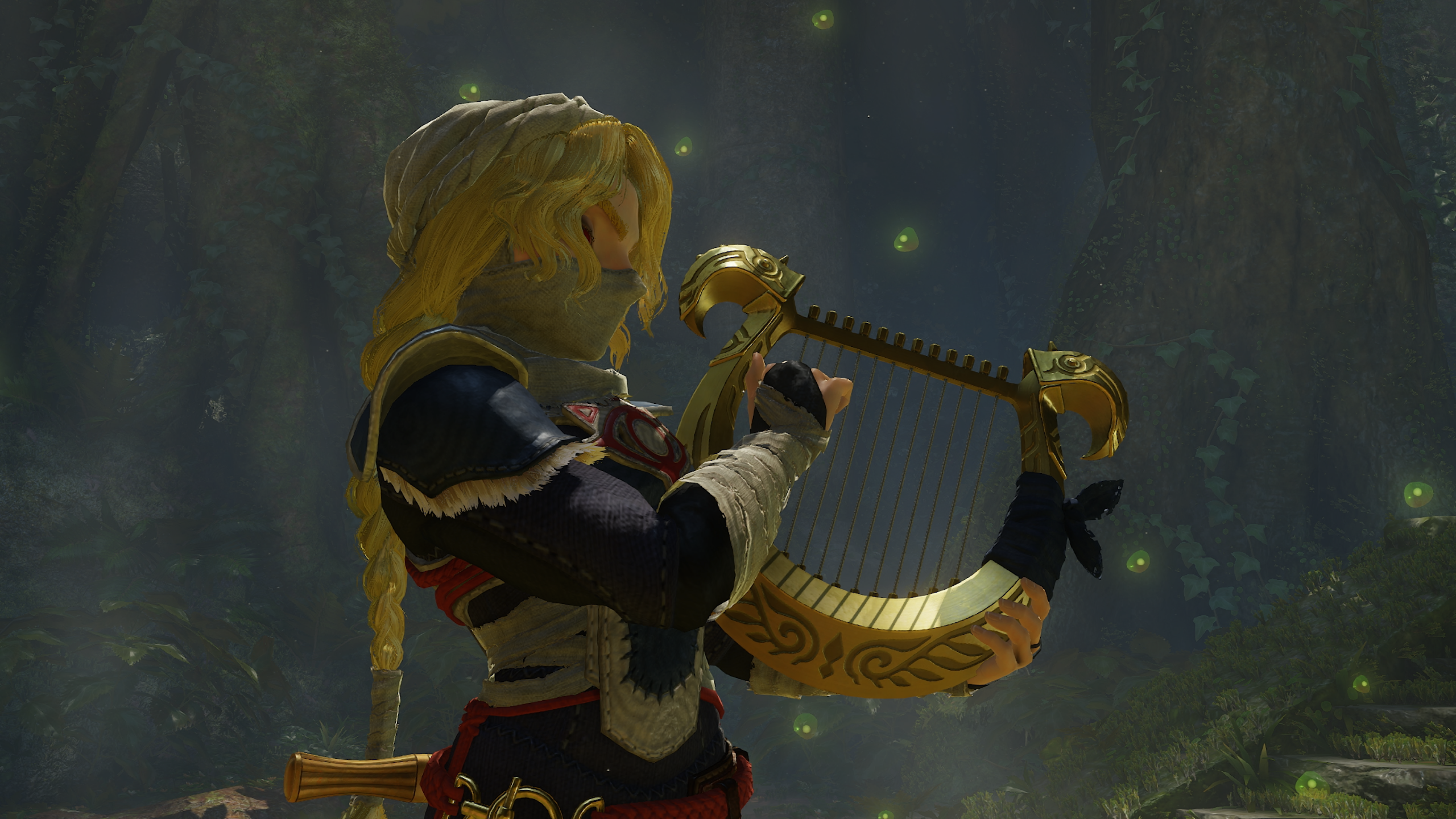
As was the case with Star Fox earlier this year on Switch 2, Ocarina of Time is a mostly faithful remake of the original game upon which it’s based. The biggest departure, and most obvious, are the visuals. Ocarina of Time might be one of the prettiest games I’ve ever played. Where Breath of the Wild originated as a Wii U game and Tears of the Kingdom was solely primed for release on Nintendo Switch, Ocarina of Time is allowed to stretch its wings as a proper Switch 2 title. The textures, the lighting, the level of detail, is all staggering. Like the Resident Evil remakes and Final Fantasy VII Remake Intergrade, Nintendo has managed to take the memories that players have of Hyrule and extrapolated upon them a hundredfold. Some spots, like the grounds outside of the Temple of Time, are actually fully explorable now as opposed to being static, pre-rendered backdrops.
The result is a Hyrule that feels more immersive and alive than ever. I found myself ravenous for every new location that I visited, eager to see how it had been transformed by the designers, eager to see what was the same and what was different. Interestingly, while the game was aggressive in revamping the graphics of the original, this remake sticks to the basic map of that first game pretty closely. With one notable exception, there isn’t anywhere new to go in this remake. Everything fans remember is there, perhaps slightly repositioned at most, and nothing more. That might be a letdown to some, but frankly, unless it was cut content from the original Ocarina that was left unfinished, I didn’t want anything new, so this was perfect to me.
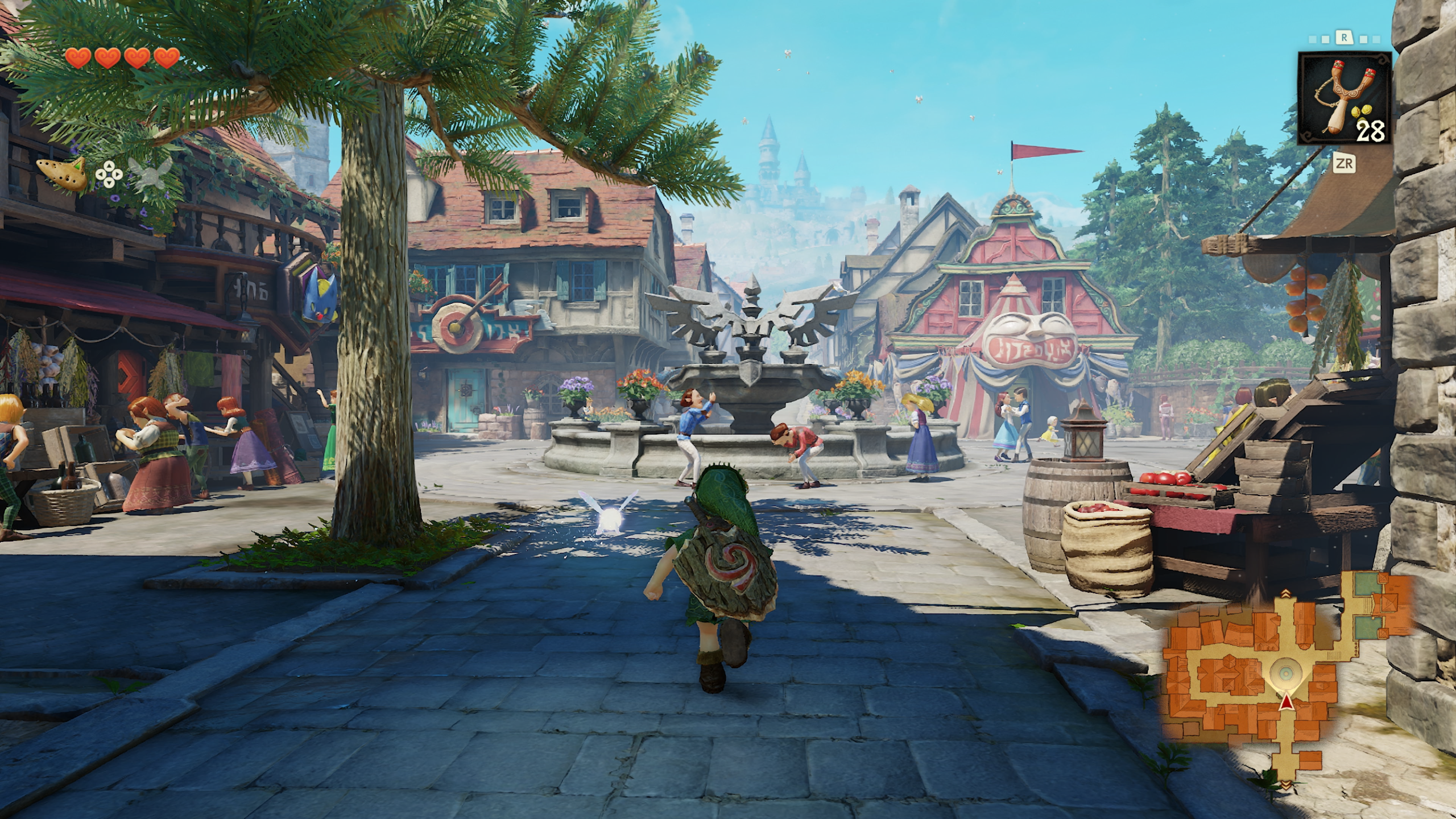
The same visual overhaul extends to the characters. While the game world in Ocarina of Time is astonishingly realistic, the cast still maintains the cartoonish designs of the N64 version. Characters have exaggerated features, disproportionate bodies, and bushels of personality; I was grateful that Nintendo didn’t attempt to make everyone look realistic and instead stuck with the designs from almost 30 years ago. Even the clothes are largely the same for much of the cast… with one disappointing exception: Link. I was not a big fan of Link and Young Link’s new looks. The leather on the tunics, the embroidered accents all over their costumes, and the tassels were not my cup of tea. These flourishes felt try-hard and over designed, unlike the iconic, clean look of the originals. Sometimes, less is more, and this was one of those times.
I eventually came to terms with Link’s new style, but I can’t totally say the same about the controls. To be clear, the game plays fine, but it’s a weaker setup than the N64 original, or even the 3DS iteration. In the original Ocarina of Time, players had six dedicated face buttons to use, with three of them customizable: the left, down, and right C-buttons. In this new Ocarina of Time, players only have a single customizable button, ZR, which can be changed on the fly via a scroll wheel not unlike Breath of the Wild, Tears of the Kingdom, and even Echoes of Wisdom. In practice it works well enough, but it is, without question, inferior to what was done before.
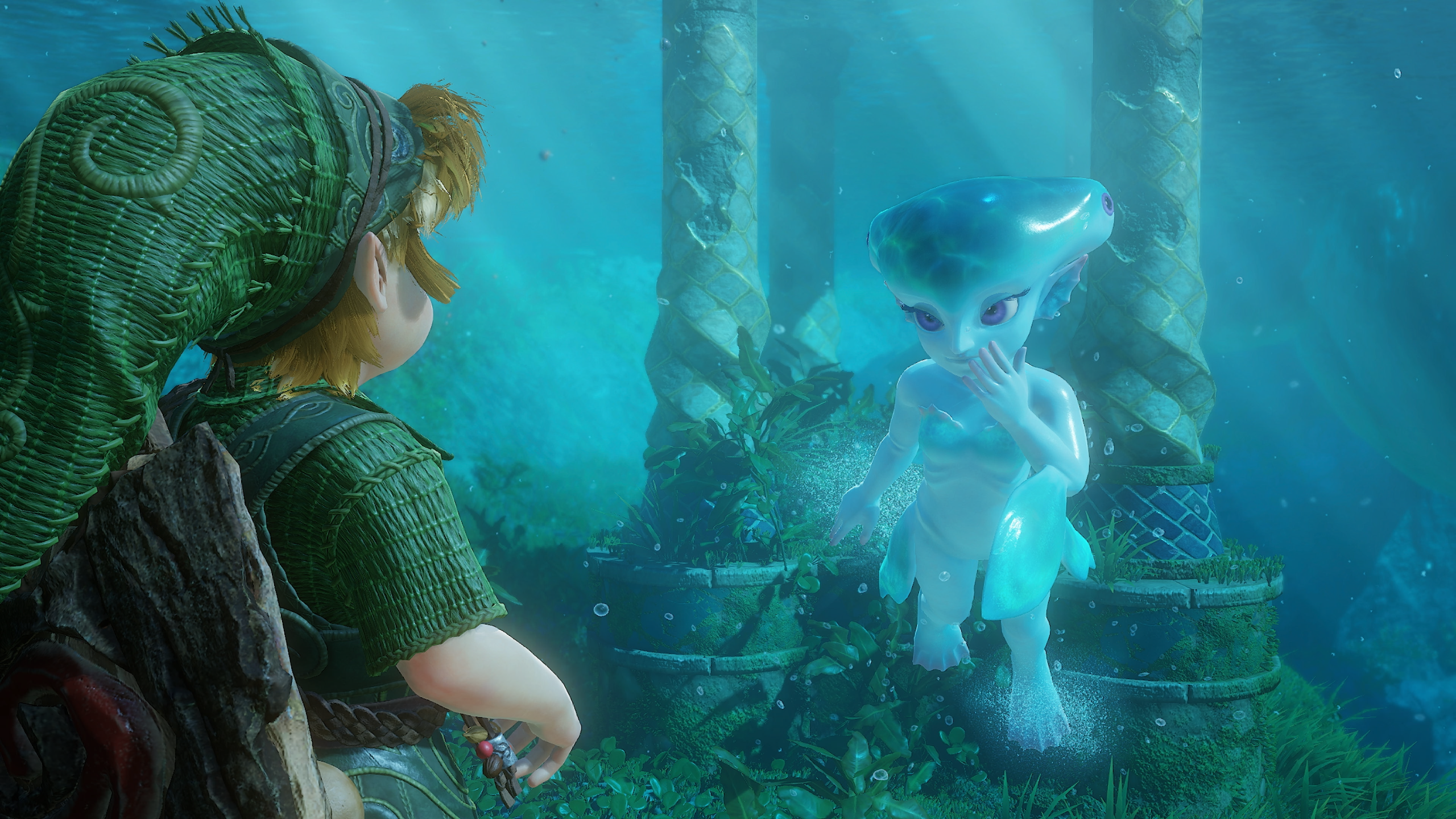
The problem with reducing the player’s customizable buttons down to one is that there are too many instances during combat and even exploration where it’s necessary to be able to rapidly move between different items and weapons. For instance, in the Water Temple, Link has to fire his arrow and then quickly pull out the Longshot to zoom across the way through a timed gate. That entire process now has a pause in the middle because the player has to fire an arrow, hold R to bring up the scroll wheel, select the Longshot, and then pull it out, aim, and fire. I suspect newer players, especially ones whose first experience with Zelda was Breath or Tears, won’t notice, but longtime players will instantly recognize how clunky this feels by comparison.
In fairness, the N64’s wealth of face buttons aren’t present on a Switch 2 Pro Controller, but Nintendo already demonstrated how to properly compensate for fewer inputs with Ocarina 3D. That game had the limited buttons of the 3DS to contend with but was able to provide players with two customizable slots to use. Now, some might try to counter with, “yeah, but 3DS had the touch screen!” It did, and the only real difference it made was that the touch screen was home to a dedicated button for Link’s ocarina. I contend that the average player on N64 likely always had the ocarina assigned to one of the three C buttons, which means they effectively only had two active buttons for weapons/items. However, just the addition of one extra customizable button makes for a far more elegant solution than the new Ocarina’s scroll wheel.
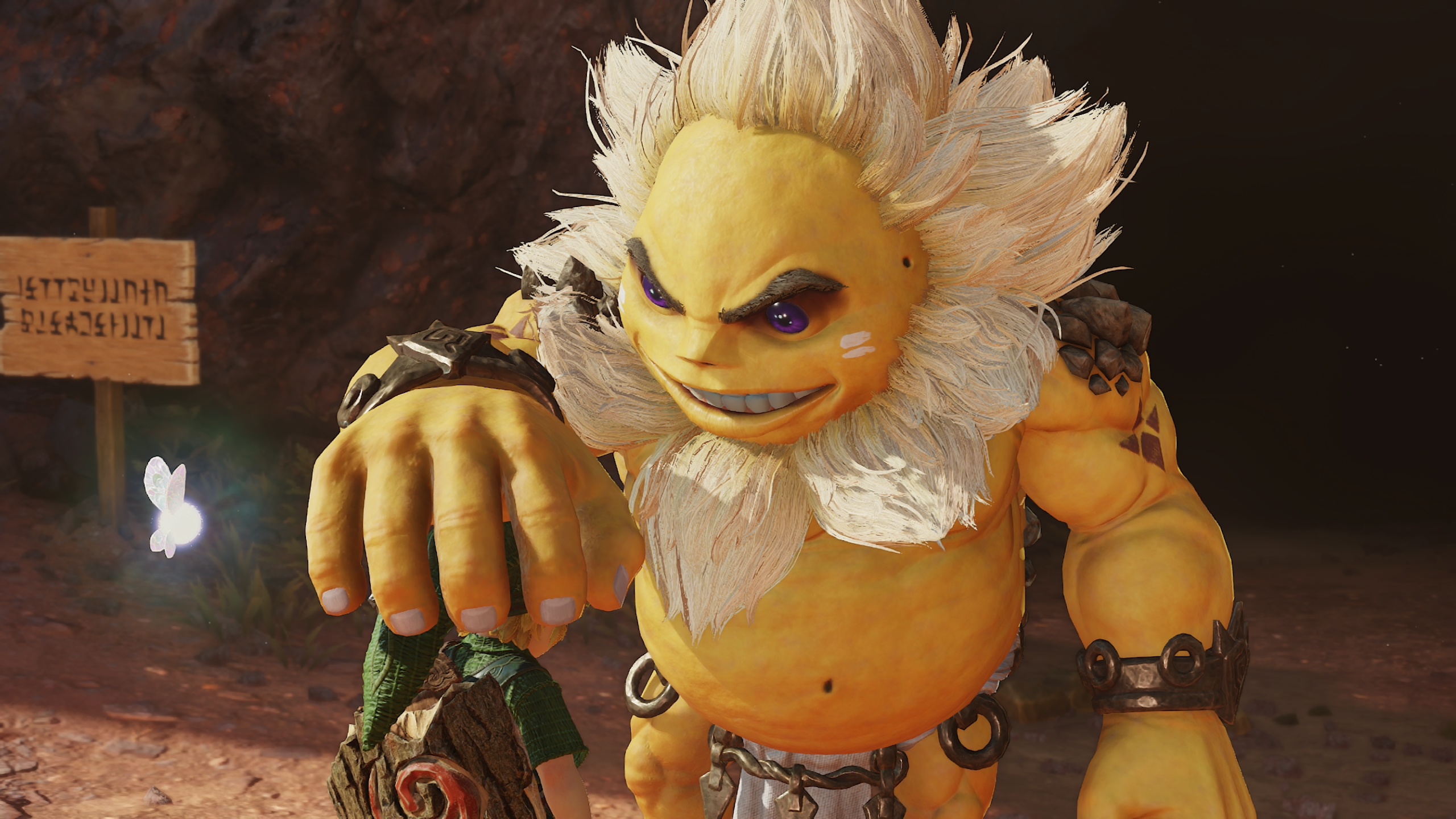
Other niggling frustrations I have with the controls include a lack of first-person view, whether for exploration or shooting; it’s especially frustrating considering how many things I’d like to have been able to take a closer look at. It’s also mildly irritating that items like the Deku Stick and the Biggoron Sword can’t be pulled out without automatically swinging. Sometimes I like to simply pull out an item to have it at the ready, but Ocarina on Switch 2 insists that you start swinging the second you hit the button. Neither of these are deal-breakers, but do point to an occasional lack of thoughtfulness from the design team that belies the loving care that was put into the visuals.
Similarly confounding are the cinematics in the new Ocarina. They’re gorgeously animated, presented using the in-game engine same as all previous iterations of Ocarina of Time. However, Nintendo decided to fully voice the cinema scenes—sometimes. And by sometimes, I mean that the game will go from fully-voiced, to unvoiced, to fully-voiced in rapid succession. It made no sense. I can understand when returning to player control and exploring the game world that the dialogue would stop being voiced; that’s fairly standard in video games. But to make the shift in voice to voiceless where there is no real transition back to player control felt bizarre. Worse, the staccato nature of the voiced sections made the cut scenes feel almost unfinished.
Compounding the matter is that I don’t know that I really liked any of the choices for character voices. Link remains silent, as he should, but all of the major characters, including Zelda, Ganondforf, Impa, and Kaepora Gaebora, are voiced (by Erica Mendez, Matt Mercer, Laura Post, and Frank Todaro, respectively). They perform well, but the delivery is too much like a typical anime dub for my liking. It’s too melodramatic, with some scenes utterly gutted of emotional impact compared to the silent delivery of the original as a result. The Great Deku Tree’s (Richard Epcar) narration at the beginning lacked the emotional heft of the original and sounded like something I’d glaze over on Crunchy Roll. That’s a stark downgrade from the classic version which had me mesmerized without ever uttering a word. Navi (Lisa Reimold), meanwhile, is cursed with a cutesy, girly voice that is grating in large doses. Her line at the end of the game during Link and Ganon’s final showdown had zero weight because of the tone used by the voice actress.
Speaking of dialogue, besides the delivery not being the best, the actual lines themselves sometimes left me wanting. Where the original Ocarina of Time was timeless in its dialogue and storytelling, the new Ocarina occasionally gives off whiffs of millennial/GenZ tropes. The Great Deku Tree no longer speaks in Shakespearean English, which both undercuts how old the character is supposed to be as well as diminishes some of his grandeur. Words and phrases that sound like they came from social media posts have no business being in a game like this. Characters blurting out generic one-liners such as “rude” are wildly out of place, but perhaps the biggest offense was the game’s incessant need to telegraph virtually every secret via NPC dialogue. The game obsessively tells the player where hidden things like the Sun’s Song are, what each Great Fairy will give you before you head to them, and so on. Not only is it pointless (who wouldn’t explore the giant graveyard in a video game?), but it also makes dialogue strained and unrealistic.
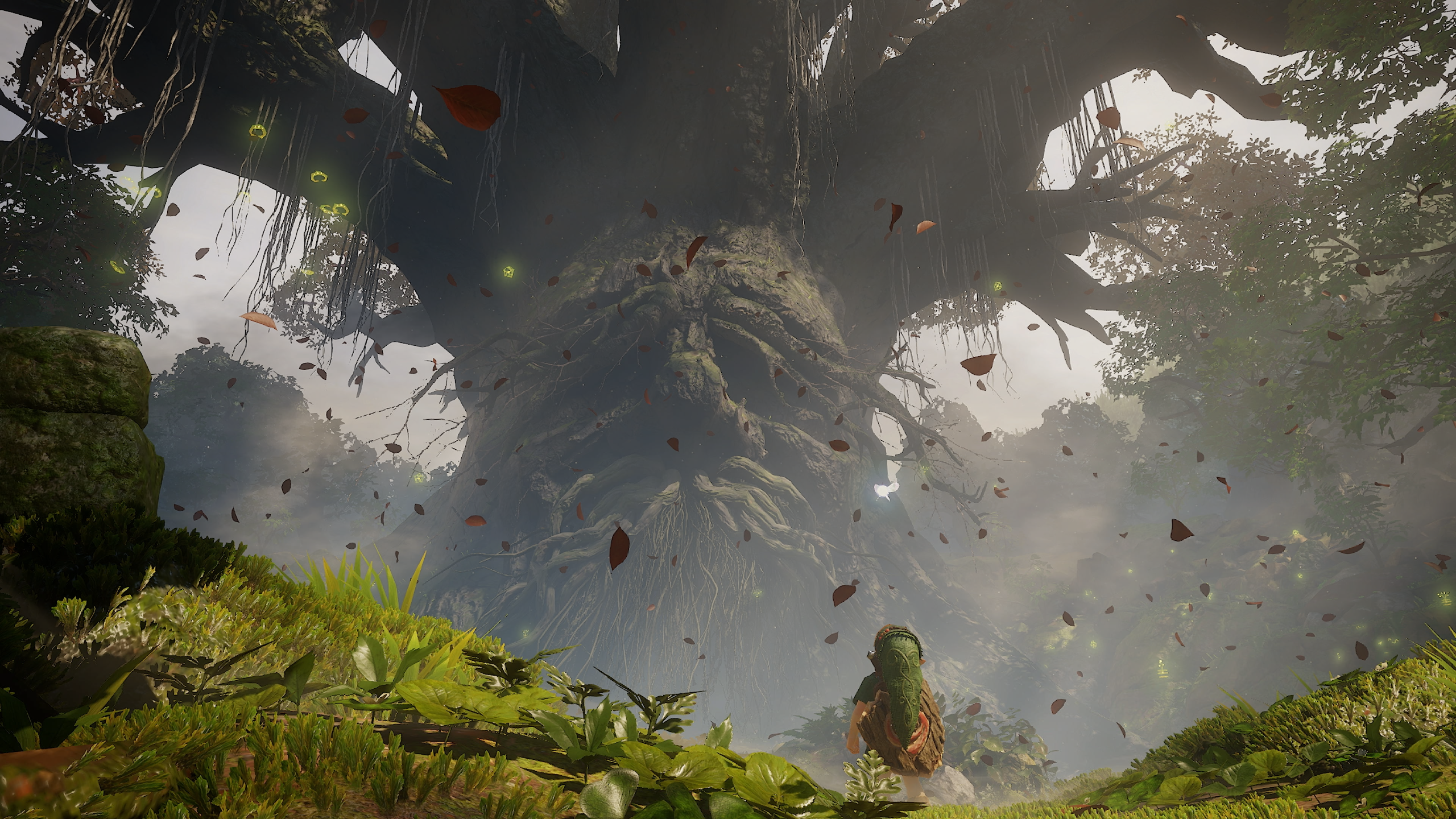
One of the mission statements of the new Ocarina seemed to be speeding things up and streamlining where possible. Most dungeons are the same as they were before, but there are instances where treasure chests have been relocated, locks removed, rooms repositioned or replaced, and so on. The most obvious dungeon to receive a facelift, the infamous Water Temple, has indeed been reworked. I personally never had an issue navigating that particular temple, but it’s been a point of contention since 1998, so I wasn’t bothered. Indeed, all of the nips and tucks to the dungeons only seemed to improve flow and clarify obscure objectives. I was more ambivalent towards Link’s new sprint ability and being able to jump up ladders and fences/vines. Part of me feels like it’s bending the knee to impatient players, but it’s not like either new addition is required to be used, nor do they rush the experience. Overall, it felt like a lot of smart choices that didn’t compromise any of the gameplay.
I thought that combat also took a step forward in the new Ocarina. Link’s movement speed as a whole is faster than in the original, making him more nimble in a fight. Enemies, meanwhile, are more aggressive and smarter as a whole. Fights against low-level foes remain pretty breezy, but once the likes of Lizalfos enter the fray, fights start to become more nuanced. The player has to be diligent about blocking and dodging versus rushing in to deliver volleys of blows with reckless abandon. Haste makes waste (of Link) this time around, and I appreciated that enemies like Stalfos and especially Iron Knuckles, were genuinely deadlier than ever. The game might make it easier to figure out where all the secrets are, but it doesn’t hesitate to kick the player’s butt.
I appreciated that Nintendo made the economy in Ocarina more useful this time around. Although I would actively collect every rupee I could in the original game, it never felt like there was much point to all the money. Resources popped up with ease just from cutting grass, I rarely if ever used potions, and if I ever needed to buy anything, Link always seemed to have enough cash at the ready. Now, however, Great Fairies demand a monetary tribute (that goes up in price with each upgrade), and the game isn’t quite so generous with hearts and resources in bushes and pots, and so on. I actually needed money and was conscious of my spending, and more, I found myself using things like potions for the first time. My one gripe here was a Business Scrub that can be summoned with a special seed anywhere in the game world, including dungeons. It felt sort of like a cheat, it was so convenient, but purists can choose to not use the seed if they want.
One all-new addition in the Ocarina remake is the Hall of Fallen Enemies. It’s not a physical location on the map, which was what I had assumed, but instead a place in Link’s dreaming mind (familiar territory for the character) that you can visit when he goes to sleep in a bed (another new mechanic that helps restore health and pass time). While in the Hall of Fallen Heroes, there are a couple of things that Link can do. First, he can look at statues of all the enemies he’s beaten, including bosses. There’s data on each enemy that includes tips for fighting them in the future. On the perimeter of the hall are statues of the bosses and mini-bosses. These can be faced in combat once more and there’s even a gauntlet challenge for those interested. As Nintendo is wont to do, there isn’t a true reward for this (a collectible, basically, but no new items or weapons), but the satisfaction of besting all of Link’s opponents again is the real point, y’know?
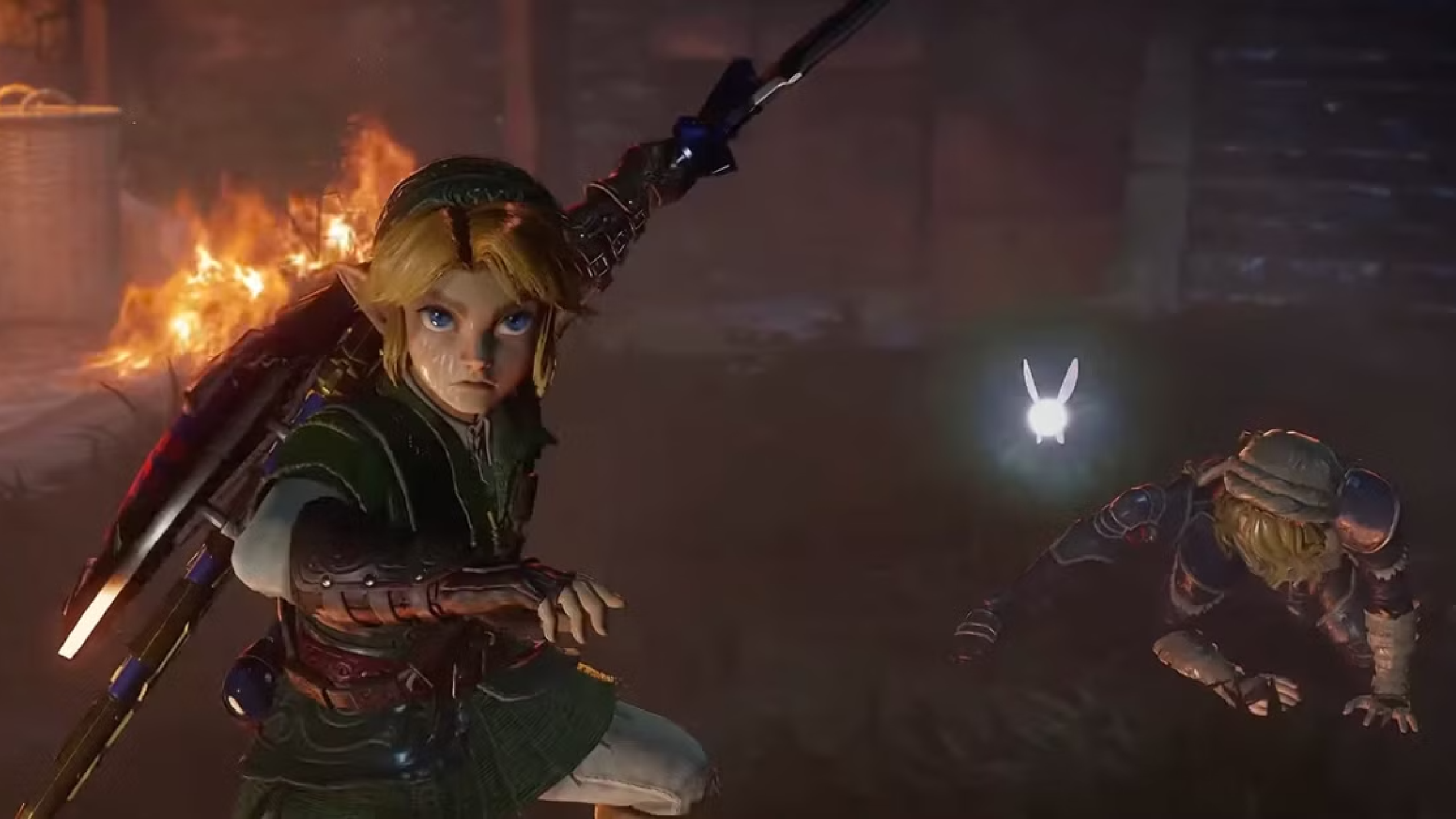
If I had to sum up my thoughts on Ocarina of Time on Switch 2, it’s that this is the weakest version of one of the greatest games ever made. It looks stunning and plays mostly great, but there are significant problems that hold this iteration back from being the definitive take on Ocarina. This game’s adoption of Breath/Tears’ selection wheel is too limiting and bogs down combat and exploration. Modern day tweaks to the narrative and dialogue are unwelcome and, in some cases, make the storytelling unclear. An overuse of character dialogue to communicate objectives and secrets that should naturally be discovered versus telegraphed to the player not only dumbs down exploration, but also results in some awkward, unnatural dialogue. Changes to dungeon layouts and puzzles, not to mention some quality of life tweaks, do offer some improvements to the play experience, but overall Nintendo got this game just right in 1998. The Ocarina of today is a fine game but a lesser one than the original.
Robert’s Grade: B-
Thoughts on Zelda Notes
Zelda Notes is an optional feature that is activated via the Nintendo Switch app on mobile. Once toggled on via the options menu in Ocarina of Time, it provides a number of useful features to the user. Some are interesting but unnecessary, such as My Play Data & Achievements, which is a stat tracker for things like enemies killed, walk distance, and so on. Similar are the Gossip Quests side missions, which provide hints to in-game locations that, when found, earn the player points that can be used to purchase music scores to use for a virtual ocarina that can be played via the app. The one feature that it seems pretty lame to have tethered to the app instead of directly accessible in-game is the Completion Tracker. This handy map shows where remaining Heart Pieces, Gold Skulltulas, and treasure chests are throughout Hyrule. Without the app, players are left flying blind, which is a bummer. Zelda Notes are worthwhile but also needlessly convoluted.
And with that, this Dual Review is at a close. Whose argument did you find yourself most drawn to? Or did you think both of us were off the mark? We’d love to hear your opinion about The Legend of Zelda: Ocarina of Time down in the comments!